
HIV Testing, Household and Reproductive Health Decision-Making: The Role of Women Autonomy in a Nationally Representative Study in Cambodia
DOI:
https://doi.org/10.25259/IJMA_36_2024Keywords:
- Cambodia,
- Decision-Making,
- HIV Testing,
- Personal Autonomy,
- Women’s Health
Abstract
Women’s autonomy plays a critical role in decision-making of health service use. This study aims to evaluate the relationship between Human Immunodeficiency Virus (HIV) testing and decision-making autonomy among Cambodian women aged 15–49.
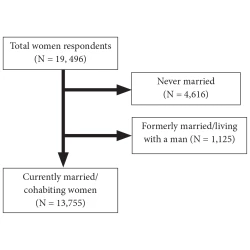
MethodsWe used data from the 2021–2022 Cambodia Demographic and Health Survey (DHS) and our sample consisted of currently married/cohabiting women aged 15–49 (N = 13,755). The outcome variable was “ever been tested for HIV.” Covariates were household decision-making and reproductive health decision-making scores, socio-demographic characteristics (age, place of residency, education, wealth quintiles, and employment status), and HIV knowledge (HIV self-test kits, drugs to prevent HIV in babies during pregnancy, antiretroviral [ARV] drugs, and pre-exposure prophylaxis).
ResultsSixty-one percent of studied women reported ever being tested for HIV. The logistic regression results revealed that women with a higher household decision-making score (aOR = 2.09, p < 0.001), reproductive health decision-making score (aOR = 1.72, p < 0.001), from 25 to 29 age groups (aOR = 2.21, p < 0.001), with a higher education (aOR = 1.96, p = 0.001), from the richest groups (aOR = 1.73, p < 0.001), had knowledge of HIV test kits but never get tested (aOR = 1.38, p = 0.035), heard of drugs to avoid HIV transmission to babies during pregnancy (aOR = 1.21, p < 0.001), and heard of ARV drugs (aOR = 1.28, p < 0.001) were more likely to get tested for HIV than their counterparts. Women living in rural areas (aOR = 0.56, p < 0.001) and those who had discriminatory attitudes (aOR = 0.76, p = < 0.001) were less likely to get HIV tests than those in urban areas and those without discrimination.
Conclusion and Global Health ImplicationsFindings revealed that greater autonomy is important for health care use, particularly HIV testing for women in Cambodia.
Downloads
Similar Articles
- Sharaf Sheik-Ali, Sergio M. Navarro, Hashim Shaikh, Evan J. Keil, Walter Johnson, Chris Lavy, The Health Determinants of Accessibility to Clubfoot Treatment in LMICs: A Global Exploration of Barriers and Solutions , Vol. 10 No. 2 (2021): International Journal of Maternal and Child Health and AIDS
- Munyaradzi Muchacha, Edmos Mtetwa, Social and Economic Barriers to Exclusive Breast Feeding In Rural Zimbabwe , Vol. 3 No. 1 (2015): International Journal of Maternal and Child Health and AIDS
- Mary Stokes, Amber Olson, Clare Algeo, Bakari Rajab, Carolyn Mwalwanda, Deepa Dongarwar, Rachel Pope, Clinical and Sociodemographic Characteristics Associated with Emergency Peripartum Hysterectomy due to Puerperal Sepsis in Malawi , Vol. 11 No. 1 (2022): International Journal of Maternal and Child Health and AIDS
- Foluke A. Olatona, Oyetola O. Oloruntola, Oluwafunmilayo F. Adeniyi, Eyitope O. Amu, Association Between Breakfast Consumption and Anthropometrically Determined Nutritional Status of Secondary-School Adolescents in Lagos, Southwest Nigeria , Vol. 11 No. 1 (2022): International Journal of Maternal and Child Health and AIDS
- Folake Olukemi Samuel, Ebunoluwa Grace Ibidapo, Complementary Feeding Practices and Associated Factors Among Nursing Mothers in Southwestern Nigeria , Vol. 9 No. 2 (2020): International Journal of Maternal and Child Health and AIDS
- Aradhana Singh, Vibha Rani Pipal, Raj Kishore Singh, Preeti Bala Singh, Nidhi Singh, Anupama Singh, Incidence and Predictors of Uterine Rupture with Maternal and Perinatal Outcome: A Cross-sectional Study , Vol. 14 No. Continuous (2025): International Journal of Maternal and Child Health and AIDS
- Nidhi Fotedar, Nugehally Raju Ramesh Masthi, Burden of Fetal Anomalies among Antenatal Mothers Attending a Public Referral Hospital: A Mixed Cohort Study , Vol. 14 No. Continuous (2025): International Journal of Maternal and Child Health and AIDS
- Deepa Dongarwar, Korede K. Yusuf, Sitratullah O. Maiyegun, Sahra Ibrahimi, Chioma Ikedionwu, Hamisu M. Salihu, Covid-19 and Neuro-Behavioral Economics: A Conceptual Framework to Improve Physical and Mental Health among Remote Workers , Vol. 9 No. 3 (2020): International Journal of Maternal and Child Health and AIDS
- Chioma A Ikedionwu, Deepa Dongarwar, Korede K. Yusuf, Sitratullah O. Maiyegun, Sahra Ibrahimi, Hamisu M. Salihu, Using Nominal Group Technique to Elucidate a COVID-19 Research Agenda for Maternal and Child Health (MCH) Populations , Vol. 9 No. 3 (2020): International Journal of Maternal and Child Health and AIDS
- Ranbir S Balgir, Population and Public Health Implications of Child Health and Reproductive Outcomes Among Carrier Couples of Sickle Cell Disorders in Madhya Pradesh, Central India , Vol. 2 No. 2 (2014): International Journal of Maternal and Child Health and AIDS
<< < 21 22 23 24 25 26 27 28 29 30 > >>
You may also start an advanced similarity search for this article.
Published
How to Cite
Issue
Section
License
Copyright © 2025 Wah Myint, Aishatu Yusuf, Angela Nguyen, Elfreda Samman. Published by Global Health and Education Projects, Inc., USA.

This is an open-access article distributed under the terms of the Creative Commons Attribution-NonCommercial-ShareAlike 4.0 International License , which permits others to remix, transform, and build upon the work non-commercially, provided the original author is credited and the new creations are licensed under the same terms.