
Individual and Community Perspectives, Attitudes, and Practices to Mother-to-Child-Transmission and Infant Feeding among HIV-Positive Mothers in Sub-Saharan Africa: A Systematic Literature Review
DOI:
https://doi.org/10.21106/ijma.20Keywords:
- mother-to-child-transmission,
- PMTC and infant feeding,
- Cultural and social norms,
- HIV/AIDS,
- Sub-Saharan Africa,
- Ghana
Abstract
International guidelines on infant feeding for HIV- positive mothers promote Exclusive Replacement Feeding (ERF) (infant formula or animal milk) or exclusive breastfeeding (with no supplements of any kind). A mixed feeding pattern, where breastfeeding is combined with other milks, liquid foods or solids, has been shown to increase the risk of transmission of HIV and is strongly discouraged. However, little is known about the ability of women to adhere to recommended feeding strategies to prevent mother-to-child transmission (MTCT) of HIV from breast milk. The objective of this study was to assess the individual and community-level factors that affect perspectives, attitudes and practices of HIV-positive mothers on MTCT and infant feeding in sub-Saharan Africa as documented in peer-reviewed and grey literature.
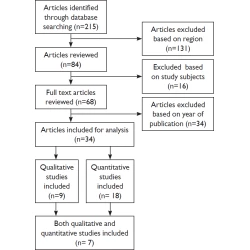
Methods:This work is based on an extensive review of peer-reviewed articles and grey literature from the period 2000-2012. The literature search was carried out using electronic databases like Medline Ovid, Google Scholar, PubMed and EBSCOhost. Both quantitative and qualitative studies written in English language on HIV and infant feeding with particular emphasis on Sub-Saharan Africa were included.
Results:The review found low adherence to the chosen infant feeding method by HIV-positive mothers. The following factors emerged as influencing infant feeding decisions: cultural and social norms; economic conditions; inadequate counselling; and mother's level of education.
Conclusions and Public Health Implications:Unless local beliefs and customs surrounding infant feeding is understood by policy makers and program implementers, Prevention of Mother-to-Child Transmission (PMTCT) programs will only be partially successful in influencing feeding practices of HIV-positive women. Hence programs should provide affordable, acceptable, feasible, safe and sustainable feeding recommendations that do not erode strong cultural practices. Advice to HIV-positive mothers should be based on local conditions that are acceptable to the community.
Downloads
Similar Articles
- Yaw Owusu, Prerana Medakkar, Elizabeth M. Akinnawo, Althea Stewart-Pyne, Eta E. Ashu, Emigration of skilled healthcare workers from developing countries: can team-based healthcare practice fill the gaps in maternal, newborn and child healthcare delivery? , Vol. 6 No. 2 (2017): International Journal of Maternal and Child Health and AIDS
- Eren Oyungu, Anna Roose, Ananda R. Ombitsa, Rachel C. Vreeman, Megan S. McHenry, Child Development Monitoring in Well-baby Clinics in Kenya , Vol. 10 No. 1 (2021): International Journal of Maternal and Child Health and AIDS
- Charles Ikeanyionwu, Deepa Dongarwar, Zenab Yusuf, Rafeek Yusuf, Meishon Bell, Toi Harris, Hamisu M. Salihu, 2019 Health Equity Summer Research Summit Organized by the Center of Excellence in Health Equity, Training and Research, Baylor College of Medicine, Houston, Texas 77030, USA on June 18th, 2019 , Vol. 9 No. S1 (2020): International Journal of Maternal and Child Health and AIDS
- Innocent Anayochukwu Ugwu, Calistus Obiora Nevo, Malachy Nwaeze Ezenwaeze, Antenatal Care Utilization and Delivery Location: Evidence from Postpartum Women in Enugu, South East Nigeria , Vol. 15 (2026): International Journal of Maternal and Child Health and AIDS
- Léonel Philibert, Judith Lapierre, Vulnerabilities and Strengths of Pregnant Haitian Adolescents and their Families During Transition to Motherhood , Vol. 11 No. 2 (2022): International Journal of Maternal and Child Health and AIDS
- Romuladus E. Azuine, Gopal K. Singh, Addressing Global Health, Development, and Social Inequalities through Research and Policy Analyses: The International Journal of MCH and AIDS , Vol. 1 No. 1 (2012): International Journal of Maternal and Child Health and AIDS
- Comfort Z. Olorunsaiye, A-Mac Harris, Korede K. Yusuf, Characteristics of Early Newborn Care: A Descriptive Analysis of Recent Births in Nigeria , Vol. 9 No. 1 (2020): International Journal of Maternal and Child Health and AIDS
- Sara Rushwan, Fatu Forna, Ferid Abbas Abubeker, Tesfaye Tufa, Tieba Millogo, Miriam Nakalembe, Kwame Adu-Bonsaffoh, Francis L. Moses, Lester Chinery, Gilda Piaggio, Metin Gülmezoglu, Integrating Heat-Stable Carbetocin and Tranexamic Acid for Prevention and Management of Postpartum Hemorrhage in Sub-Saharan Africa: A Five-Country Pilot Implementation Study , Vol. 13 No. S1 (2024): International Journal of Maternal and Child Health and AIDS
- David Rakotonandrasana Harimbola, Kaori Mizumoto, Individual and Household Risk Factors for Severe Acute Malnutrition among Under-Five Children in the Analamanga Region, Madagascar , Vol. 7 No. 1 (2018): International Journal of Maternal and Child Health and AIDS
- Rajesh Narwal, Lu Gram, Has the Rate of Reduction in Infant Mortality Increased in India Since the Launch of National Rural Health Mission? Analysis of Time Trends 2000-2009 with Projection to 2015 , Vol. 2 No. 1 (2013): International Journal of Maternal and Child Health and AIDS
<< < 8 9 10 11 12 13 14 15 16 17 > >>
You may also start an advanced similarity search for this article.
Published
How to Cite
Issue
Section
License
Copyright © 2015 Alexander Suuk Laar, Veioshnee Govender. Published by Global Health and Education Projects, Inc., USA.

This is an open-access article distributed under the terms of the Creative Commons Attribution-NonCommercial-ShareAlike 4.0 International License , which permits others to remix, transform, and build upon the work non-commercially, provided the original author is credited and the new creations are licensed under the same terms.