
Nutritional Deficiencies and Food Insecurity Among HIV-infected Children in Tanzania
DOI:
https://doi.org/10.21106/ijma.28Keywords:
- HIV,
- Tanzania,
- Children,
- Energy Intake,
- Food Insecurity,
- Micronutrients
Abstract
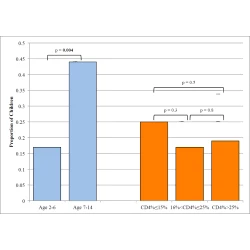
Background: Poor nutrition has been associated with impaired immunity and accelerated disease progression in HIV- infected children. The aim of this study was to quantify the levels of nutrient intake in HIV-infected children and compare these to standard recommendations. Methods: We surveyed HIV-infected Tanzanian children enrolled in a pediatric care program that provided routine nutritional counseling and vitamin supplementation. We obtained anthropometric measurements and determined 24-hour macronutrient and micronutrient intakes and food insecurity. Values were compared to recommended nutrient intakes based on age and gender. Results: We interviewed 48 pairs of children and their caregiver(s). The age of the child ranged from 2-14 years; median age 6 and 60% female. The median weight-for-height z-score for children ≤ 5 years was 0.69 and BMI-for-age z-scores for children >5 was -0.84. Macronutrient evaluation showed that 29 (60%) children were deficient in dietary intake of energy; deficiency was more common in older children (p=0.004). Micronutrient evaluation shows that over half of study subjects were deficient in dietary intake of vitamin A, vitamin D, vitamin E, thiamine, riboflavin, niacin, folate, vitamin B12, and calcium. Food insecurity was reported by 20 (58%) caregivers. Conclusions and Public Health Implications: The diets of many HIV-infected children at a specialized treatment center in Tanzania do not meet recommended levels of macro- and micro-nutrients. Food insecurity was a contributory factor. Enhanced dietary counseling and provision of macro- and micro-nutrient supplements will be necessary to achieve optimal nutrition for most HIV-infected children in resource-poor regions.
Downloads
Similar Articles
- Wah Wah Myint, Human Immunodeficiency Virus (HIV) Knowledge and Stigma: Findings from a Cross-sectional Survey , Vol. 15 (2026): International Journal of Maternal and Child Health and AIDS
- Kolawole A. Fasakin, Christopher T. Omisakin, Idowu O. Adebara, Wasiu A. Ajetunmobi, Adebayo A. Adeniyi, Ayodele J. Esan, Olufunke B. Bolaji, Oluwafemi D. Ajayi, Abayomi J. Afe, Assessment of PMTCT Success Rates Based on Antiretroviral Interventions and Feeding Options: A Prospective Cohort Study , Vol. 7 No. 2 (2018): International Journal of Maternal and Child Health and AIDS
- Brianna L. Smith, Sara Zizzo, Anouk Amzel, Sarah Wiant, Molly C. Pezzulo, Sarah Konopka, Rachel Golin, Alexandra C. Vrazo, Integration of Neonatal and Child Health Interventions with Pediatric HIV Interventions in Global Health , Vol. 7 No. 1 (2018): International Journal of Maternal and Child Health and AIDS
- Andrew Walubo, Refuoe Baleni, Hillary Mukudu, Henry Kambafwile, Mukesh Dheda, Thanduxolo Thengwa, Tshepang Jiane, Clinical Characteristics of Children with HIV Initiated on Antiretroviral Treatment at HIV Clinics in Bloemfontein, South Africa , Vol. 10 No. 1 (2021): International Journal of Maternal and Child Health and AIDS
- Margaret Macherera Macherera, Lindani Moyo, Mkhanyiseli Ncube, Angella Gumbi, Social, Cultural, and Environmental Challenges Faced by Children on Antiretroviral Therapy in Zimbabwe: a Mixed-Method Study , Vol. 1 No. 1 (2012): International Journal of Maternal and Child Health and AIDS
- Sorochi H. Iloanusi, Osaro O. Mgbere, Susan. M. Abughosh, Ekere J. Essien, HIV Non-Occupational Post Exposure Prophylaxis in Nigeria: A Systematic Review of Research Evidence and Practice , Vol. 8 No. 2 (2019): International Journal of Maternal and Child Health and AIDS
- Michelle Meyer, Molly Elmer-DeWitt, Cinthia Blat, Starley B Shade, Ijaa Kapule, Elizabeth Bukusi, Craig R Cohen, Lisa Abuogi, Evaluation and Utility of a Family Information Table to Identify and Test Children at Risk for HIV in Kenya , Vol. 2 No. 2 (2014): International Journal of Maternal and Child Health and AIDS
- Céline N. Nkenfou, Marie-Nicole Ngoufack, Georges Nguefack-Tsague, Barbara T. Atogho, Constantin Tchakounte, Brian T. Bongwong, Carine N. Nguefeu-Tchinda, Elise Elong, Laeticia H. Yatchou, Joel K. Kameni, Aline Tiga, Wilfred F. Mbacham, Alexis Ndjolo, Maternal Socio-Demographic Factors and Mother-to-Child Transmission of HIV in the North Region of Cameroon , Vol. 12 No. 1 (2023): International Journal of Maternal and Child Health and AIDS
- Agnes Langat, Tegan L. Callahan, Isabella Yonga, Boniface Ochanda, Anthony Waruru, Lucy W. Ng’anga, Abraham Katana, Brian Onyango, Benson Singa, Stephen Oyule, George Githuka, Lennah Omoto, Jane Muli, Thorkild Tylleskar, Surbhi Modi, Associations of Sociodemographic and Clinical Factors with Late Presentation for Early Infant HIV Diagnosis (EID) Services in Kenya , Vol. 10 No. 2 (2021): International Journal of Maternal and Child Health and AIDS
- George Chidi Anwuri, Michael S. Dunn, Frederick Schulze, Determinants of Voluntary HIV/AIDS Counseling and Testing among Community College Students in the United States , Vol. 6 No. 2 (2017): International Journal of Maternal and Child Health and AIDS
You may also start an advanced similarity search for this article.
Published
How to Cite
Issue
Section
License
Copyright © 2015 Chelsea E Modlin, Helga Naburi, Kristy M Hendricks, Goodluck Lyatuu, Josphine Kimaro, Lisa V Adams, Paul E Palumbo, C. Fordham von Reyn. Published by Global Health and Education Projects, Inc., USA.

This is an open-access article distributed under the terms of the Creative Commons Attribution-NonCommercial-ShareAlike 4.0 International License , which permits others to remix, transform, and build upon the work non-commercially, provided the original author is credited and the new creations are licensed under the same terms.