
Cost-effectiveness and Budget Impact of Introducing Heat-stable Carbetocin for Postpartum Hemorrhage Prevention in Nigeria
DOI:
https://doi.org/10.25259/IJMA_51_2024Keywords:
- Cost-Effectiveness Analysis,
- Economic Evaluation,
- Heat-stable Carbetocin,
- Postpartum Hemorrhage,
- Uterotonics
Abstract
Background and Objective: Nigeria accounts for about 28.5% of the global maternal death burden, with 22% of these deaths caused by postpartum hemorrhage (PPH). The high prevalence of poor-quality uterotonics, particularly oxytocin and misoprostol, results in more PPH cases. Heat-stable carbetocin (HSC), a thermo-stable analog of oxytocin, is a suitable uterotonic option for preventing PPH, particularly in regions like Nigeria where the quality of oxytocin, the “gold standard uterotonic, ” cannot be assured.
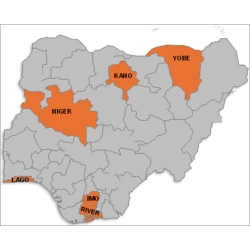
Methods: This evaluation assesses the cost-effectiveness, budget, and health impacts of introducing HSC compared to current prophylactic standards for PPH prevention among women delivering in public healthcare facilities in Nigeria. Quantitative data on direct healthcare system costs of using oxytocin, misoprostol, oxytocin– misoprostol combination, and HSC to prevent PPH collected from one state in each of six geopolitical zones in Nigeria served as inputs into a hierarchical decision-tree model built to generate public healthcare system perspective outputs on related PPH deaths and disabilities (disability-adjusted life-years), budget impact, and cost-effectiveness.
Results: In a cohort of 2,548,136 deliveries, HSC may avert 111,652 PPH events when compared against oxytocin. This includes 12,873 PPH cases, 31,442 severe morbidities (disability-adjusted life years), and 1,165 deaths. These are associated with a 6% reduction in total cost to the health system and cost per woman, respectively. The budget impact analysis revealed a possible total cumulative savings to the public healthcare system of ₦352,798,943 (USD $ 235,199) if HSC is scaled up over 5 years to a 17% market share of prophylactic uterotonics administered.
Conclusion and Global Health Implications: Introducing HSC for PPH prevention may be a cost-effective public health intervention in Nigeria when compared to oxytocin, the current standard of care to prevent PPH. Health-economic modeling projects HSC to be associated with lower costs to the health system while conferring better maternal health outcomes when compared to oxytocin or oxytocin–misoprostol combination.
Downloads
Most read articles by the same author(s)
- Olatunde A. Amode, Omaye V. Negedu, Jessica T. Joseph, Uchenna Igbokwe Igbokwe, Olajumoke Adekeye, Damilola K. Oyedele, Hadiza Salele, Lola Ameyan, Kayode Afolabi, Olufunke Fasawe, Owens Wiwa, An Implementation Research Study on Uterotonics Use Patterns and Heat-stable Carbetocin Acceptability and Safety for Prevention of Postpartum Hemorrhage in Nigeria , International Journal of Maternal and Child Health and AIDS: Vol. 13 No. S1 (2024): International Journal of Maternal and Child Health and AIDS
Similar Articles
- Olayinka A. Onasoga, Joel Adeleke Afolayan, Tariebi Florence Asamabiriowei, Umar Nda Jibril, Abubakar Ayinla Imam, Adolescents’ Knowledge, Attitude and Utilization of Emergency Contraceptive Pills in Nigeria’s Niger Delta Region , Vol. 5 No. 1 (2016): International Journal of Maternal and Child Health and AIDS
- Margaret Macherera Macherera, Lindani Moyo, Mkhanyiseli Ncube, Angella Gumbi, Social, Cultural, and Environmental Challenges Faced by Children on Antiretroviral Therapy in Zimbabwe: a Mixed-Method Study , Vol. 1 No. 1 (2012): International Journal of Maternal and Child Health and AIDS
You may also start an advanced similarity search for this article.
Published
How to Cite
Issue
Section
License
Copyright © 2025 Olatunde Ayodele Amode, Damilola Kafayat Oyedele, Hadiza Salele, Olajumoke Adekeye, Uchenna Igbokwe, Lola Ameyan, Kayode Akin Afolabi, Olufunke Fasawe, Owens Wiwa. Published by Global Health and Education Projects, Inc., USA.

This is an open-access article distributed under the terms of the Creative Commons Attribution-NonCommercial-ShareAlike 4.0 International License , which permits others to remix, transform, and build upon the work non-commercially, provided the original author is credited and the new creations are licensed under the same terms.