
Exploring Patients’ Needs and Desires for Quality Prenatal Care in Florida, United States
DOI:
https://doi.org/10.21106/ijma.622Keywords:
- Medicaid,
- Patient Preference,
- Patient-Centered Care,
- Pregnancy,
- Prenatal Care,
- Qualitative Research,
- Quality of Health Care,
- United States
Abstract
High-quality prenatal care promotes adequate care throughout pregnancy by increasing patients’ desires to return for follow-up visits. Almost 15% of women in the United States receive inadequate prenatal care, with 6% receiving late or no prenatal care. Only 63% of pregnant women in Florida receive adequate prenatal care, and little is known about their perceptions of high-quality prenatal care. Therefore, the objective of this study was to assess women’s perceptions of the quality of their prenatal care and to describe their preferences for seeking prenatal care that meets their needs.
Methods:From April to December 2019, a qualitative study was conducted with postpartum women (n = 55) who received no or late prenatal care and delivered in Tampa, Florida, USA. Eligible women completed an open-ended qualitative survey and a semi-structured in-depth interview. The interview contextualized the factors influencing prenatal care quality perceptions. The qualitative data analysis was based on Donabedian’s quality of care model.
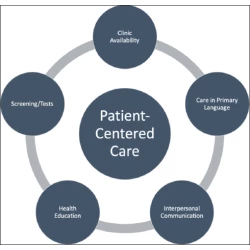
Results:The qualitative data analysis revealed three key themes about women’s perceptions and preferences for prenatal care that meets their needs. First, clinical care processes included provision of health education and medical assessments. Second, structural conditions included language preferences, clinic availability, and the presence of ancillary staff. Finally, interpersonal communication encompassed interactions with providers and continuity of care. Overall, participants desired patient-centered care and care that was informative, tailored to their needs, and worked within the constraints of their daily lives.
Conclusion and Global Health Implications:Women seeking and receiving prenatal care prefer a welcoming, patient-centered health care environment. These findings should prompt health care providers and organizations to improve existing prenatal care models and develop new prenatal care models that provide early, accessible, and high-quality prenatal care to a diverse population of maternity patients.
Downloads
Most read articles by the same author(s)
- Arlin Delgado, Chinyere N. Reid, Emma Hale, Jennifer Marshall, Kimberly Fryer, Evaluation of Virtual Prenatal Care for Obstetric Care Delivery During the COVID-19 Pandemic: A Mixed Method Research Study Using the Consolidated Framework in Implementation Research , International Journal of Maternal and Child Health and AIDS: Vol. 12 No. 2 (2023): International Journal of Maternal and Child Health and AIDS
Similar Articles
- Wah Wah Myint, Human Immunodeficiency Virus (HIV) Knowledge and Stigma: Findings from a Cross-sectional Survey , Vol. 15 (2026): International Journal of Maternal and Child Health and AIDS
- Arlin Delgado, Chinyere N. Reid, Emma Hale, Jennifer Marshall, Kimberly Fryer, Evaluation of Virtual Prenatal Care for Obstetric Care Delivery During the COVID-19 Pandemic: A Mixed Method Research Study Using the Consolidated Framework in Implementation Research , Vol. 12 No. 2 (2023): International Journal of Maternal and Child Health and AIDS
- Charles Ikeanyionwu, Deepa Dongarwar, Zenab Yusuf, Rafeek Yusuf, Meishon Bell, Toi Harris, Hamisu M. Salihu, 2019 Health Equity Summer Research Summit Organized by the Center of Excellence in Health Equity, Training and Research, Baylor College of Medicine, Houston, Texas 77030, USA on June 18th, 2019 , Vol. 9 No. S1 (2020): International Journal of Maternal and Child Health and AIDS
- Olatunde Ayodele Amode, Damilola Kafayat Oyedele, Hadiza Salele, Olajumoke Adekeye, Uchenna Igbokwe, Lola Ameyan, Kayode Akin Afolabi, Olufunke Fasawe, Owens Wiwa, Cost-effectiveness and Budget Impact of Introducing Heat-stable Carbetocin for Postpartum Hemorrhage Prevention in Nigeria , Vol. 14 No. Continuous (2025): International Journal of Maternal and Child Health and AIDS
- Ernest Tambo, Chidiebere E. Ugwu, Yayi Guan, Ding Wei, Xiao-Ning, Zhou Xiao-Nong, China-Africa Health Development Initiatives: Benefits and Implications for Shaping Innovative and Evidence-informed National Health Policies and Programs in Sub-saharan African Countries , Vol. 5 No. 2 (2016): International Journal of Maternal and Child Health and AIDS
- Juliana Y. Enos, Richard D. Amoako, Innocent K. Doku, Utilization, Predictors and Gaps in the Continuum of Care for Maternal and Newborn Health in Ghana , Vol. 10 No. 1 (2021): International Journal of Maternal and Child Health and AIDS
- Ahmad Abdulhadi, Nasiru Abdullahi, Ibrahim Yusuf, Basheer I. Waziri, Kasimu Mamuda , Husna F. Ibrahim, Khadija Muhammad, Maryam M. Ibrahim , Aisha A. Abdullahi, Hassan A. Murtala, Muhammad A. Abbas, Hamisu M. Salihu, A Systematic Review and Meta-analysis on Innovative Approaches in Tuberculosis Diagnosis: Challenges and Future Directions , Vol. 15 (2026): International Journal of Maternal and Child Health and AIDS
- Elizabeth Armstrong, Priya Srinivasan, Dawood Azeemy, Fayja Habib, Ernest Alema-Mensah, COVID-19 Stressors and Maternal Mental Health in Georgia, United States: Sources, Effects, and Recommendations , Vol. 14 No. Continuous (2025): International Journal of Maternal and Child Health and AIDS
- Stella Yu, Sue Lin, Bonnie Strickland, Disparities in Health Care Quality Indicators among US Children with Special Health Care Needs According to Household Language Use , Vol. 4 No. 1 (2015): International Journal of Maternal and Child Health and AIDS
- Jaleah D. Rutledge, Alexis Kiyanda, Christina Jean-Louis, Elizabeth Raskin, Joanne Gaillard, Morgan Maxwell, Tynetta Smith, Trace Kershaw, Jasmine Abrams, Recommendations for Integrating Traditional Birth Attendants to Improve Maternal Health Outcomes in Low- and Middle-Income Countries , Vol. 13 No. Continuous (2024): International Journal of Maternal and Child Health and AIDS
<< < 1 2 3 4 5 6 7 8 9 10 > >>
You may also start an advanced similarity search for this article.
Published
How to Cite
Issue
Section
License
Copyright © 2023 Kimberly Fryer, Chinyere N. Reid, Naciely Cabral, Jennifer Marshall, Usha Menon. Published by Global Health and Education Projects, Inc., USA.

This is an open-access article distributed under the terms of the Creative Commons Attribution-NonCommercial-ShareAlike 4.0 International License , which permits others to remix, transform, and build upon the work non-commercially, provided the original author is credited and the new creations are licensed under the same terms.