
The Health Determinants of Accessibility to Clubfoot Treatment in LMICs: A Global Exploration of Barriers and Solutions
DOI:
https://doi.org/10.21106/ijma.453Keywords:
- Clubfoot,
- Accessibility,
- Health Determinants,
- Global,
- Barriers to Care,
- Treatment
Abstract
Background: Clubfoot or Congenital Talipes Equinovarus (CTEV) treatment in newborn infants involves simple, non-invasive manipulation and is primarily managed non-surgically if identified early. In low- and middle-income countries (LMICs), less than 15% of patients with CTEV access treatment. This crosssectional questionnaire study conducted descriptive and regression analysis of institutional reasons for CTEV management in LMICs.
Methods: A cross-sectional study was undertaken of 1,489 medical institutions in 62 LMICs. Data were evaluated from the “World Health Organization Situation Analysis tool” database. We analyzed characteristics of institutions that manage and did not manage CTEV. With the use of a multivariate linear regression model, we identified a set of factors linked to referral for non-management of CTEV.
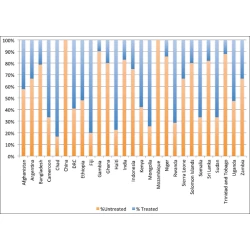
Results: A total of 72.7% (1,083/1,395) of institutions surveyed did not manage CTEV. The most common reason cited for not managing CTEV was a lack of sufficient skills, 92.1% (668/725, P<0.001). A total of 39.4% (286/725) of institutions also cited a lack of functioning equipment as a reason. Multivariate linear regression analysis showed lack of training, lack of supplies, and lack of functioning equipment were most closely related to non-management of CTEV.
Conclusion and Global Health Implications: We identified that failure to manage CTEV may result from a lack of skills and medical equipment. Increasing the capacity of sustainable training programs may reduce the presently available skill deficit in treating CTEV in LMICs and provide improved health outcomes for those with CTEV. While considerable progress has been made in building capacity for the treatment and management of CTEV in LMICs, structured training programs that support conservative manipulative methods to manage CTEV should be initiated globally.
Downloads
Most read articles by the same author(s)
- Kelsey A. Stewart, Sergio M. Navarro, Sriharsha Kambala, Gail Tan, Revanth Poondla, Sara Lederman, Kelli Barbour, Chris Lavy, Trends in Ultrasound Use in Low and Middle Income Countries: A Systematic Review , International Journal of Maternal and Child Health and AIDS: Vol. 9 No. 1 (2020): International Journal of Maternal and Child Health and AIDS
Similar Articles
- Akinyi E. Imbo, Elizabeth K. Mbuthia, Douglas N. Ngotho, Determinants of Neonatal Mortality in Kenya: Evidence from the Kenya Demographic and Health Survey 2014 , Vol. 10 No. 2 (2021): International Journal of Maternal and Child Health and AIDS
- Ndidiamaka Amutah-Onukagha, Monica Rodriguez, Ijeoma Opara, Michelle Gardner, Maame Araba Assan, Rodney Hammond, Jesus Plata, Kimberly Pierre, Ehsan Farag, Progresses and challenges of utilizing traditional birth attendants in maternal and child health in Nigeria , Vol. 6 No. 2 (2017): International Journal of Maternal and Child Health and AIDS
- Mehrete Girmay, Digital Health Divide: Opportunities for Reducing Health Disparities and Promoting Equitable Care for Maternal and Child Health Populations , Vol. 13 No. Continuous (2024): International Journal of Maternal and Child Health and AIDS
- Yaw Owusu, Prerana Medakkar, Elizabeth M. Akinnawo, Althea Stewart-Pyne, Eta E. Ashu, Emigration of skilled healthcare workers from developing countries: can team-based healthcare practice fill the gaps in maternal, newborn and child healthcare delivery? , Vol. 6 No. 2 (2017): International Journal of Maternal and Child Health and AIDS
- May Soe Aung, Myint Moh Soe, Hla Hla Win, Kyaw Swa Mya, Assessing the Impact of an Intervention on Caregivers’ Awareness and Completion of Continuum of Care Among Pregnant Women , Vol. 13 No. Continuous (2024): International Journal of Maternal and Child Health and AIDS
- Sorochi H. Iloanusi, Osaro O. Mgbere, Susan. M. Abughosh, Ekere J. Essien, HIV Non-Occupational Post Exposure Prophylaxis in Nigeria: A Systematic Review of Research Evidence and Practice , Vol. 8 No. 2 (2019): International Journal of Maternal and Child Health and AIDS
- Sue C. Lin, Stella M. Yu, Disparities in Healthcare Access and Utilization among Children with Autism Spectrum Disorder from Immigrant Non-English Primary Language Households in the United States , Vol. 3 No. 2 (2015): International Journal of Maternal and Child Health and AIDS
- Gerald J. Makuka, Moses M. Sango, Ayubu E. Mashambo, Abednego E. Mashambo, Sia E. Msuya, Sabina P. Mtweve, Clients’ Perspectives on Quality of Delivery Services in a Rural Setting in Tanzania: Findings from a Qualitative Action-Oriented Research , Vol. 6 No. 1 (2017): International Journal of Maternal and Child Health and AIDS
- Esum Mathias Eyong, Nwana Yvette Ngwe, Claude Ngwayu Nfuksai, Loveline Lum Niba, Akoachere Jane-Francis, Prevalence of Occupational Exposure to HIV and Factors Associated with Compliance with Post-Exposure Prophylaxis Among Health Workers of the Biyem-Assi, Buea, and Limbe Health Districts of Cameroon Maternal and Child Health and AIDS , Vol. 11 No. 1 (2022): International Journal of Maternal and Child Health and AIDS
- Musawenkosi H L Mabaso, Thoko Ndaba, Zilungile L Mkhize-Kwitshana, Overview of Maternal, Neonatal and Child Deaths in South Africa: Challenges, Opportunities, Progress and Future Prospects , Vol. 2 No. 2 (2014): International Journal of Maternal and Child Health and AIDS
<< < 1 2 3 4 5 6 7 8 9 10 > >>
You may also start an advanced similarity search for this article.
Published
How to Cite
Issue
Section
License
Copyright © 2021 Sharaf Sheik-Ali, Sergio M. Navarro, Hashim Shaikh, Evan J. Keil, Walter Johnson, Chris Lavy. Published by Global Health and Education Projects, Inc., USA.

This is an open-access article distributed under the terms of the Creative Commons Attribution-NonCommercial-ShareAlike 4.0 International License , which permits others to remix, transform, and build upon the work non-commercially, provided the original author is credited and the new creations are licensed under the same terms.