
Exclusive Breastfeeding Rates and Factors Associated with Exclusive Breastfeeding Practices in Northern Tanzania: Measurement using Two Different Methodologies—24 Hours Recall and Recall Since Birth
DOI:
https://doi.org/10.21106/ijma.258Keywords:
- Breastfeeding,
- Exclusive Breastfeeding,
- Factors,
- Rates,
- 24 Hours,
- Recall Since Birth,
- Tanzania
Abstract
Exclusive breastfeeding (EBF) has many benefits to the child from mental to physical growth and development; however, methods of measuring EBF have raised a number of policy and programmatic questions. This study assesses EBF rates and factors associated with EBF practices in Northern Tanzania using two different methodologies, namely, the 24-hours recall and recall-since-birth.
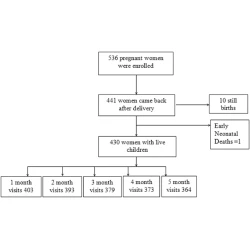
Methods:A cohort study was conducted from October 2013 to December 2015 among mother-infants’ pairs. Mothers with child delivery information (N=430) were followed and included in the analyses. We enrolled pregnant women who were in their third trimesters and interviewed them with the help of questionnaires at enrollment, delivery, 7 days and thereafter monthly up to nine months after delivery. At each visit after delivery, information on breastfeeding using the two methods (24 hours recall and recall-since-birth) was collected.
Results:The prevalence of EBF dropped from one month to six months when using both the 24 hours recall and the recall since birth methods, but at different rates. At six months, 24.2% of the mothers practiced EBF when measured with the recall since birth method, compared to 38.8% when measured with the 24 hour recall. Predictors of EBF were also different. When using the recall since birth method, women who had received counseling on infant feeding had increased odds of practicing EBF compared to those who did not receive counseling, [AOR=2.3; 95% CI (1.2, 3.7)]. When using 24 hours recall, women who were unemployed had increased odds of practicing EBF compared to those who were employed [AOR=1.5;95% CI(1.1,2.5)], and women aged 35 - 49 years had decreased odds of practicing EBF compared to younger women[AOR=0.28; 95 % CI(0.1,0.7)].
Conclusions and Global Health Implications:The two methods for EBF give substantially different results, both in the prevalence of EBF and factors associated with EBF. The higher EBF obtained with 24 hours recall represents an overestimation and thereby an overly positive picture of the situation.
Downloads
Similar Articles
- Amol Jamkhande, Bhagyashree P. Agre, Neelam Gavali, Anjali Rajesh Gaikwad, Sanpreet Singh Sachdev, Association Between Maternal Periodontitis and Preterm Low Birth Weight in Indian Populations: A Literature Review , Vol. 15 (2026): International Journal of Maternal and Child Health and AIDS
- Modupe Rebekah Akinyinka, Foluke Adenike Olatona, Esther Oluwakemi Oluwole, Breastfeeding Knowledge and Practices among Mothers of Children under 2 Years of Age Living in a Military Barrack in Southwest Nigeria , Vol. 5 No. 1 (2016): International Journal of Maternal and Child Health and AIDS
- Romuladus E. Azuine, Janna Murray, Noor Alsafi, Gopal K. Singh, Exclusive Breastfeeding and Under-Five Mortality, 2006-2014: A Cross-National Analysis of 57 Low- and-Middle Income Countries , Vol. 4 No. 1 (2015): International Journal of Maternal and Child Health and AIDS
- Kolawole A. Fasakin, Christopher T. Omisakin, Idowu O. Adebara, Wasiu A. Ajetunmobi, Adebayo A. Adeniyi, Ayodele J. Esan, Olufunke B. Bolaji, Oluwafemi D. Ajayi, Abayomi J. Afe, Assessment of PMTCT Success Rates Based on Antiretroviral Interventions and Feeding Options: A Prospective Cohort Study , Vol. 7 No. 2 (2018): International Journal of Maternal and Child Health and AIDS
- Innocent Anayochukwu Ugwu, Calistus Obiora Nevo, Malachy Nwaeze Ezenwaeze, Antenatal Care Utilization and Delivery Location: Evidence from Postpartum Women in Enugu, South East Nigeria , Vol. 15 (2026): International Journal of Maternal and Child Health and AIDS
- Charles Chibuisi Ehiemere, Ishaku Adamu Akyala, Bisayo Adetuyi Ogundipe, Chukwuebuka Clement Nri-Ezedi, Peter Joseph Anzaku, Waryit Esther Yonah, Efe Mary Imokhai, Isaac Onyebuchi Okohu, Idowu Olapemi Makinde, Ngozi Miriam Chimzobam-Nnalue, Beyond Access: Behavior Change and Gendered Realities in the Adoption of Digital Health Tools for Maternal, Newborn, and Child Health in Nigeria , Vol. 15 (2026): International Journal of Maternal and Child Health and AIDS
- Akinyi E. Imbo, Elizabeth K. Mbuthia, Douglas N. Ngotho, Determinants of Neonatal Mortality in Kenya: Evidence from the Kenya Demographic and Health Survey 2014 , Vol. 10 No. 2 (2021): International Journal of Maternal and Child Health and AIDS
- Océane J. Parker, Duc Minh Duong, Thuy Thu Nguyen, Vui Thi Le, Utilization of Sexual and Reproductive Healthcare Services Among Young Women in Two Districts of Hanoi, Vietnam , Vol. 15 (2026): International Journal of Maternal and Child Health and AIDS
- Comfort Z. Olorunsaiye, A-Mac Harris, Korede K. Yusuf, Characteristics of Early Newborn Care: A Descriptive Analysis of Recent Births in Nigeria , Vol. 9 No. 1 (2020): International Journal of Maternal and Child Health and AIDS
- Maria Vigil-Mallette, Daryle Pickens, Julliet Ogu, Deepa Dongarwar, Elizabeth Onugha, Hamisu M Salihu, Fifth Annual Summer Research Summit on Health Equity Organized by the Center of Excellence in Health Equity, Training and Research, Baylor College of Medicine, Houston, Texas 77030, USA on May 17, 2022 , Vol. 11 No. S2 (2022): International Journal of Maternal and Child Health and AIDS
You may also start an advanced similarity search for this article.
Published
How to Cite
Issue
Section
License
Copyright © 2019 Tamara H. Hussein, Melina Mgongo, Jacqueline G. Uriyo, Damian J. Damian, Babill Stray-Pedersen, Sia E. Msuya, Margareta Wandel. Published by Global Health and Education Projects, Inc., USA.

This is an open-access article distributed under the terms of the Creative Commons Attribution-NonCommercial-ShareAlike 4.0 International License , which permits others to remix, transform, and build upon the work non-commercially, provided the original author is credited and the new creations are licensed under the same terms.