
Determinants of Under-Five Mortality in Rural Empowered Action Group States in India: An Application of Cox Frailty Model
DOI:
https://doi.org/10.21106/ijma.9Keywords:
- Empowered Action Group States,
- Under-five mortality,
- National Family Health Survey,
- Frailty model,
- Unobserved familial effect,
- Programmable determinants,
- India
Abstract
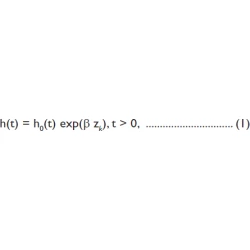
Objectives : In India there has been a decline in overall under-five mortality, with some states still showing very high mortality rates. It is argued that there is family clustering in mortality among children aged <5 years. We explored the effects of programmable (proximate) determinants on under-five mortality by accounting for family-level clustering and adjusting for background variables using Cox frailty model in rural Empowered Action Group states (EAG) in India and compared results with standard models.
Methods: Analysis included 13,785 live births that occurred five years preceding the National Family Health Survey-3 (2005-06). The Cox frailty model and the traditional Cox proportional hazards models were used.
Results: The Cox frailty model showed that mother's age at birth, place of delivery, sex of the baby, composite variable of birth order and birth interval, baby size at birth, and breastfeeding were significant determinants of under- five mortality, after adjusting for the familial frailty effect. The hazard ratio was 1.41 (95% CI=I.I4-I.75) for children born to mothers aged 12-19 years compared to mothers aged 20-30 years, 1.42 (95% CI=I.I2-I.79) for small-sized than average-sized babies at birth, and I02 (95% CI=8I-I28) for non-breastfed than breastfed babies. Children had significantly lower mortality risks in the richest than poorest wealth quintile. The familial frailty effect was 2.86 in the rural EAG states. The hazard ratios for the determinants in all the three models were similar except the death of a previous child variable in the Cox frailty model, which had the highest R2 and lowest log-likelihood.
Conclusions and Public Health Implications: While planning for the child survival program in rural EAG states, parental competence which explains the unobserved familial effect needs to be considered along with significant programmable determinants. The frailty models that provide statistically valid estimates of the covariate effects are recommended, when observations are correlated.
Downloads
Similar Articles
- Charles Chibuisi Ehiemere, Ishaku Adamu Akyala, Bisayo Adetuyi Ogundipe, Chukwuebuka Clement Nri-Ezedi, Peter Joseph Anzaku, Waryit Esther Yonah, Efe Mary Imokhai, Isaac Onyebuchi Okohu, Idowu Olapemi Makinde, Ngozi Miriam Chimzobam-Nnalue, Beyond Access: Behavior Change and Gendered Realities in the Adoption of Digital Health Tools for Maternal, Newborn, and Child Health in Nigeria , Vol. 15 (2026): International Journal of Maternal and Child Health and AIDS
- Maria Vigil-Mallette, Daryle Pickens, Julliet Ogu, Deepa Dongarwar, Elizabeth Onugha, Hamisu M Salihu, Fifth Annual Summer Research Summit on Health Equity Organized by the Center of Excellence in Health Equity, Training and Research, Baylor College of Medicine, Houston, Texas 77030, USA on May 17, 2022 , Vol. 11 No. S2 (2022): International Journal of Maternal and Child Health and AIDS
- Amol Jamkhande, Bhagyashree P. Agre, Neelam Gavali, Anjali Rajesh Gaikwad, Sanpreet Singh Sachdev, Association Between Maternal Periodontitis and Preterm Low Birth Weight in Indian Populations: A Literature Review , Vol. 15 (2026): International Journal of Maternal and Child Health and AIDS
- Faith Iretioluwa Olaniyi, Ayodele Ebenezer Owolabi, Gideon Temitope Olowe, Ololade Daniella Olunloyo, Eric Anuoluwapo Ogunleye, Ifeoluwapo Oluwafunke Kolawole, Perception, Pattern of Use, and Determinants of Family Planning Uptake Among Women of Childbearing Age in Ibadan, South West Nigeria , Vol. 15 (2026): International Journal of Maternal and Child Health and AIDS
- Gopal K. Singh, Gem P. Daus, Michelle Allender, Christine T. Ramey, Elijah K. Martin, Chrisp Perry, Andrew A. De Los Reyes, Ivy P. Vedamuthu, Social Determinants of Health in the United States: Addressing Major Health Inequality Trends for the Nation, 1935-2016 , Vol. 6 No. 2 (2017): International Journal of Maternal and Child Health and AIDS
- Margaret Omowaleola Akinwaare, Jonah Musa, Chizoma Millicent Ndikom, Determinants of Digitalized Antenatal Education Use among Pregnant Women Living with Human Immunodeficiency Virus in Nigeria , Vol. 15 (2026): International Journal of Maternal and Child Health and AIDS
- Océane J. Parker, Duc Minh Duong, Thuy Thu Nguyen, Vui Thi Le, Utilization of Sexual and Reproductive Healthcare Services Among Young Women in Two Districts of Hanoi, Vietnam , Vol. 15 (2026): International Journal of Maternal and Child Health and AIDS
- Deepa Dongarwar, Toi B. Harris, Hamisu M. Salihu, Fourth Annual Summer Research Summit on Health Equity Organized by the Center of Excellence in Health Equity, Training and Research, Baylor College of Medicine, Houston, Texas 77030, USA on May 20, 2021 , Vol. 10 No. S3 (2021): International Journal of Maternal and Child Health and AIDS
- Gopal K. Singh, Jihong Liu, Health Improvements Have Been More Rapid and Widespread in China than in India: A Comparative Analysis of Health and Socioeconomic Trends from 1960 to 2011 , Vol. 1 No. 1 (2012): International Journal of Maternal and Child Health and AIDS
- Elizabeth Armstrong-Mensah, Damilola Dada, Amber Bowers, Aruba Muhammad, Chisom Nnoli, Geographic, Health Care Access, Racial Discrimination, and Socioeconomic Determinants of Maternal Mortality in Georgia, United States , Vol. 10 No. 2 (2021): International Journal of Maternal and Child Health and AIDS
You may also start an advanced similarity search for this article.
Published
How to Cite
Issue
Section
License
Copyright © 2016 Kalaivani Mani, Sada Nand Dwivedi, Ravindra Mohan Pandey. Published by Global Health and Education Projects, Inc., USA.

This is an open-access article distributed under the terms of the Creative Commons Attribution-NonCommercial-ShareAlike 4.0 International License , which permits others to remix, transform, and build upon the work non-commercially, provided the original author is credited and the new creations are licensed under the same terms.