
Impact of Maternal Viral Suppression on Growth Patterns for HIV-Exposed Uninfected Infants in Kenya
DOI:
https://doi.org/10.25259/IJMA_656Keywords:
- Viral Suppression,
- Low- and Middle-Income Countries,
- Key and Vulnerable Populations,
- Viral Load Monitoring,
- Kenya
Abstract
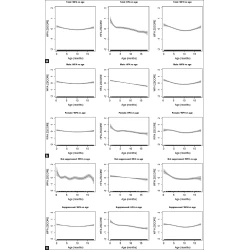
Background and Objective: Children born to mothers living with human immunodeficiency virus (HIV) are at risk for poor health outcomes but data characterizing these associations are limited. Our objective was to determine the impact of maternal viral suppression on growth patterns and malnutrition for infants who are HIVexposed but uninfected (HEU). Methods: We conducted a retrospective cohort analysis of clinical data for infants who were HEU and their mothers (September 2015 – March 2019) in Kenya. Infants were stratified based on maternal viral suppression status (≥ or < 0.05). Male infants had higher adjusted odds for stunted status, and as children aged, they had slightly increased odds of becoming underweight or stunted. Maternal viral suppression and timing of maternal antiretroviral therapy initiation in relation to the prevention of vertical transmission (PVT) enrollment did not significantly affect malnutrition indicators. Conclusion and Global Health Implications: Maternal viral suppression status was not associated with increased odds of more severe malnutrition indicators in children who were HEU. However, overall growth patterns over time, measured by z-scores of growth indicators, did differ based on maternal viral suppression status, and to a lesser degree, by gender.
Downloads
Most read articles by the same author(s)
- John Humphrey, James G Carlucci, Esther Karen Wanjama, Violet Naanyu, Lindah Muli, Joy Marsha Alera, Edwin Were, Alan McGuire, Winstone Nyandiko, Gregory Zimet, Julia Jerono Songok, Kara Wools Kaloustian, Implementing WHO Differentiated Service Delivery Model for Pregnant and Breastfeeding Women and Infants Living with HIV: Insights from Kenyan Healthcare Providers , International Journal of Maternal and Child Health and AIDS: Vol. 14 No. Continuous (2025): International Journal of Maternal and Child Health and AIDS
- Michelle Berlacher, Timothy Mercer, Edith O. Apondi, Winfred Mwangi, Edwin Were, Megan S. McHenry, Integrating Prevention of Mother-to-Child Transmission of HIV Care into General Maternal Child Health Care in Western Kenya , International Journal of Maternal and Child Health and AIDS: Vol. 10 No. 1 (2021): International Journal of Maternal and Child Health and AIDS
- John Humphrey, Esther Wanjama, James G. Carlucci, Violet Naanyu, Lindah Muli, Edwin Were, Alan McGuire, Winstone M. Nyandiko, Julia Songok, Gregory Zimet, Kara Wools-Kaloustian, Understanding Women’s Preferences for Prevention of Mother-to-Child HIV Transmission Services in Kenya , International Journal of Maternal and Child Health and AIDS: Vol. 13 No. Continuous (2024): International Journal of Maternal and Child Health and AIDS
Similar Articles
- Amol Jamkhande, Bhagyashree P. Agre, Neelam Gavali, Anjali Rajesh Gaikwad, Sanpreet Singh Sachdev, Association Between Maternal Periodontitis and Preterm Low Birth Weight in Indian Populations: A Literature Review , Vol. 15 (2026): International Journal of Maternal and Child Health and AIDS
- Ahmad Abdulhadi, Nasiru Abdullahi, Ibrahim Yusuf, Basheer I. Waziri, Kasimu Mamuda , Husna F. Ibrahim, Khadija Muhammad, Maryam M. Ibrahim , Aisha A. Abdullahi, Hassan A. Murtala, Muhammad A. Abbas, Hamisu M. Salihu, A Systematic Review and Meta-analysis on Innovative Approaches in Tuberculosis Diagnosis: Challenges and Future Directions , Vol. 15 (2026): International Journal of Maternal and Child Health and AIDS
- Charles Chibuisi Ehiemere, Ishaku Adamu Akyala, Bisayo Adetuyi Ogundipe, Chukwuebuka Clement Nri-Ezedi, Peter Joseph Anzaku, Waryit Esther Yonah, Efe Mary Imokhai, Isaac Onyebuchi Okohu, Idowu Olapemi Makinde, Ngozi Miriam Chimzobam-Nnalue, Beyond Access: Behavior Change and Gendered Realities in the Adoption of Digital Health Tools for Maternal, Newborn, and Child Health in Nigeria , Vol. 15 (2026): International Journal of Maternal and Child Health and AIDS
- Agnes Napyo, James K Tumwine, David Mukunya, Josephine Tumuhamye, Anna Agnes Ojok Arach, Grace Ndeezi, Paul Waako, Thorkild Tylleskär, Detectable HIV-RNA Viral Load Among HIV-Infected Pregnant Women on Treatment in Northern Uganda , Vol. 9 No. 2 (2020): International Journal of Maternal and Child Health and AIDS
- Margaret Omowaleola Akinwaare, Jonah Musa, Chizoma Millicent Ndikom, Determinants of Digitalized Antenatal Education Use among Pregnant Women Living with Human Immunodeficiency Virus in Nigeria , Vol. 15 (2026): International Journal of Maternal and Child Health and AIDS
- Océane J. Parker, Duc Minh Duong, Thuy Thu Nguyen, Vui Thi Le, Utilization of Sexual and Reproductive Healthcare Services Among Young Women in Two Districts of Hanoi, Vietnam , Vol. 15 (2026): International Journal of Maternal and Child Health and AIDS
- Akinyi E. Imbo, Elizabeth K. Mbuthia, Douglas N. Ngotho, Determinants of Neonatal Mortality in Kenya: Evidence from the Kenya Demographic and Health Survey 2014 , Vol. 10 No. 2 (2021): International Journal of Maternal and Child Health and AIDS
- Wah Wah Myint, Human Immunodeficiency Virus (HIV) Knowledge and Stigma: Findings from a Cross-sectional Survey , Vol. 15 (2026): International Journal of Maternal and Child Health and AIDS
- Gopal K. Singh, Anagha Lokhande, Romuladus E. Azuine, Global Inequalities in Youth Mortality, 2007-2012 , Vol. 3 No. 1 (2015): International Journal of Maternal and Child Health and AIDS
- Mamour Gueye, Mame D. Ndiaye-Gueye, Serigne M. Kane-Gueye, Omar Gassama, Moussa Diallo, Jean C. Moreau, Diagnosis, Treatment and Outcome of Gestational Trophoblastic Neoplasia in a Low Resource Income Country , Vol. 5 No. 2 (2016): International Journal of Maternal and Child Health and AIDS
You may also start an advanced similarity search for this article.
Published
How to Cite
Issue
Section
License
Copyright © 2024 Katherine Magerko, John Humphrey, Julia Songok, Beverly Musick, Joy Marsha Alera, Bett Kipchumba, Wycliffe Kosgei, Winfred Mwangi, Ziyi Yang, Kara Wools-Kaloustian, Megan McHenry. Published by Global Health and Education Projects, Inc., USA.

This is an open-access article distributed under the terms of the Creative Commons Attribution-NonCommercial-ShareAlike 4.0 International License , which permits others to remix, transform, and build upon the work non-commercially, provided the original author is credited and the new creations are licensed under the same terms.