
House Ball Community Leaders’ Perceptions of HIV and HIV Vaccine Research
DOI:
https://doi.org/10.21106/ijma.331Keywords:
- LGBT,
- HIV,
- MSM,
- Transgender populations,
- MSM/Transgender psychosocial,
- HIV risk factors,
- HIV and black/Latino MSM,
- Syndemic factors,
- MSM/Transgender communities
Abstract
Background or Objectives: Worldwide, men who have sex with men (MSM) and Transgender persons are vulnerable to psychosocial factors associated with high risk for HIV, and suffer disproportionately high rates of HIV/AIDS. In the United States (US), the House Ball Community (HBC) is a social network comprised predominantly of Black and Hispanic MSM and Transgender persons who reside in communal settings. This study explores Western NewYork HBC leaders’ perceptions of HIV in their communities and their knowledge of HIV prevention strategies, including HIV vaccine trials.
Methods: The project was conducted using an exploratory approach based on the principles of Community-Based Participatory Research (CBPR) methods. An HIV behavioral risk assessment provided descriptive data, while qualitative measures explored psychosocial and behavioral factors.
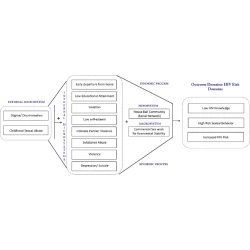
Results: Behavioral assessments indicated high levels of risky sexual behaviors and experiences of violence. Interviews with 14 HBC leaders revealed that knowledge of HIV and local HIV vaccines trials was limited. Barriers to HIV knowledge included fear of peer judgment, having inaccurate information, and lack of formal education. Experiencing violence was identified as barrier to positive health behavior. Nevertheless, the HBC was described as a safe and creative space for marginalized MSM and Transgender youth.
Conclusion and Global Health Implications: Findings suggest that the interrelation between health problems and social context amplify HIV risk in the HBC. The organizational structure and resources of the HBC, and MSM/Transgender communities worldwide can be instrumental in informing interventions to address HIV-related risk behaviors and create appropriate recruitment tools to ensure their representation in HIV research.
Downloads
Similar Articles
- Hamisu M. Salihu, Ronee E. Wilson, Lindsey M. King, Phillip J. Marty, Valerie E. Whiteman, Socio-ecological Model as a Framework for Overcoming Barriers and Challenges in Randomized Control Trials in Minority and Underserved Communities , Vol. 3 No. 1 (2015): International Journal of Maternal and Child Health and AIDS
- Paul Kiondo, Annettee Nakimuli, Samuel Ononge, Julius N. Wandabwa, Milton W. Musaba, Predictors of Intrapartum Stillbirths among Women Delivering at Mulago Hospital, Kampala, Uganda , Vol. 10 No. 2 (2021): International Journal of Maternal and Child Health and AIDS
- Hamisu M. Salihu, Global Reduction in HIV-related Maternal Mortality: ART as a Key Strategy , Vol. 4 No. 2 (2015): International Journal of Maternal and Child Health and AIDS
- Gopal K. Singh, Mohammad Siahpush, Romuladus E. Azuine, Shanita D. Williams, Increasing Area Deprivation and Socioeconomic Inequalities in Heart Disease, Stroke, and Cardiovascular Disease Mortality Among Working Age Populations, United States, 1969-2011 , Vol. 3 No. 2 (2015): International Journal of Maternal and Child Health and AIDS
- Gopal K. Singh, Anagha Lokhande, Romuladus E. Azuine, Global Inequalities in Youth Mortality, 2007-2012 , Vol. 3 No. 1 (2015): International Journal of Maternal and Child Health and AIDS
- Nazrul Islam Mondal, Monzur Morshad Nasir Ullah, Nuruzzaman Khan, Mohammad Zamirul Islam, Nurul Islam, Sabiha Yasmin Moni, Nazrul Hoque, Mashiur Rahman, Socioeconomic and Demographic Disparities in Knowledge of Reproductive Healthcare among Female University Students in Bangladesh , Vol. 4 No. 2 (2015): International Journal of Maternal and Child Health and AIDS
- Devon Madelyn Rupley, Deepa Dongarwar, Hamisu M. Salihu, Allison M. Janda, Rachel Pope, Healthcare Access as a Risk-Marker for Obstetric Vesicovaginal Fistula in Malawi , Vol. 9 No. 1 (2020): International Journal of Maternal and Child Health and AIDS
- Rasaki O Shittu, Baba A Issa, Ganiyu T Olanrewaju, Abdulraheem O Mahmoud, Louis O Odeigah, Abdullateef G Sule, Social Determinants of Depression: Social Cohesion, Negative Life Events, and Depression Among People Living with HIV/Aids in Nigeria, West Africa , Vol. 2 No. 2 (2014): International Journal of Maternal and Child Health and AIDS
- Muhammad Adamu Abbas, Hassan Adam Murtala, Fauziyya S. Abdullahi, Abubakar L. Yusuf, Aisha Adam Abdullahi, Amina Aminu, Aisha Mustapha, Eknath Naik, Hamisu M. Salihu, Intent to Receive Human Papillomavirus Vaccination among School-going Pre-teens and Adolescent Girls , Vol. 14 No. Continuous (2025): International Journal of Maternal and Child Health and AIDS
- Lucien Honoré Etame Sone, Roger Ahouga Voufo, Henriette Thérèse Dimodi, Michel Kengne, Cédric Gueguim, Nnanga Ngah, Julius Oben, Judith Laure Ngondi, Prevalence and Identification of Serum Markers Associated with Vertical Transmission of Hepatitis B in Pregnant Women in Yaounde, Cameroon , Vol. 6 No. 1 (2017): International Journal of Maternal and Child Health and AIDS
<< < 7 8 9 10 11 12 13 14 15 16 > >>
You may also start an advanced similarity search for this article.
Published
How to Cite
Issue
Section
License
Copyright © 2020 Amina P. Alio, Candace Sibley, Halimah S. Ouedraogo, Stephaun E. Wallace, Steven Wakefield, Damon L. Humes, Sheldon D. Fields, Michael C. Keefer. Published by Global Health and Education Projects, Inc., USA.

This is an open-access article distributed under the terms of the Creative Commons Attribution-NonCommercial-ShareAlike 4.0 International License , which permits others to remix, transform, and build upon the work non-commercially, provided the original author is credited and the new creations are licensed under the same terms.