
House Ball Community Leaders’ Perceptions of HIV and HIV Vaccine Research
DOI:
https://doi.org/10.21106/ijma.331Keywords:
- LGBT,
- HIV,
- MSM,
- Transgender populations,
- MSM/Transgender psychosocial,
- HIV risk factors,
- HIV and black/Latino MSM,
- Syndemic factors,
- MSM/Transgender communities
Abstract
Background or Objectives: Worldwide, men who have sex with men (MSM) and Transgender persons are vulnerable to psychosocial factors associated with high risk for HIV, and suffer disproportionately high rates of HIV/AIDS. In the United States (US), the House Ball Community (HBC) is a social network comprised predominantly of Black and Hispanic MSM and Transgender persons who reside in communal settings. This study explores Western NewYork HBC leaders’ perceptions of HIV in their communities and their knowledge of HIV prevention strategies, including HIV vaccine trials.
Methods: The project was conducted using an exploratory approach based on the principles of Community-Based Participatory Research (CBPR) methods. An HIV behavioral risk assessment provided descriptive data, while qualitative measures explored psychosocial and behavioral factors.
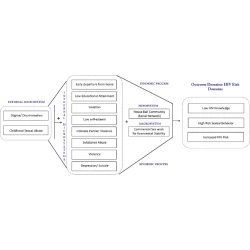
Results: Behavioral assessments indicated high levels of risky sexual behaviors and experiences of violence. Interviews with 14 HBC leaders revealed that knowledge of HIV and local HIV vaccines trials was limited. Barriers to HIV knowledge included fear of peer judgment, having inaccurate information, and lack of formal education. Experiencing violence was identified as barrier to positive health behavior. Nevertheless, the HBC was described as a safe and creative space for marginalized MSM and Transgender youth.
Conclusion and Global Health Implications: Findings suggest that the interrelation between health problems and social context amplify HIV risk in the HBC. The organizational structure and resources of the HBC, and MSM/Transgender communities worldwide can be instrumental in informing interventions to address HIV-related risk behaviors and create appropriate recruitment tools to ensure their representation in HIV research.
Downloads
Similar Articles
- Eshetu Bekele Worku, Selamawit Alemu Woldesenbet, Factors that Influence Teenage Antenatal Care Utilization in John Taolo Gaetsewe (JTG) District of Northern Cape Province, South Africa: Underscoring the Need for Tackling Social Determinants of Health , Vol. 5 No. 2 (2016): International Journal of Maternal and Child Health and AIDS
- Chiluba Kabalika, David Mulenga, Mazyanga Lucy Mazaba, Seter Siziya, Acceptance of Cervical Cancer Screening and its Correlates Among Women of a Peri-Urban High-Density Residential Area in Ndola, Zambia , Vol. 7 No. 1 (2018): International Journal of Maternal and Child Health and AIDS
- Jahron P Marriott, José G Pérez-Ramos Pérez-Ramos, Song Hoa Choi, Gersandre Gonsalves-Domond, Beatrice Aladin, Monica Barbosu, Cheryl Smith, Timothy Dye, Assessing Training Interests of Latin American and Caribbean Immigrant-serving HIV/AIDS, STD, and Hepatitis C Providers in New York State, United States , Vol. 9 No. 2 (2020): International Journal of Maternal and Child Health and AIDS
- Gopal K. Singh, Romuladus E. Azuine, Mohammad Siahpush, Shanita D. Williams, Widening Geographical Disparities in Cardiovascular Disease Mortality in the United States, 1969-2011 , Vol. 3 No. 2 (2015): International Journal of Maternal and Child Health and AIDS
- Deepa Dongarwar, Morgan Lee, Christo Manikkuttiyil, Hamisu M. Salihu, Association Between Social Determinants of Health Issues and Maternal Obesity Among American Racial/Ethnic Groups , Vol. 12 No. 1 (2023): International Journal of Maternal and Child Health and AIDS
- Faith Iretioluwa Olaniyi, Ayodele Ebenezer Owolabi, Gideon Temitope Olowe, Ololade Daniella Olunloyo, Eric Anuoluwapo Ogunleye, Ifeoluwapo Oluwafunke Kolawole, Perception, Pattern of Use, and Determinants of Family Planning Uptake Among Women of Childbearing Age in Ibadan, South West Nigeria , Vol. 15 (2026): International Journal of Maternal and Child Health and AIDS
- María Isabel Roldós, Phaedra Corso, Justin Ingels, How much are Ecuadorians Willing to Pay to Reduce Maternal Mortality? Results from a Pilot Study on Contingent Valuation , Vol. 6 No. 1 (2017): International Journal of Maternal and Child Health and AIDS
- Charles Kouanfack, Fala Bede, Claude Ngwayu Nkfusai, Emerson Wepngong, Mbinkar Adeline Venyuy, Chombong Hubert, Denise Movuh Sam, Samuel Nambile Cumber, Retention in HIV/AIDS Management Services: is it Really Poor? The Case of Yaounde Central Hospital in Cameroon , Vol. 9 No. 2 (2020): International Journal of Maternal and Child Health and AIDS
- Jaleah D. Rutledge, Alexis Kiyanda, Christina Jean-Louis, Elizabeth Raskin, Joanne Gaillard, Morgan Maxwell, Tynetta Smith, Trace Kershaw, Jasmine Abrams, Recommendations for Integrating Traditional Birth Attendants to Improve Maternal Health Outcomes in Low- and Middle-Income Countries , Vol. 13 No. Continuous (2024): International Journal of Maternal and Child Health and AIDS
- Hasiya Tijjani Ismail, Taiwo G Amole, Fatima I Tsiga-Ahmed, Rabiu I Jalo, Aishatu L Adamu, Mahmoud U Sani, Hamisu M Salihu, William Wester, Muktar H Aliyu, Factors Associated with Utilization of Sexual and Reproductive Health Services among Married Adolescent Girls in Kano, Northern Nigeria , Vol. 13 No. Continuous (2024): International Journal of Maternal and Child Health and AIDS
<< < 8 9 10 11 12 13 14 15 16 17 > >>
You may also start an advanced similarity search for this article.
Published
How to Cite
Issue
Section
License
Copyright © 2020 Amina P. Alio, Candace Sibley, Halimah S. Ouedraogo, Stephaun E. Wallace, Steven Wakefield, Damon L. Humes, Sheldon D. Fields, Michael C. Keefer. Published by Global Health and Education Projects, Inc., USA.

This is an open-access article distributed under the terms of the Creative Commons Attribution-NonCommercial-ShareAlike 4.0 International License , which permits others to remix, transform, and build upon the work non-commercially, provided the original author is credited and the new creations are licensed under the same terms.