
Caffeine Intake During Pregnancy and Risk of Childhood Obesity: A Systematic Review
DOI:
https://doi.org/10.21106/ijma.387Keywords:
- Prenatal,
- Caffeine intake,
- Pregnancy,
- Childhood,
- Obesity,
- Overweight,
- Serum paraxanthine,
- Systematic review
Abstract
Objective: This paper evaluates the association between caffeine consumption during pregnancy and overweight or obesity in the offspring.
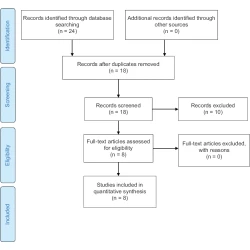
Methods: Following the Preferred Reporting Items for Systematic Reviews and Meta-Analyses (PRISMA) guidelines, a literature search was conducted using MedLine, PubMed, CINAHL-Plus and Google Scholar databases. Inclusion criteria were cohort studies on participants with live singleton births at ≥28 weeks gestation who had consumed caffeine during pregnancy. Included were studies reporting both measurement of maternal caffeine intake and offspring anthropometric measurements. Studies reporting serum paraxanthine, a measurement of caffeine intake, were also included.
Results: After final elimination, there were eight studies meeting our inclusion criteria. From these studies, we deduced that caffeine intake during pregnancy between 50 mg and <150 mg/day was associated with increased risk of overweight and obesity by excess fat deposition or increased weight, and elevated BMI per International Obesity Task Force (IOTF) criteria using a reference population. The majority of studies reported the strongest association with maternal caffeine intake during pregnancy and overweight and obesity risk beginning at ≥300 mg/day.
Conclusions and Global Health Implication: The risk of childhood overweight or obesity was associated with caffeine consumption at 50 mg/day during pregnancy with a stronger association at intakes ≥300 mg/day and higher. The current recommendation of <200 mg/day of caffeine during pregnancy is likely associated with lower risk of overweight or obesity in offspring but avoidance of the substance is recommended.
Downloads
Similar Articles
- Léonel Philibert, Judith Lapierre, Vulnerabilities and Strengths of Pregnant Haitian Adolescents and their Families During Transition to Motherhood , Vol. 11 No. 2 (2022): International Journal of Maternal and Child Health and AIDS
- Mary Stokes, Amber Olson, Mtisunge Chan’gombe, Bakari Rajab, Rachel Pope, Carolyn Mwalwanda, Judy Levison, Isabel Janmey, Reinventing the Pregnancy Wheel to Improve Pregnancy Dating and Antenatal Care Visits: A Pilot Randomized Trial in Malawi , Vol. 10 No. 1 (2021): International Journal of Maternal and Child Health and AIDS
- Maxwell P. Dapar, Benjamin N. Joseph, Rotkangmwa C. Okunlola, Josiah Mutihir, Moses P. Chingle, Mathilda E. Banwat, Pregnancy and Birth Outcomes Among Women on Antiretroviral Therapy: A Long-term Retrospective Analysis of Data from a Major Tertiary Hospital in North Central Nigeria , Vol. 10 No. 2 (2021): International Journal of Maternal and Child Health and AIDS
- Tsi N Njim, Late Pregnancy Outcomes among Women who Attended and Women who did not Attend First Trimester Antenatal Care Visits in a Suburban Regional Hospital in Cameroon , Vol. 5 No. 1 (2016): International Journal of Maternal and Child Health and AIDS
- Foluke A. Olatona, Oyetola O. Oloruntola, Oluwafunmilayo F. Adeniyi, Eyitope O. Amu, Association Between Breakfast Consumption and Anthropometrically Determined Nutritional Status of Secondary-School Adolescents in Lagos, Southwest Nigeria , Vol. 11 No. 1 (2022): International Journal of Maternal and Child Health and AIDS
- Jaleah D. Rutledge, Alexis Kiyanda, Christina Jean-Louis, Elizabeth Raskin, Joanne Gaillard, Morgan Maxwell, Tynetta Smith, Trace Kershaw, Jasmine Abrams, Recommendations for Integrating Traditional Birth Attendants to Improve Maternal Health Outcomes in Low- and Middle-Income Countries , Vol. 13 No. Continuous (2024): International Journal of Maternal and Child Health and AIDS
- Vatsla Dadhwal, Aparna Sharma, Kavita Khoiwal, Dipika Deka, Plaboni Sarkar, P. Vanamail, Pregnancy Outcomes in HIV-Infected Women: Experience from a Tertiary Care Center in India , Vol. 6 No. 1 (2017): International Journal of Maternal and Child Health and AIDS
- Elizabeth Armstrong, Priya Srinivasan, Dawood Azeemy, Fayja Habib, Ernest Alema-Mensah, COVID-19 Stressors and Maternal Mental Health in Georgia, United States: Sources, Effects, and Recommendations , Vol. 14 No. Continuous (2025): International Journal of Maternal and Child Health and AIDS
- Kelsey A. Stewart, Sergio M. Navarro, Sriharsha Kambala, Gail Tan, Revanth Poondla, Sara Lederman, Kelli Barbour, Chris Lavy, Trends in Ultrasound Use in Low and Middle Income Countries: A Systematic Review , Vol. 9 No. 1 (2020): International Journal of Maternal and Child Health and AIDS
- Nkechi Martina Odogwu, Chinedum A. C. Onebunne, Oladapo O. Olayemi, Akinyinka O. Omigbodun, Protocol for a Longitudinal Analysis of the Vaginal Microbiome from a Pregnant Cohort of African Women in Nigeria , Vol. 9 No. 2 (2020): International Journal of Maternal and Child Health and AIDS
<< < 1 2 3 4 5 6 7 8 9 10 > >>
You may also start an advanced similarity search for this article.
Published
How to Cite
Issue
Section
License
Copyright © 2020 Natalie C Frayer, Yeonsoo Kim. Published by Global Health and Education Projects, Inc., USA.

This is an open-access article distributed under the terms of the Creative Commons Attribution-NonCommercial-ShareAlike 4.0 International License , which permits others to remix, transform, and build upon the work non-commercially, provided the original author is credited and the new creations are licensed under the same terms.