
Caffeine Intake During Pregnancy and Risk of Childhood Obesity: A Systematic Review
DOI:
https://doi.org/10.21106/ijma.387Keywords:
- Prenatal,
- Caffeine intake,
- Pregnancy,
- Childhood,
- Obesity,
- Overweight,
- Serum paraxanthine,
- Systematic review
Abstract
Objective: This paper evaluates the association between caffeine consumption during pregnancy and overweight or obesity in the offspring.
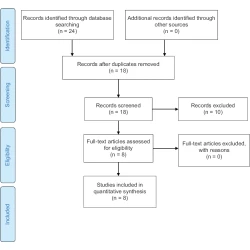
Methods: Following the Preferred Reporting Items for Systematic Reviews and Meta-Analyses (PRISMA) guidelines, a literature search was conducted using MedLine, PubMed, CINAHL-Plus and Google Scholar databases. Inclusion criteria were cohort studies on participants with live singleton births at ≥28 weeks gestation who had consumed caffeine during pregnancy. Included were studies reporting both measurement of maternal caffeine intake and offspring anthropometric measurements. Studies reporting serum paraxanthine, a measurement of caffeine intake, were also included.
Results: After final elimination, there were eight studies meeting our inclusion criteria. From these studies, we deduced that caffeine intake during pregnancy between 50 mg and <150 mg/day was associated with increased risk of overweight and obesity by excess fat deposition or increased weight, and elevated BMI per International Obesity Task Force (IOTF) criteria using a reference population. The majority of studies reported the strongest association with maternal caffeine intake during pregnancy and overweight and obesity risk beginning at ≥300 mg/day.
Conclusions and Global Health Implication: The risk of childhood overweight or obesity was associated with caffeine consumption at 50 mg/day during pregnancy with a stronger association at intakes ≥300 mg/day and higher. The current recommendation of <200 mg/day of caffeine during pregnancy is likely associated with lower risk of overweight or obesity in offspring but avoidance of the substance is recommended.
Downloads
Similar Articles
- Mehrete Girmay, Digital Health Divide: Opportunities for Reducing Health Disparities and Promoting Equitable Care for Maternal and Child Health Populations , Vol. 13 No. Continuous (2024): International Journal of Maternal and Child Health and AIDS
- Mohamed Najimudeen, Hana W. Jun Chen, Nurul Akmal Jamaluddin, Myo Hla Myint, Roy Rillera Marzo, Monkeypox in Pregnancy: Susceptibility, Maternal and Fetal Outcomes, and One Health Concept , Vol. 11 No. 2 (2022): International Journal of Maternal and Child Health and AIDS
- Faith Iretioluwa Olaniyi, Ayodele Ebenezer Owolabi, Gideon Temitope Olowe, Ololade Daniella Olunloyo, Eric Anuoluwapo Ogunleye, Ifeoluwapo Oluwafunke Kolawole, Perception, Pattern of Use, and Determinants of Family Planning Uptake Among Women of Childbearing Age in Ibadan, South West Nigeria , Vol. 15 (2026): International Journal of Maternal and Child Health and AIDS
- Gopal K. Singh, Isaac E. Kim, Mehrete Girmay, Chrisp Perry, Gem P. Daus, Ivy P. Vedamuthu, Andrew A. De Los Reyes, Christine T. Ramey, Elijah K. Martin, Michelle Allender, Opioid Epidemic in the United States: Empirical Trends, and A Literature Review of Social Determinants and Epidemiological, Pain Management, and Treatment Patterns , Vol. 8 No. 2 (2019): International Journal of Maternal and Child Health and AIDS
- Innocent Anayochukwu Ugwu, Calistus Obiora Nevo, Malachy Nwaeze Ezenwaeze, Antenatal Care Utilization and Delivery Location: Evidence from Postpartum Women in Enugu, South East Nigeria , Vol. 15 (2026): International Journal of Maternal and Child Health and AIDS
- John Humphrey, James G Carlucci, Esther Karen Wanjama, Violet Naanyu, Lindah Muli, Joy Marsha Alera, Edwin Were, Alan McGuire, Winstone Nyandiko, Gregory Zimet, Julia Jerono Songok, Kara Wools Kaloustian, Implementing WHO Differentiated Service Delivery Model for Pregnant and Breastfeeding Women and Infants Living with HIV: Insights from Kenyan Healthcare Providers , Vol. 14 No. Continuous (2025): International Journal of Maternal and Child Health and AIDS
- Jayati Kusari Basu, Lawrence Chauke, Cert Maternal Fetal Medicine, Terrance Magoro, Clinical Features and Outcomes of COVID-19 Infection among Pregnant Women in South Africa , Vol. 10 No. 2 (2021): International Journal of Maternal and Child Health and AIDS
- Wael Hafez, Sana Osman, Muneir Gador, Muhammad Aslam, Correlation Between Plasma Vitamin C Concentration and COVID-19 Outcomes among Patients Seen at a Major Hospital in the United Arab Emirates , Vol. 11 No. 2 (2022): International Journal of Maternal and Child Health and AIDS
- Mamour Gueye, Mame D. Ndiaye-Gueye, Serigne M. Kane-Gueye, Omar Gassama, Moussa Diallo, Jean C. Moreau, Diagnosis, Treatment and Outcome of Gestational Trophoblastic Neoplasia in a Low Resource Income Country , Vol. 5 No. 2 (2016): International Journal of Maternal and Child Health and AIDS
- Comfort Z. Olorunsaiye, Larissa R. Brunner Huber, Samira P. Ouedraogo, Interbirth Intervals of Immigrant and Refugee Women in the United States: A Cross-Sectional Study , Vol. 12 No. 1 (2023): International Journal of Maternal and Child Health and AIDS
<< < 2 3 4 5 6 7 8 9 10 11 > >>
You may also start an advanced similarity search for this article.
Published
How to Cite
Issue
Section
License
Copyright © 2020 Natalie C Frayer, Yeonsoo Kim. Published by Global Health and Education Projects, Inc., USA.

This is an open-access article distributed under the terms of the Creative Commons Attribution-NonCommercial-ShareAlike 4.0 International License , which permits others to remix, transform, and build upon the work non-commercially, provided the original author is credited and the new creations are licensed under the same terms.