
HIV Testing, Household and Reproductive Health Decision-Making: The Role of Women Autonomy in a Nationally Representative Study in Cambodia
DOI:
https://doi.org/10.25259/IJMA_36_2024Keywords:
- Cambodia,
- Decision-Making,
- HIV Testing,
- Personal Autonomy,
- Women’s Health
Abstract
Women’s autonomy plays a critical role in decision-making of health service use. This study aims to evaluate the relationship between Human Immunodeficiency Virus (HIV) testing and decision-making autonomy among Cambodian women aged 15–49.
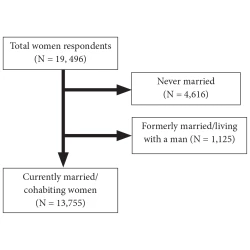
MethodsWe used data from the 2021–2022 Cambodia Demographic and Health Survey (DHS) and our sample consisted of currently married/cohabiting women aged 15–49 (N = 13,755). The outcome variable was “ever been tested for HIV.” Covariates were household decision-making and reproductive health decision-making scores, socio-demographic characteristics (age, place of residency, education, wealth quintiles, and employment status), and HIV knowledge (HIV self-test kits, drugs to prevent HIV in babies during pregnancy, antiretroviral [ARV] drugs, and pre-exposure prophylaxis).
ResultsSixty-one percent of studied women reported ever being tested for HIV. The logistic regression results revealed that women with a higher household decision-making score (aOR = 2.09, p < 0.001), reproductive health decision-making score (aOR = 1.72, p < 0.001), from 25 to 29 age groups (aOR = 2.21, p < 0.001), with a higher education (aOR = 1.96, p = 0.001), from the richest groups (aOR = 1.73, p < 0.001), had knowledge of HIV test kits but never get tested (aOR = 1.38, p = 0.035), heard of drugs to avoid HIV transmission to babies during pregnancy (aOR = 1.21, p < 0.001), and heard of ARV drugs (aOR = 1.28, p < 0.001) were more likely to get tested for HIV than their counterparts. Women living in rural areas (aOR = 0.56, p < 0.001) and those who had discriminatory attitudes (aOR = 0.76, p = < 0.001) were less likely to get HIV tests than those in urban areas and those without discrimination.
Conclusion and Global Health ImplicationsFindings revealed that greater autonomy is important for health care use, particularly HIV testing for women in Cambodia.
Downloads
Similar Articles
- Constantin Tchakounté, Céline N. Nkenfou, Thibau F. Tchouangueu, Nicole M. Ngoufack, Salomon B. Tchuandom, Olivier D. Ngono, Jules-Rogers Kuiate, Alexis Ndjolo, HIV Serodiscordance among Couples in Cameroon: Effects on Sexual and Reproductive Health , Vol. 9 No. 3 (2020): International Journal of Maternal and Child Health and AIDS
- John Humphrey, James G Carlucci, Esther Karen Wanjama, Violet Naanyu, Lindah Muli, Joy Marsha Alera, Edwin Were, Alan McGuire, Winstone Nyandiko, Gregory Zimet, Julia Jerono Songok, Kara Wools Kaloustian, Implementing WHO Differentiated Service Delivery Model for Pregnant and Breastfeeding Women and Infants Living with HIV: Insights from Kenyan Healthcare Providers , Vol. 14 No. Continuous (2025): International Journal of Maternal and Child Health and AIDS
- Ebenezer Ahenkan, Anastasia Asare-Bediako, Kingsley Adeoye Damilare, David Antwi-Agyei, Paul Atawuchugi, Frederick Osei-Owusu, Sarah Konadu Agyemang, Gifty Konadu, Richard Agyemang Opoku, Kofi Oduro Yeboah, Oumou Maiga-Ascofare, Eric Boakye-Gyasi, Newman Osafo, Prevalence and Predictors of Mother-to-Child Transmission of Human Immunodeficiency Virus (HIV) among HIV-exposed Infants , Vol. 14 No. Continuous (2025): International Journal of Maternal and Child Health and AIDS
- Jayati Kusari Basu, Lawrence Chauke, Cert Maternal Fetal Medicine, Terrance Magoro, Clinical Features and Outcomes of COVID-19 Infection among Pregnant Women in South Africa , Vol. 10 No. 2 (2021): International Journal of Maternal and Child Health and AIDS
- Johnbull Egharevba, Jennifer Pharr, Brian van Wyk, Echezona Ezeanolue, Factors Influencing the Choice of Child Delivery Location among Women Attending Antenatal Care Services and Immunization Clinic in Southeastern Nigeria , Vol. 6 No. 1 (2017): International Journal of Maternal and Child Health and AIDS
- Nnennaya N. Kalu-Umeh, Mohammed N. Sambo N. Sambo, Suleiman H. Idris, Abubakar M. Kurfi, Costs and Patterns of Financing Maternal Health Care Services in Rural Communities in Northern Nigeria: Evidence for Designing National Fee Exemption Policy , Vol. 2 No. 1 (2013): International Journal of Maternal and Child Health and AIDS
- Michelle Meyer, Molly Elmer-DeWitt, Cinthia Blat, Starley B Shade, Ijaa Kapule, Elizabeth Bukusi, Craig R Cohen, Lisa Abuogi, Evaluation and Utility of a Family Information Table to Identify and Test Children at Risk for HIV in Kenya , Vol. 2 No. 2 (2014): International Journal of Maternal and Child Health and AIDS
- Ashu Michael Agbor, Loyick Nguafack Zencha, Henri Essome, Che Bleck Ndikum, Pascal Foumane, Oral Health Status of Pregnant Women Attending Antenatal Clinic in Cameroon , Vol. 14 No. Continuous (2025): International Journal of Maternal and Child Health and AIDS
- Armand Duclaire Kemo, Bruno Kenfack, Jérôme Ateudjieu, Partograph Utilization and its Determinant Factors among Healthcare Providers during Childbirth in West Cameroon , Vol. 14 No. Continuous (2025): International Journal of Maternal and Child Health and AIDS
- Florence F. Kimario, Charles Festo, Josephine Shabani, Mwifadhi Mrisho, Determinants of Home Delivery among Women Aged 15-24 Years in Tanzania , Vol. 9 No. 2 (2020): International Journal of Maternal and Child Health and AIDS
<< < 4 5 6 7 8 9 10 11 12 13 > >>
You may also start an advanced similarity search for this article.
Published
How to Cite
Issue
Section
License
Copyright © 2025 Wah Myint, Aishatu Yusuf, Angela Nguyen, Elfreda Samman. Published by Global Health and Education Projects, Inc., USA.

This is an open-access article distributed under the terms of the Creative Commons Attribution-NonCommercial-ShareAlike 4.0 International License , which permits others to remix, transform, and build upon the work non-commercially, provided the original author is credited and the new creations are licensed under the same terms.