
The Health Determinants of Accessibility to Clubfoot Treatment in LMICs: A Global Exploration of Barriers and Solutions
DOI:
https://doi.org/10.21106/ijma.453Keywords:
- Clubfoot,
- Accessibility,
- Health Determinants,
- Global,
- Barriers to Care,
- Treatment
Abstract
Background: Clubfoot or Congenital Talipes Equinovarus (CTEV) treatment in newborn infants involves simple, non-invasive manipulation and is primarily managed non-surgically if identified early. In low- and middle-income countries (LMICs), less than 15% of patients with CTEV access treatment. This crosssectional questionnaire study conducted descriptive and regression analysis of institutional reasons for CTEV management in LMICs.
Methods: A cross-sectional study was undertaken of 1,489 medical institutions in 62 LMICs. Data were evaluated from the “World Health Organization Situation Analysis tool” database. We analyzed characteristics of institutions that manage and did not manage CTEV. With the use of a multivariate linear regression model, we identified a set of factors linked to referral for non-management of CTEV.
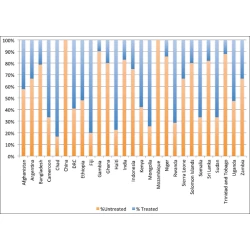
Results: A total of 72.7% (1,083/1,395) of institutions surveyed did not manage CTEV. The most common reason cited for not managing CTEV was a lack of sufficient skills, 92.1% (668/725, P<0.001). A total of 39.4% (286/725) of institutions also cited a lack of functioning equipment as a reason. Multivariate linear regression analysis showed lack of training, lack of supplies, and lack of functioning equipment were most closely related to non-management of CTEV.
Conclusion and Global Health Implications: We identified that failure to manage CTEV may result from a lack of skills and medical equipment. Increasing the capacity of sustainable training programs may reduce the presently available skill deficit in treating CTEV in LMICs and provide improved health outcomes for those with CTEV. While considerable progress has been made in building capacity for the treatment and management of CTEV in LMICs, structured training programs that support conservative manipulative methods to manage CTEV should be initiated globally.
Downloads
Most read articles by the same author(s)
- Kelsey A. Stewart, Sergio M. Navarro, Sriharsha Kambala, Gail Tan, Revanth Poondla, Sara Lederman, Kelli Barbour, Chris Lavy, Trends in Ultrasound Use in Low and Middle Income Countries: A Systematic Review , International Journal of Maternal and Child Health and AIDS: Vol. 9 No. 1 (2020): International Journal of Maternal and Child Health and AIDS
Similar Articles
- Rasaki O Shittu, Baba A Issa, Ganiyu T Olanrewaju, Abdulraheem O Mahmoud, Louis O Odeigah, Abdullateef G Sule, Social Determinants of Depression: Social Cohesion, Negative Life Events, and Depression Among People Living with HIV/Aids in Nigeria, West Africa , Vol. 2 No. 2 (2014): International Journal of Maternal and Child Health and AIDS
- Charles Kouanfack, Skinner Nguefack Lekelem, Fala Bede, Claude Ngwayu Nkfusai, Yvette Micha Nouafo, Christian Tchokonte, Nicaise Tsomo Zephirin, Pierre Joseph Fouda, Use of Trained Non-Medical Staff to Improve Access to HIV Testing Services in Africa: Implementation of the World Health Organization Opt-out Approach in Cameroon , Vol. 10 No. 1 (2021): International Journal of Maternal and Child Health and AIDS
- Gopal K. Singh, Anagha Lokhande, Romuladus E. Azuine, Global Inequalities in Youth Mortality, 2007-2012 , Vol. 3 No. 1 (2015): International Journal of Maternal and Child Health and AIDS
- Maame Aba Coleman, Deepa Dongarwar, Jessica Ramirez, Mei-Li Laracuente, Chelsea Livingston, Julliet Ogu, Racquel Lyn, Arabella Hall, Sylvia Adu-Gyamfi, Hamisu M. Salihu, Factors Impacting Vaccine Uptake during Pregnancy: A Retrospective Analysis , Vol. 11 No. 2 (2022): International Journal of Maternal and Child Health and AIDS
- María Isabel Roldós, Phaedra Corso, Justin Ingels, How much are Ecuadorians Willing to Pay to Reduce Maternal Mortality? Results from a Pilot Study on Contingent Valuation , Vol. 6 No. 1 (2017): International Journal of Maternal and Child Health and AIDS
- David Rakotonandrasana Harimbola, Kaori Mizumoto, Individual and Household Risk Factors for Severe Acute Malnutrition among Under-Five Children in the Analamanga Region, Madagascar , Vol. 7 No. 1 (2018): International Journal of Maternal and Child Health and AIDS
- Fatima M. Damagum, Zainab D. Ahmed, Rabiu I. Jalo, Hamisu M. Salihu, C. William Wester, Muktar H. Aliyu, Adapted Counseling Care Model for Management of Female Sexual Dysfunction Among Women Living With and Without HIV , Vol. 13 No. Continuous (2024): International Journal of Maternal and Child Health and AIDS
- Hamisu M. Salihu, Ronee E. Wilson, Lindsey M. King, Phillip J. Marty, Valerie E. Whiteman, Socio-ecological Model as a Framework for Overcoming Barriers and Challenges in Randomized Control Trials in Minority and Underserved Communities , Vol. 3 No. 1 (2015): International Journal of Maternal and Child Health and AIDS
- Godwin Omokhagbo Emmanuel, Olaniyi Felix Sanni, Abang Roger, Paul Umoh, Ochonye Bartholomew Boniface, Amechi Paul, Ismaeel Mohammed Yahaya, Agie Muhmmad Auwal, Improving HIV Prevention for Key Populations in Nigeria: Insights on Access, Barriers, Stigma, and Service Utilization , Vol. 14 No. Continuous (2025): International Journal of Maternal and Child Health and AIDS
- Mamour Gueye, Mame D. Ndiaye-Gueye, Serigne M. Kane-Gueye, Omar Gassama, Moussa Diallo, Jean C. Moreau, Diagnosis, Treatment and Outcome of Gestational Trophoblastic Neoplasia in a Low Resource Income Country , Vol. 5 No. 2 (2016): International Journal of Maternal and Child Health and AIDS
<< < 9 10 11 12 13 14 15 16 17 18 > >>
You may also start an advanced similarity search for this article.
Published
How to Cite
Issue
Section
License
Copyright © 2021 Sharaf Sheik-Ali, Sergio M. Navarro, Hashim Shaikh, Evan J. Keil, Walter Johnson, Chris Lavy. Published by Global Health and Education Projects, Inc., USA.

This is an open-access article distributed under the terms of the Creative Commons Attribution-NonCommercial-ShareAlike 4.0 International License , which permits others to remix, transform, and build upon the work non-commercially, provided the original author is credited and the new creations are licensed under the same terms.