
PEPFAR Funding and Reduction in HIV Infection Rates in 12 Focus Sub-Saharan African Countries: A Quantitative Analysis
DOI:
https://doi.org/10.21106/ijma.47Keywords:
- AIDS Africa,
- Disease Prevention,
- Global Health HIV,
- PEPFAR,
- President's Emergency Plan for AIDS Relief
Abstract
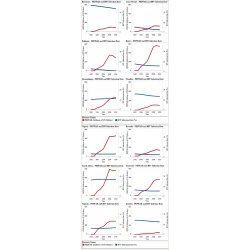
HIV and AIDS continue to have a calamitous effect on individuals living on the continent of Africa. U.S. President George W. Bush implemented the President's Emergency Plan for AIDS Relief (PEPFAR) with the objective of committing approximately $15 billion from 2004 through 2008 to assist with the reduction of the HIV pandemic worldwide. The majority of the PEPFAR policy and funding focused on 12 countries in sub-Saharan Africa: Botswana, Cote d'Ivoire, Ethiopia, Kenya, Mozambique, Namibia, Nigeria, Rwanda, South Africa, Tanzania, Uganda, and Zambia. The policy question this research paper seeks to analyze is whether the PEPFAR funding (as a % of Gross Domestic Product (GDP)) allocated to the 12 countries in Africa had any effect on the decrease of HIV infection rates of males and females between the ages of 15 and 49.
Methods:A fixed-effects panel regression analysis was conducted to determine if this association exists. This study examined the 12 African countries that received PEPFAR funding over the years 2002 to 2010; even though PEPFAR was only active from 2004 through 2008, this research included two years prior and two years after this timeframe in order to better estimate the effect of PEPFAR funding on HIV reduction.
Results:The results illustrate that on average, ceteris paribus, for every 1 percentage point increase in PEPFAR funding per GDP a country received, the country's HIV infection rate decreased by 0.355 percentage points.
Conclusions and Global Health Implications:While the empirical findings in this study suggested that the correlation between PEPFAR funding and HIV reduction is statistically significant, the practical significance is perhaps less obvious. Arguably, the reduction rate should be higher given the extent of funding targeted to this project. The conclusion of this research provides suggestions on future research and the policy implications of PEPFAR.
Downloads
Similar Articles
- Deepa Dongarwar, Korede K. Yusuf, Sitratullah O. Maiyegun, Sahra Ibrahimi, Chioma Ikedionwu, Hamisu M. Salihu, Covid-19 and Neuro-Behavioral Economics: A Conceptual Framework to Improve Physical and Mental Health among Remote Workers , Vol. 9 No. 3 (2020): International Journal of Maternal and Child Health and AIDS
- Oluwafunmilayo Funke Adeniyi, Ekanem Ekure, Foluke A. Olatona, Elizabeth O. Ajayi, Nwaoma Nworgu, Nutritional Assessment and Maternal Perception of Toddler Body Size using Toddler Silhouette Scale in Nigeria a Developing Country , Vol. 7 No. 1 (2018): International Journal of Maternal and Child Health and AIDS
- Munyaradzi Muchacha, Edmos Mtetwa, Social and Economic Barriers to Exclusive Breast Feeding In Rural Zimbabwe , Vol. 3 No. 1 (2015): International Journal of Maternal and Child Health and AIDS
- Tsi N Njim, Late Pregnancy Outcomes among Women who Attended and Women who did not Attend First Trimester Antenatal Care Visits in a Suburban Regional Hospital in Cameroon , Vol. 5 No. 1 (2016): International Journal of Maternal and Child Health and AIDS
- Arlin Delgado, Chinyere N. Reid, Emma Hale, Jennifer Marshall, Kimberly Fryer, Evaluation of Virtual Prenatal Care for Obstetric Care Delivery During the COVID-19 Pandemic: A Mixed Method Research Study Using the Consolidated Framework in Implementation Research , Vol. 12 No. 2 (2023): International Journal of Maternal and Child Health and AIDS
- Ali Reza Soltanian, Saeid Bashirian, Shahin Akhondzadeh Basti, Manoochehr Karami, Afshin Ostovar, Salman Khazaei, Estimation of the Hidden Population with COVID-19 Disease , Vol. 9 No. 2 (2020): International Journal of Maternal and Child Health and AIDS
- Janel Mendoza, Improving Health, Social Welfare, and Human Development Through Women’s Empowerment in Developing Countries: The 2016 Girl Up Leadership Summit, Washington, DC, USA , Vol. 5 No. 2 (2016): International Journal of Maternal and Child Health and AIDS
- Pangi Vijaya Nirmala, Mani Gudivada, Chikkam Vijaya Lashmi, Comparative Study of the Prevalence of Type-2 Diabetes Mellitus in Various Demographic Regions of Andhra Pradesh, India: a Population based Study , Vol. 5 No. 2 (2016): International Journal of Maternal and Child Health and AIDS
- Kamukwamba Mwale, Seter Siziya, Intestinal Infestations in Under-Five Children in Zambia , Vol. 4 No. 2 (2015): International Journal of Maternal and Child Health and AIDS
- Oluwafunmilayo Funke Adeniyi, Gabriel T. Fagbenro, Foluke A. Olatona, Overweight and Obesity Among School-aged Children and Maternal Preventive Practices against Childhood Obesity in Select Local Government Areas of Lagos, Southwest, Nigeria , Vol. 8 No. 1 (2019): International Journal of Maternal and Child Health and AIDS
<< < 23 24 25 26 27 28 29 30 31 > >>
You may also start an advanced similarity search for this article.
Published
How to Cite
Issue
Section
License
Copyright © 2015 Roger J. Chin, Domrongphol Sangmanee, Lisa Piergallini. Published by Global Health and Education Projects, Inc., USA.

This is an open-access article distributed under the terms of the Creative Commons Attribution-NonCommercial-ShareAlike 4.0 International License , which permits others to remix, transform, and build upon the work non-commercially, provided the original author is credited and the new creations are licensed under the same terms.