
PEPFAR Funding and Reduction in HIV Infection Rates in 12 Focus Sub-Saharan African Countries: A Quantitative Analysis
DOI:
https://doi.org/10.21106/ijma.47Keywords:
- AIDS Africa,
- Disease Prevention,
- Global Health HIV,
- PEPFAR,
- President's Emergency Plan for AIDS Relief
Abstract
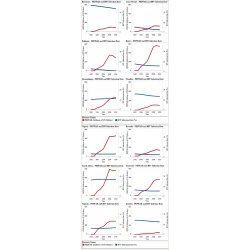
HIV and AIDS continue to have a calamitous effect on individuals living on the continent of Africa. U.S. President George W. Bush implemented the President's Emergency Plan for AIDS Relief (PEPFAR) with the objective of committing approximately $15 billion from 2004 through 2008 to assist with the reduction of the HIV pandemic worldwide. The majority of the PEPFAR policy and funding focused on 12 countries in sub-Saharan Africa: Botswana, Cote d'Ivoire, Ethiopia, Kenya, Mozambique, Namibia, Nigeria, Rwanda, South Africa, Tanzania, Uganda, and Zambia. The policy question this research paper seeks to analyze is whether the PEPFAR funding (as a % of Gross Domestic Product (GDP)) allocated to the 12 countries in Africa had any effect on the decrease of HIV infection rates of males and females between the ages of 15 and 49.
Methods:A fixed-effects panel regression analysis was conducted to determine if this association exists. This study examined the 12 African countries that received PEPFAR funding over the years 2002 to 2010; even though PEPFAR was only active from 2004 through 2008, this research included two years prior and two years after this timeframe in order to better estimate the effect of PEPFAR funding on HIV reduction.
Results:The results illustrate that on average, ceteris paribus, for every 1 percentage point increase in PEPFAR funding per GDP a country received, the country's HIV infection rate decreased by 0.355 percentage points.
Conclusions and Global Health Implications:While the empirical findings in this study suggested that the correlation between PEPFAR funding and HIV reduction is statistically significant, the practical significance is perhaps less obvious. Arguably, the reduction rate should be higher given the extent of funding targeted to this project. The conclusion of this research provides suggestions on future research and the policy implications of PEPFAR.
Downloads
Similar Articles
- Oluwasola Stephen Ayosanmi, Lorette Oden, Titilope Ayosanmi, Babatunde Y. Alli, Mei Wen Wen, Jamie Johnson, Acceptability of HIV Screening in a Sample of International Students in the United States , Vol. 9 No. 3 (2020): International Journal of Maternal and Child Health and AIDS
- Zubairu Iliyasux, Amina A. Umar, Fatima S. Gaya, Nafisa S. Nass, Hadiza M. Abdullahi, Aminatu A. Kwaku, Taiwo G. Amole, Fatimah I. Tsiga-Ahmed, Hadiza S. Galadanci, Hamisu M. Salihu, Muktar H. Aliyu, ‘We delivered at home out of fear’: Maternity Care in Rural Nigeria During the COVID-19 Pandemic , Vol. 12 No. 1 (2023): International Journal of Maternal and Child Health and AIDS
- Presley Chick Tayong, Herbert Afegenwi Mbunkah, Raphael Awah Abong, Sumelong Sharon Dione Akomoneh, Raoul Tuekam Kayo, Elvis Achondou Akomoneh, Incidence of Mother-to-Child Transmission of HIV and Associated Factors in Postpartum Women in Cameroon , Vol. 14 No. Continuous (2025): International Journal of Maternal and Child Health and AIDS
- Gopal K. Singh, Hyunjung Lee, Lyoung Hee Kim, Shanita D. Williams, Social Determinants of Health Among American Indians and Alaska Natives and Tribal Communities: Comparison with Other Major Racial and Ethnic Groups in the United States, 1990–2022 , Vol. 13 No. Continuous (2024): International Journal of Maternal and Child Health and AIDS
- Hyunjung Lee, Gopal K. Singh, Psychological Distress and Heart Disease Mortality in the United States: Results from the 1997-2014 NHIS-NDI Record Linkage Study , Vol. 9 No. 3 (2020): International Journal of Maternal and Child Health and AIDS
- John Humphrey, James G Carlucci, Esther Karen Wanjama, Violet Naanyu, Lindah Muli, Joy Marsha Alera, Edwin Were, Alan McGuire, Winstone Nyandiko, Gregory Zimet, Julia Jerono Songok, Kara Wools Kaloustian, Implementing WHO Differentiated Service Delivery Model for Pregnant and Breastfeeding Women and Infants Living with HIV: Insights from Kenyan Healthcare Providers , Vol. 14 No. Continuous (2025): International Journal of Maternal and Child Health and AIDS
- Gopal K. Singh, Mohammad Siahpush, Romuladus E. Azuine, Shanita D. Williams, Increasing Area Deprivation and Socioeconomic Inequalities in Heart Disease, Stroke, and Cardiovascular Disease Mortality Among Working Age Populations, United States, 1969-2011 , Vol. 3 No. 2 (2015): International Journal of Maternal and Child Health and AIDS
- Faith Iretioluwa Olaniyi, Ayodele Ebenezer Owolabi, Gideon Temitope Olowe, Ololade Daniella Olunloyo, Eric Anuoluwapo Ogunleye, Ifeoluwapo Oluwafunke Kolawole, Perception, Pattern of Use, and Determinants of Family Planning Uptake Among Women of Childbearing Age in Ibadan, South West Nigeria , Vol. 15 (2026): International Journal of Maternal and Child Health and AIDS
- Neza Guillaine, Wilberforce Mwizerwa, Jackline Odhiambo, Bethany L. Hedt-Gauthier, Lisa R. Hirschhorn, Placidie Mugwaneza, Jean Paul Umugisha, Felix Rwabukwisi Cyamatare, Christine Mutaganzwa, Neil Gupta, A Novel Combined Mother-Infant Clinic to Optimize Post-Partum Maternal Retention, Service Utilization, and Linkage to Services in HIV Care in Rural Rwanda , Vol. 6 No. 1 (2017): International Journal of Maternal and Child Health and AIDS
- Akosua A. Gyimah, Emmanuel K. Nakua, Ellis Owusu-Dabo, Easmon Otupiri, Contraceptive Characteristics of Women Living with HIV in the Kumasi Metropolis, Ghana , Vol. 2 No. 1 (2013): International Journal of Maternal and Child Health and AIDS
<< < 1 2 3 4 5 6 7 8 9 10 > >>
You may also start an advanced similarity search for this article.
Published
How to Cite
Issue
Section
License
Copyright © 2015 Roger J. Chin, Domrongphol Sangmanee, Lisa Piergallini. Published by Global Health and Education Projects, Inc., USA.

This is an open-access article distributed under the terms of the Creative Commons Attribution-NonCommercial-ShareAlike 4.0 International License , which permits others to remix, transform, and build upon the work non-commercially, provided the original author is credited and the new creations are licensed under the same terms.