
PEPFAR Funding and Reduction in HIV Infection Rates in 12 Focus Sub-Saharan African Countries: A Quantitative Analysis
DOI:
https://doi.org/10.21106/ijma.47Keywords:
- AIDS Africa,
- Disease Prevention,
- Global Health HIV,
- PEPFAR,
- President's Emergency Plan for AIDS Relief
Abstract
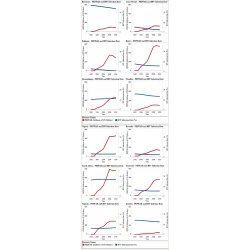
HIV and AIDS continue to have a calamitous effect on individuals living on the continent of Africa. U.S. President George W. Bush implemented the President's Emergency Plan for AIDS Relief (PEPFAR) with the objective of committing approximately $15 billion from 2004 through 2008 to assist with the reduction of the HIV pandemic worldwide. The majority of the PEPFAR policy and funding focused on 12 countries in sub-Saharan Africa: Botswana, Cote d'Ivoire, Ethiopia, Kenya, Mozambique, Namibia, Nigeria, Rwanda, South Africa, Tanzania, Uganda, and Zambia. The policy question this research paper seeks to analyze is whether the PEPFAR funding (as a % of Gross Domestic Product (GDP)) allocated to the 12 countries in Africa had any effect on the decrease of HIV infection rates of males and females between the ages of 15 and 49.
Methods:A fixed-effects panel regression analysis was conducted to determine if this association exists. This study examined the 12 African countries that received PEPFAR funding over the years 2002 to 2010; even though PEPFAR was only active from 2004 through 2008, this research included two years prior and two years after this timeframe in order to better estimate the effect of PEPFAR funding on HIV reduction.
Results:The results illustrate that on average, ceteris paribus, for every 1 percentage point increase in PEPFAR funding per GDP a country received, the country's HIV infection rate decreased by 0.355 percentage points.
Conclusions and Global Health Implications:While the empirical findings in this study suggested that the correlation between PEPFAR funding and HIV reduction is statistically significant, the practical significance is perhaps less obvious. Arguably, the reduction rate should be higher given the extent of funding targeted to this project. The conclusion of this research provides suggestions on future research and the policy implications of PEPFAR.
Downloads
Similar Articles
- Alicia E. Hersey, Betty Norman, Rebecca Reece, Assessing Reproductive Decision-making Among HIV-Positive Women in Kumasi, Ghana , Vol. 8 No. 1 (2019): International Journal of Maternal and Child Health and AIDS
- Muhammad Adamu Abbas, Aisha A Abdullahi, Hassan A Murtala, Abubakar L Yusuf, Rahila A Mukhtar, Hamisu M Salihu, New Paradigm for Battling Hospital-Acquired Infections in Developing Countries , Vol. 14 No. Continuous (2025): International Journal of Maternal and Child Health and AIDS
- Issaka Saouadogo, Douglas Mbang Massom, Soutongnoma Safiata Kabore, Ronny Kevin Fomete Djatsa, Josiane Seu, Patrice Ngangue, Perceived Benefits and Disadvantages Associated with the Use of the Electronic Consultation Register by Health Providers in the Health District of Toma, Burkina Faso , Vol. 13 No. Continuous (2024): International Journal of Maternal and Child Health and AIDS
- Abdul-Wahab Inusa, Nana Asha Alhassan, Ana Maria Simono Charadan, Roy Rillera Marzo, Shamsu-Deen Ziblim, Influence of Sociodemographic Factors and Obstetric History on Choice of Place of Delivery: A Retrospective Study Among Post-Natal Women in Ghana , Vol. 12 No. 2 (2023): International Journal of Maternal and Child Health and AIDS
- Fulufhedzani C. Malindi, Maria S. Maputle, Involvement of Male Partners in Sustaining Interventions for Preventing Mother-to-Child Transmission of HIV Among Women with HIV , Vol. 13 No. Continuous (2024): International Journal of Maternal and Child Health and AIDS
- Elizabeth Armstrong-Mensah, Damilola Dada, Amber Bowers, Aruba Muhammad, Chisom Nnoli, Geographic, Health Care Access, Racial Discrimination, and Socioeconomic Determinants of Maternal Mortality in Georgia, United States , Vol. 10 No. 2 (2021): International Journal of Maternal and Child Health and AIDS
- Juliana Y. Enos, Richard D. Amoako, Innocent K. Doku, Utilization, Predictors and Gaps in the Continuum of Care for Maternal and Newborn Health in Ghana , Vol. 10 No. 1 (2021): International Journal of Maternal and Child Health and AIDS
- Khadija Kofoworola Adeleye, Margaret Omowaleola Akinwaare, Prisca Olabisi Adejumo, Reproductive Plans And Utilization of Contraceptives Among Women Living With HIV , Vol. 8 No. 2 (2019): International Journal of Maternal and Child Health and AIDS
- Isaac Oludare Oluwayemi, Simeon Oladele Olatunya, Ezra Olatunde Ogundare, PCR Results and PMTCT Treatment Outcomes among HIV-Exposed Infants in a Tertiary Hospital in Nigeria, 2010-2014 , Vol. 3 No. 2 (2015): International Journal of Maternal and Child Health and AIDS
- Romuladus E. Azuine, Sussan E. Ekejiuba, Gopal K. Singh, Magnus A. Azuine, Ebola Virus Disease Epidemic: What Can the World Learn and Not Learn from West Africa? , Vol. 3 No. 1 (2015): International Journal of Maternal and Child Health and AIDS
<< < 3 4 5 6 7 8 9 10 11 12 > >>
You may also start an advanced similarity search for this article.
Published
How to Cite
Issue
Section
License
Copyright © 2015 Roger J. Chin, Domrongphol Sangmanee, Lisa Piergallini. Published by Global Health and Education Projects, Inc., USA.

This is an open-access article distributed under the terms of the Creative Commons Attribution-NonCommercial-ShareAlike 4.0 International License , which permits others to remix, transform, and build upon the work non-commercially, provided the original author is credited and the new creations are licensed under the same terms.