
House Ball Community Leaders’ Perceptions of HIV and HIV Vaccine Research
DOI:
https://doi.org/10.21106/ijma.331Keywords:
- LGBT,
- HIV,
- MSM,
- Transgender populations,
- MSM/Transgender psychosocial,
- HIV risk factors,
- HIV and black/Latino MSM,
- Syndemic factors,
- MSM/Transgender communities
Abstract
Background or Objectives: Worldwide, men who have sex with men (MSM) and Transgender persons are vulnerable to psychosocial factors associated with high risk for HIV, and suffer disproportionately high rates of HIV/AIDS. In the United States (US), the House Ball Community (HBC) is a social network comprised predominantly of Black and Hispanic MSM and Transgender persons who reside in communal settings. This study explores Western NewYork HBC leaders’ perceptions of HIV in their communities and their knowledge of HIV prevention strategies, including HIV vaccine trials.
Methods: The project was conducted using an exploratory approach based on the principles of Community-Based Participatory Research (CBPR) methods. An HIV behavioral risk assessment provided descriptive data, while qualitative measures explored psychosocial and behavioral factors.
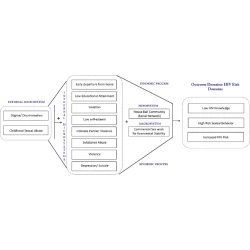
Results: Behavioral assessments indicated high levels of risky sexual behaviors and experiences of violence. Interviews with 14 HBC leaders revealed that knowledge of HIV and local HIV vaccines trials was limited. Barriers to HIV knowledge included fear of peer judgment, having inaccurate information, and lack of formal education. Experiencing violence was identified as barrier to positive health behavior. Nevertheless, the HBC was described as a safe and creative space for marginalized MSM and Transgender youth.
Conclusion and Global Health Implications: Findings suggest that the interrelation between health problems and social context amplify HIV risk in the HBC. The organizational structure and resources of the HBC, and MSM/Transgender communities worldwide can be instrumental in informing interventions to address HIV-related risk behaviors and create appropriate recruitment tools to ensure their representation in HIV research.
Downloads
Similar Articles
- Elangovan Arumugam, Joseph K. David, Santhakumar Aridoss, Nagaraj Jaganathasamy, Malathi Mathiyazhakan, Ganesh Balasubramanian, Manikandan Natesan, VM, Padmapriya, BK Kirubakaran, Sanjay Patel, Pradeep Kumar, Shobini Rajan, An Analysis of Levels and Trends in HIV Prevalence Among Pregnant Women Attending Antenatal Clinics in Karnataka, South India, 2003-2019 , Vol. 10 No. 2 (2021): International Journal of Maternal and Child Health and AIDS
- Agnes Langat, Tegan L. Callahan, Isabella Yonga, Boniface Ochanda, Anthony Waruru, Lucy W. Ng’anga, Abraham Katana, Brian Onyango, Benson Singa, Stephen Oyule, George Githuka, Lennah Omoto, Jane Muli, Thorkild Tylleskar, Surbhi Modi, Associations of Sociodemographic and Clinical Factors with Late Presentation for Early Infant HIV Diagnosis (EID) Services in Kenya , Vol. 10 No. 2 (2021): International Journal of Maternal and Child Health and AIDS
- Brianna L. Smith, Sara Zizzo, Anouk Amzel, Sarah Wiant, Molly C. Pezzulo, Sarah Konopka, Rachel Golin, Alexandra C. Vrazo, Integration of Neonatal and Child Health Interventions with Pediatric HIV Interventions in Global Health , Vol. 7 No. 1 (2018): International Journal of Maternal and Child Health and AIDS
- Chaw Hay Thar, Young Hwa Lee, Young June Choe, Human Immunodeficiency Virus/Acquired Immunodeficiency Syndrome Knowledge and Attitude among Myanmar Women , Vol. 13 No. Continuous (2024): International Journal of Maternal and Child Health and AIDS
- Wah W. Myint, David J. Washburn, Brian Colwell, Jay E. Maddock, Determinants of HIV Testing Uptake among Women (aged 15-49 years) in the Philippines, Myanmar, and Cambodia , Vol. 10 No. 2 (2021): International Journal of Maternal and Child Health and AIDS
- Isabel Hernandez, Vinita Sharma, Miguel Reina-Ortiz, Carlos Rosas, Tatiana Ochoa, Ricardo Izurieta, Enrique Teran, HIV/AIDS-related Knowledge and Behavior among School-attending Afro-Descendant Youths in Ecuador , Vol. 9 No. 3 (2020): International Journal of Maternal and Child Health and AIDS
- Elizabeth Armstrong-Mensah, Ato Kwamena Tetteh, Seung Choi, Utilization of Rapid Diagnostic Testing in sub-Saharan Africa: Challenges and Effects on HIV Prevention , Vol. 10 No. 1 (2021): International Journal of Maternal and Child Health and AIDS
- Aridoss Santhakumar, Malathi Mathiyazhakan, Nagaraj Jaganathasamy, Balsubramanian Ganesh, N Manikandan, VM Padmapriya, Angel Monika, Joseph K David, Arvind Kumar, Elangovan Arumugam, Prevalence and Risk Factors Associated with HIV Infection among Pregnant Women in Odisha State, India , Vol. 9 No. 3 (2020): International Journal of Maternal and Child Health and AIDS
- Presley Chick Tayong, Herbert Afegenwi Mbunkah, Raphael Awah Abong, Sumelong Sharon Dione Akomoneh, Raoul Tuekam Kayo, Elvis Achondou Akomoneh, Incidence of Mother-to-Child Transmission of HIV and Associated Factors in Postpartum Women in Cameroon , Vol. 14 No. Continuous (2025): International Journal of Maternal and Child Health and AIDS
- Alexander Suuk Laar, Veioshnee Govender, Individual and Community Perspectives, Attitudes, and Practices to Mother-to-Child-Transmission and Infant Feeding among HIV-Positive Mothers in Sub-Saharan Africa: A Systematic Literature Review , Vol. 2 No. 1 (2013): International Journal of Maternal and Child Health and AIDS
<< < 1 2 3 4 5 6 7 8 9 10 > >>
You may also start an advanced similarity search for this article.
Published
How to Cite
Issue
Section
License
Copyright © 2020 Amina P. Alio, Candace Sibley, Halimah S. Ouedraogo, Stephaun E. Wallace, Steven Wakefield, Damon L. Humes, Sheldon D. Fields, Michael C. Keefer. Published by Global Health and Education Projects, Inc., USA.

This is an open-access article distributed under the terms of the Creative Commons Attribution-NonCommercial-ShareAlike 4.0 International License , which permits others to remix, transform, and build upon the work non-commercially, provided the original author is credited and the new creations are licensed under the same terms.