
House Ball Community Leaders’ Perceptions of HIV and HIV Vaccine Research
DOI:
https://doi.org/10.21106/ijma.331Keywords:
- LGBT,
- HIV,
- MSM,
- Transgender populations,
- MSM/Transgender psychosocial,
- HIV risk factors,
- HIV and black/Latino MSM,
- Syndemic factors,
- MSM/Transgender communities
Abstract
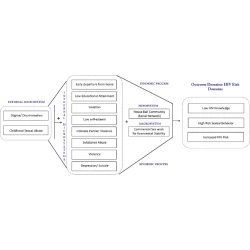
Background or Objectives: Worldwide, men who have sex with men (MSM) and Transgender persons are vulnerable to psychosocial factors associated with high risk for HIV, and suffer disproportionately high rates of HIV/AIDS. In the United States (US), the House Ball Community (HBC) is a social network comprised predominantly of Black and Hispanic MSM and Transgender persons who reside in communal settings. This study explores Western NewYork HBC leaders’ perceptions of HIV in their communities and their knowledge of HIV prevention strategies, including HIV vaccine trials.
Methods: The project was conducted using an exploratory approach based on the principles of Community-Based Participatory Research (CBPR) methods. An HIV behavioral risk assessment provided descriptive data, while qualitative measures explored psychosocial and behavioral factors.
Results: Behavioral assessments indicated high levels of risky sexual behaviors and experiences of violence. Interviews with 14 HBC leaders revealed that knowledge of HIV and local HIV vaccines trials was limited. Barriers to HIV knowledge included fear of peer judgment, having inaccurate information, and lack of formal education. Experiencing violence was identified as barrier to positive health behavior. Nevertheless, the HBC was described as a safe and creative space for marginalized MSM and Transgender youth.
Conclusion and Global Health Implications: Findings suggest that the interrelation between health problems and social context amplify HIV risk in the HBC. The organizational structure and resources of the HBC, and MSM/Transgender communities worldwide can be instrumental in informing interventions to address HIV-related risk behaviors and create appropriate recruitment tools to ensure their representation in HIV research.
Downloads
Similar Articles
- Charles Kouanfack, Skinner Nguefack Lekelem, Fala Bede, Claude Ngwayu Nkfusai, Yvette Micha Nouafo, Christian Tchokonte, Nicaise Tsomo Zephirin, Pierre Joseph Fouda, Use of Trained Non-Medical Staff to Improve Access to HIV Testing Services in Africa: Implementation of the World Health Organization Opt-out Approach in Cameroon , Vol. 10 No. 1 (2021): International Journal of Maternal and Child Health and AIDS
- Zubairu Iliyasu, Fatimah Hassan-Hanga, Sadiq Isah Ajuji, Musa M. Bello, Safiyya S. Abdulkadir, Nafisa S. Nass, Hamisu M. Salihu, Muktar H. Aliyu, Correlates of Health Care Workers’ Knowledge and HIV-Exposed Infant Immunization Counseling Practice in Northern Nigeria , Vol. 10 No. 1 (2021): International Journal of Maternal and Child Health and AIDS
- Esum Mathias Eyong, Nwana Yvette Ngwe, Claude Ngwayu Nfuksai, Loveline Lum Niba, Akoachere Jane-Francis, Prevalence of Occupational Exposure to HIV and Factors Associated with Compliance with Post-Exposure Prophylaxis Among Health Workers of the Biyem-Assi, Buea, and Limbe Health Districts of Cameroon Maternal and Child Health and AIDS , Vol. 11 No. 1 (2022): International Journal of Maternal and Child Health and AIDS
- Wah Myint, Aishatu Yusuf, Angela Nguyen, Elfreda Samman, HIV Testing, Household and Reproductive Health Decision-Making: The Role of Women Autonomy in a Nationally Representative Study in Cambodia , Vol. 14 No. Continuous (2025): International Journal of Maternal and Child Health and AIDS
- Oluwasola Stephen Ayosanmi, Lorette Oden, Titilope Ayosanmi, Babatunde Y. Alli, Mei Wen Wen, Jamie Johnson, Acceptability of HIV Screening in a Sample of International Students in the United States , Vol. 9 No. 3 (2020): International Journal of Maternal and Child Health and AIDS
- Deepa Dongarwar, Toi B. Harris, Hamisu M. Salihu, Fourth Annual Summer Research Summit on Health Equity Organized by the Center of Excellence in Health Equity, Training and Research, Baylor College of Medicine, Houston, Texas 77030, USA on May 20, 2021 , Vol. 10 No. S3 (2021): International Journal of Maternal and Child Health and AIDS
- Amina Abdullahi, Hassan Adam Murtala, Aisha Adam Abdullahi, Amina Aminu, Muktar H. Aliyu, Sani H. Aliyu, Ololade D. Adeyemi, Deepa Dongarwar, Jordi B. Torrelles, Gambo Aliyu, Hamisu M. Salihu, Drivers of Human Immunodeficiency Virus among Pregnant Women in Conflict and Non-conflict Zones of Nigeria , Vol. 14 No. Continuous (2025): International Journal of Maternal and Child Health and AIDS
- Alana F. Hairston, Emily A. Bobrow, Christian S. Pitter, Towards the Elimination of Pediatric HIV: Enhancing Maternal, Sexual, and Reproductive Health Services , Vol. 1 No. 1 (2012): International Journal of Maternal and Child Health and AIDS
- Rachael Bonawitz, Kathleen Lucy McGlasson, Jeanette L. Kaiser, Thandiwe Ngoma, Jody Lori, Carol Boyd, Godfrey Biemba, Davidson H. Hamer, Nancy A. Scott, Maternity Waiting Home Use by HIV-positive Pregnant Women in Zambia: Opportunity for Improved Prevention of Maternal to Child Transmission of HIV , Vol. 8 No. 1 (2019): International Journal of Maternal and Child Health and AIDS
- Charles Chibuisi Ehiemere, Ishaku Adamu Akyala, Bisayo Adetuyi Ogundipe, Chukwuebuka Clement Nri-Ezedi, Peter Joseph Anzaku, Waryit Esther Yonah, Efe Mary Imokhai, Isaac Onyebuchi Okohu, Idowu Olapemi Makinde, Ngozi Miriam Chimzobam-Nnalue, Beyond Access: Behavior Change and Gendered Realities in the Adoption of Digital Health Tools for Maternal, Newborn, and Child Health in Nigeria , Vol. 15 (2026): International Journal of Maternal and Child Health and AIDS
<< < 1 2 3 4 5 6 7 8 9 10 > >>
You may also start an advanced similarity search for this article.
Published
How to Cite
Issue
Section
License
Copyright © 2020 Amina P. Alio, Candace Sibley, Halimah S. Ouedraogo, Stephaun E. Wallace, Steven Wakefield, Damon L. Humes, Sheldon D. Fields, Michael C. Keefer. Published by Global Health and Education Projects, Inc., USA.

This is an open-access article distributed under the terms of the Creative Commons Attribution-NonCommercial-ShareAlike 4.0 International License , which permits others to remix, transform, and build upon the work non-commercially, provided the original author is credited and the new creations are licensed under the same terms.