
HIV Testing, Household and Reproductive Health Decision-Making: The Role of Women Autonomy in a Nationally Representative Study in Cambodia
DOI:
https://doi.org/10.25259/IJMA_36_2024Keywords:
- Cambodia,
- Decision-Making,
- HIV Testing,
- Personal Autonomy,
- Women’s Health
Abstract
Women’s autonomy plays a critical role in decision-making of health service use. This study aims to evaluate the relationship between Human Immunodeficiency Virus (HIV) testing and decision-making autonomy among Cambodian women aged 15–49.
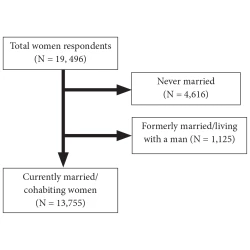
MethodsWe used data from the 2021–2022 Cambodia Demographic and Health Survey (DHS) and our sample consisted of currently married/cohabiting women aged 15–49 (N = 13,755). The outcome variable was “ever been tested for HIV.” Covariates were household decision-making and reproductive health decision-making scores, socio-demographic characteristics (age, place of residency, education, wealth quintiles, and employment status), and HIV knowledge (HIV self-test kits, drugs to prevent HIV in babies during pregnancy, antiretroviral [ARV] drugs, and pre-exposure prophylaxis).
ResultsSixty-one percent of studied women reported ever being tested for HIV. The logistic regression results revealed that women with a higher household decision-making score (aOR = 2.09, p < 0.001), reproductive health decision-making score (aOR = 1.72, p < 0.001), from 25 to 29 age groups (aOR = 2.21, p < 0.001), with a higher education (aOR = 1.96, p = 0.001), from the richest groups (aOR = 1.73, p < 0.001), had knowledge of HIV test kits but never get tested (aOR = 1.38, p = 0.035), heard of drugs to avoid HIV transmission to babies during pregnancy (aOR = 1.21, p < 0.001), and heard of ARV drugs (aOR = 1.28, p < 0.001) were more likely to get tested for HIV than their counterparts. Women living in rural areas (aOR = 0.56, p < 0.001) and those who had discriminatory attitudes (aOR = 0.76, p = < 0.001) were less likely to get HIV tests than those in urban areas and those without discrimination.
Conclusion and Global Health ImplicationsFindings revealed that greater autonomy is important for health care use, particularly HIV testing for women in Cambodia.
Downloads
Similar Articles
- Faith Iretioluwa Olaniyi, Ayodele Ebenezer Owolabi, Gideon Temitope Olowe, Ololade Daniella Olunloyo, Eric Anuoluwapo Ogunleye, Ifeoluwapo Oluwafunke Kolawole, Perception, Pattern of Use, and Determinants of Family Planning Uptake Among Women of Childbearing Age in Ibadan, South West Nigeria , Vol. 15 (2026): International Journal of Maternal and Child Health and AIDS
- Alana F. Hairston, Emily A. Bobrow, Christian S. Pitter, Towards the Elimination of Pediatric HIV: Enhancing Maternal, Sexual, and Reproductive Health Services , Vol. 1 No. 1 (2012): International Journal of Maternal and Child Health and AIDS
- Elizabeth Armstrong, Priya Srinivasan, Dawood Azeemy, Fayja Habib, Ernest Alema-Mensah, COVID-19 Stressors and Maternal Mental Health in Georgia, United States: Sources, Effects, and Recommendations , Vol. 14 No. Continuous (2025): International Journal of Maternal and Child Health and AIDS
- Charles Kouanfack, Skinner Nguefack Lekelem, Fala Bede, Claude Ngwayu Nkfusai, Yvette Micha Nouafo, Christian Tchokonte, Nicaise Tsomo Zephirin, Pierre Joseph Fouda, Use of Trained Non-Medical Staff to Improve Access to HIV Testing Services in Africa: Implementation of the World Health Organization Opt-out Approach in Cameroon , Vol. 10 No. 1 (2021): International Journal of Maternal and Child Health and AIDS
- Elangovan Arumugam, Joseph K. David, Santhakumar Aridoss, Nagaraj Jaganathasamy, Malathi Mathiyazhakan, Ganesh Balasubramanian, Manikandan Natesan, VM, Padmapriya, BK Kirubakaran, Sanjay Patel, Pradeep Kumar, Shobini Rajan, An Analysis of Levels and Trends in HIV Prevalence Among Pregnant Women Attending Antenatal Clinics in Karnataka, South India, 2003-2019 , Vol. 10 No. 2 (2021): International Journal of Maternal and Child Health and AIDS
- Chaw Hay Thar, Young Hwa Lee, Young June Choe, Human Immunodeficiency Virus/Acquired Immunodeficiency Syndrome Knowledge and Attitude among Myanmar Women , Vol. 13 No. Continuous (2024): International Journal of Maternal and Child Health and AIDS
- Sara A. Holtz, Rudi Thetard, Sarah N. Konopka, Jennifer Albertini, Anouk Amzel, Karen P. Fogg, A Systematic Review of Interventions to Reduce Maternal Mortality among HIV-Infected Pregnant and Postpartum Women , Vol. 4 No. 2 (2015): International Journal of Maternal and Child Health and AIDS
- Elizabeth Armstrong-Mensah, Damilola Dada, Amber Bowers, Aruba Muhammad, Chisom Nnoli, Geographic, Health Care Access, Racial Discrimination, and Socioeconomic Determinants of Maternal Mortality in Georgia, United States , Vol. 10 No. 2 (2021): International Journal of Maternal and Child Health and AIDS
- Ernest Tambo, Chidiebere E. Ugwu, Yayi Guan, Ding Wei, Xiao-Ning, Zhou Xiao-Nong, China-Africa Health Development Initiatives: Benefits and Implications for Shaping Innovative and Evidence-informed National Health Policies and Programs in Sub-saharan African Countries , Vol. 5 No. 2 (2016): International Journal of Maternal and Child Health and AIDS
- John Humphrey, Esther Wanjama, James G. Carlucci, Violet Naanyu, Lindah Muli, Edwin Were, Alan McGuire, Winstone M. Nyandiko, Julia Songok, Gregory Zimet, Kara Wools-Kaloustian, Understanding Women’s Preferences for Prevention of Mother-to-Child HIV Transmission Services in Kenya , Vol. 13 No. Continuous (2024): International Journal of Maternal and Child Health and AIDS
<< < 1 2 3 4 5 6 7 8 9 10 > >>
You may also start an advanced similarity search for this article.
Published
How to Cite
Issue
Section
License
Copyright © 2025 Wah Myint, Aishatu Yusuf, Angela Nguyen, Elfreda Samman. Published by Global Health and Education Projects, Inc., USA.

This is an open-access article distributed under the terms of the Creative Commons Attribution-NonCommercial-ShareAlike 4.0 International License , which permits others to remix, transform, and build upon the work non-commercially, provided the original author is credited and the new creations are licensed under the same terms.