
Individual and Community Perspectives, Attitudes, and Practices to Mother-to-Child-Transmission and Infant Feeding among HIV-Positive Mothers in Sub-Saharan Africa: A Systematic Literature Review
DOI:
https://doi.org/10.21106/ijma.20Keywords:
- mother-to-child-transmission,
- PMTC and infant feeding,
- Cultural and social norms,
- HIV/AIDS,
- Sub-Saharan Africa,
- Ghana
Abstract
International guidelines on infant feeding for HIV- positive mothers promote Exclusive Replacement Feeding (ERF) (infant formula or animal milk) or exclusive breastfeeding (with no supplements of any kind). A mixed feeding pattern, where breastfeeding is combined with other milks, liquid foods or solids, has been shown to increase the risk of transmission of HIV and is strongly discouraged. However, little is known about the ability of women to adhere to recommended feeding strategies to prevent mother-to-child transmission (MTCT) of HIV from breast milk. The objective of this study was to assess the individual and community-level factors that affect perspectives, attitudes and practices of HIV-positive mothers on MTCT and infant feeding in sub-Saharan Africa as documented in peer-reviewed and grey literature.
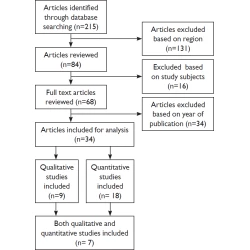
Methods:This work is based on an extensive review of peer-reviewed articles and grey literature from the period 2000-2012. The literature search was carried out using electronic databases like Medline Ovid, Google Scholar, PubMed and EBSCOhost. Both quantitative and qualitative studies written in English language on HIV and infant feeding with particular emphasis on Sub-Saharan Africa were included.
Results:The review found low adherence to the chosen infant feeding method by HIV-positive mothers. The following factors emerged as influencing infant feeding decisions: cultural and social norms; economic conditions; inadequate counselling; and mother's level of education.
Conclusions and Public Health Implications:Unless local beliefs and customs surrounding infant feeding is understood by policy makers and program implementers, Prevention of Mother-to-Child Transmission (PMTCT) programs will only be partially successful in influencing feeding practices of HIV-positive women. Hence programs should provide affordable, acceptable, feasible, safe and sustainable feeding recommendations that do not erode strong cultural practices. Advice to HIV-positive mothers should be based on local conditions that are acceptable to the community.
Downloads
Similar Articles
- Ernest Tambo, Chidiebere E. Ugwu, Yayi Guan, Ding Wei, Xiao-Ning, Zhou Xiao-Nong, China-Africa Health Development Initiatives: Benefits and Implications for Shaping Innovative and Evidence-informed National Health Policies and Programs in Sub-saharan African Countries , Vol. 5 No. 2 (2016): International Journal of Maternal and Child Health and AIDS
- Ekere James Essien, Osaro Mgbere, Sorochi Iloanusi, Susan M. Abughosh, COVID-19 Infection among People with HIV/AIDS in Africa: Knowledge Gaps, Public Health Preparedness and Research Priorities , Vol. 10 No. 1 (2021): International Journal of Maternal and Child Health and AIDS
- Godwin Omokhagbo Emmanuel, Olaniyi Felix Sanni, Abang Roger, Paul Umoh, Ochonye Bartholomew Boniface, Amechi Paul, Ismaeel Mohammed Yahaya, Agie Muhmmad Auwal, Improving HIV Prevention for Key Populations in Nigeria: Insights on Access, Barriers, Stigma, and Service Utilization , Vol. 14 No. Continuous (2025): International Journal of Maternal and Child Health and AIDS
- Alicia E. Hersey, Betty Norman, Rebecca Reece, Assessing Reproductive Decision-making Among HIV-Positive Women in Kumasi, Ghana , Vol. 8 No. 1 (2019): International Journal of Maternal and Child Health and AIDS
- Karen M. Hampanda, Lisa L. Abuogi, Yusuf Ahmed, HIV-Positive Women Taking Lifelong Antiretroviral Therapy Report Better Adherence Than Women Taking Short-Course Prophylaxis During and After Pregnancy Under PMTCT Program Option A in Lusaka, Zambia , Vol. 6 No. 1 (2017): International Journal of Maternal and Child Health and AIDS
- Charles Kouanfack, Skinner Nguefack Lekelem, Fala Bede, Claude Ngwayu Nkfusai, Yvette Micha Nouafo, Christian Tchokonte, Nicaise Tsomo Zephirin, Pierre Joseph Fouda, Use of Trained Non-Medical Staff to Improve Access to HIV Testing Services in Africa: Implementation of the World Health Organization Opt-out Approach in Cameroon , Vol. 10 No. 1 (2021): International Journal of Maternal and Child Health and AIDS
- Oluwasola Stephen Ayosanmi, Lorette Oden, Titilope Ayosanmi, Babatunde Y. Alli, Mei Wen Wen, Jamie Johnson, Acceptability of HIV Screening in a Sample of International Students in the United States , Vol. 9 No. 3 (2020): International Journal of Maternal and Child Health and AIDS
- Amina P. Alio, Candace Sibley, Halimah S. Ouedraogo, Stephaun E. Wallace, Steven Wakefield, Damon L. Humes, Sheldon D. Fields, Michael C. Keefer, House Ball Community Leaders’ Perceptions of HIV and HIV Vaccine Research , Vol. 9 No. 1 (2020): International Journal of Maternal and Child Health and AIDS
- Andrew Walubo, Refuoe Baleni, Hillary Mukudu, Henry Kambafwile, Mukesh Dheda, Thanduxolo Thengwa, Tshepang Jiane, Clinical Characteristics of Children with HIV Initiated on Antiretroviral Treatment at HIV Clinics in Bloemfontein, South Africa , Vol. 10 No. 1 (2021): International Journal of Maternal and Child Health and AIDS
- Gopal K. Singh, Stella M. Yu, Infant Mortality in the United States, 1915-2017: Large Social Inequalities have Persisted for Over a Century , Vol. 8 No. 1 (2019): International Journal of Maternal and Child Health and AIDS
<< < 1 2 3 4 5 6 7 8 9 10 > >>
You may also start an advanced similarity search for this article.
Published
How to Cite
Issue
Section
License
Copyright © 2015 Alexander Suuk Laar, Veioshnee Govender. Published by Global Health and Education Projects, Inc., USA.

This is an open-access article distributed under the terms of the Creative Commons Attribution-NonCommercial-ShareAlike 4.0 International License , which permits others to remix, transform, and build upon the work non-commercially, provided the original author is credited and the new creations are licensed under the same terms.