
The Health Determinants of Accessibility to Clubfoot Treatment in LMICs: A Global Exploration of Barriers and Solutions
DOI:
https://doi.org/10.21106/ijma.453Keywords:
- Clubfoot,
- Accessibility,
- Health Determinants,
- Global,
- Barriers to Care,
- Treatment
Abstract
Background: Clubfoot or Congenital Talipes Equinovarus (CTEV) treatment in newborn infants involves simple, non-invasive manipulation and is primarily managed non-surgically if identified early. In low- and middle-income countries (LMICs), less than 15% of patients with CTEV access treatment. This crosssectional questionnaire study conducted descriptive and regression analysis of institutional reasons for CTEV management in LMICs.
Methods: A cross-sectional study was undertaken of 1,489 medical institutions in 62 LMICs. Data were evaluated from the “World Health Organization Situation Analysis tool” database. We analyzed characteristics of institutions that manage and did not manage CTEV. With the use of a multivariate linear regression model, we identified a set of factors linked to referral for non-management of CTEV.
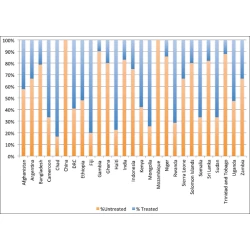
Results: A total of 72.7% (1,083/1,395) of institutions surveyed did not manage CTEV. The most common reason cited for not managing CTEV was a lack of sufficient skills, 92.1% (668/725, P<0.001). A total of 39.4% (286/725) of institutions also cited a lack of functioning equipment as a reason. Multivariate linear regression analysis showed lack of training, lack of supplies, and lack of functioning equipment were most closely related to non-management of CTEV.
Conclusion and Global Health Implications: We identified that failure to manage CTEV may result from a lack of skills and medical equipment. Increasing the capacity of sustainable training programs may reduce the presently available skill deficit in treating CTEV in LMICs and provide improved health outcomes for those with CTEV. While considerable progress has been made in building capacity for the treatment and management of CTEV in LMICs, structured training programs that support conservative manipulative methods to manage CTEV should be initiated globally.
Downloads
Most read articles by the same author(s)
- Kelsey A. Stewart, Sergio M. Navarro, Sriharsha Kambala, Gail Tan, Revanth Poondla, Sara Lederman, Kelli Barbour, Chris Lavy, Trends in Ultrasound Use in Low and Middle Income Countries: A Systematic Review , International Journal of Maternal and Child Health and AIDS: Vol. 9 No. 1 (2020): International Journal of Maternal and Child Health and AIDS
Similar Articles
- Kolawole Solomon Oyedeji, Adeniyi Francis Fagbamigbe, Johnbull Sonny Ogboi, Adebobola Toluwalashe Bashorun, Kawu Bolakale Issa, Perpetua Amida, Adeniyi Ogundiran, Ezire Onoriode, Does Pre-Survey Training Impact Knowledge of Survey Administrators and Survey Outcomes in Developing Countries? Evaluation Findings of a Training of Trainers Workshop for National AIDS and Reproductive Health Survey-Plus in Nigeria , Vol. 2 No. 1 (2013): International Journal of Maternal and Child Health and AIDS
- Munyaradzi Muchacha, Edmos Mtetwa, Social and Economic Barriers to Exclusive Breast Feeding In Rural Zimbabwe , Vol. 3 No. 1 (2015): International Journal of Maternal and Child Health and AIDS
- Deepa Dongarwar, Hamisu M. Salihu, COVID-19 Pandemic: Marked Global Disparities in Fatalities According to Geographic Location and Universal Health Care , Vol. 9 No. 2 (2020): International Journal of Maternal and Child Health and AIDS
- Hyunjung Lee, Gopal K. Singh, Monthly Trends in Drug Overdose Mortality among Youth Aged 15-34 Years in the United States, 2018-2021: Measuring the Impact of the COVID-19 Pandemic , Vol. 11 No. 2 (2022): International Journal of Maternal and Child Health and AIDS
- Chelsea E Modlin, Helga Naburi, Kristy M Hendricks, Goodluck Lyatuu, Josphine Kimaro, Lisa V Adams, Paul E Palumbo, C. Fordham von Reyn, Nutritional Deficiencies and Food Insecurity Among HIV-infected Children in Tanzania , Vol. 2 No. 2 (2014): International Journal of Maternal and Child Health and AIDS
- Kenneth N. Opara, Rebecca T. Akomalafe, Nsima I. Udoidung, Udeme U. Afia, Clement A. Yaro, Bassey E. Bassey, Urogenital Schistosomiasis among Primary School Children in Rural Communities in Obudu, Southern Nigeria , Vol. 10 No. 1 (2021): International Journal of Maternal and Child Health and AIDS
- Vatsla Dadhwal, Aparna Sharma, Kavita Khoiwal, Dipika Deka, Plaboni Sarkar, P. Vanamail, Pregnancy Outcomes in HIV-Infected Women: Experience from a Tertiary Care Center in India , Vol. 6 No. 1 (2017): International Journal of Maternal and Child Health and AIDS
- Hamisu M. Salih, Deepa Dongarwar, Muktar H. Aliyu, Romuladus E. Azuine, Global Ranking of COVID-19-Related Mortality by Country using a Novel Pandemic Efficiency Index (PEI) , Vol. 9 No. 2 (2020): International Journal of Maternal and Child Health and AIDS
- Modupe Rebekah Akinyinka, Foluke Adenike Olatona, Esther Oluwakemi Oluwole, Breastfeeding Knowledge and Practices among Mothers of Children under 2 Years of Age Living in a Military Barrack in Southwest Nigeria , Vol. 5 No. 1 (2016): International Journal of Maternal and Child Health and AIDS
- Aridoss Santhakumar, Malathi Mathiyazhakan, Nagaraj Jaganathasamy, Balsubramanian Ganesh, N Manikandan, VM Padmapriya, Angel Monika, Joseph K David, Arvind Kumar, Elangovan Arumugam, Prevalence and Risk Factors Associated with HIV Infection among Pregnant Women in Odisha State, India , Vol. 9 No. 3 (2020): International Journal of Maternal and Child Health and AIDS
<< < 21 22 23 24 25 26 27 28 29 30 > >>
You may also start an advanced similarity search for this article.
Published
How to Cite
Issue
Section
License
Copyright © 2021 Sharaf Sheik-Ali, Sergio M. Navarro, Hashim Shaikh, Evan J. Keil, Walter Johnson, Chris Lavy. Published by Global Health and Education Projects, Inc., USA.

This is an open-access article distributed under the terms of the Creative Commons Attribution-NonCommercial-ShareAlike 4.0 International License , which permits others to remix, transform, and build upon the work non-commercially, provided the original author is credited and the new creations are licensed under the same terms.