
PEPFAR Funding and Reduction in HIV Infection Rates in 12 Focus Sub-Saharan African Countries: A Quantitative Analysis
DOI:
https://doi.org/10.21106/ijma.47Keywords:
- AIDS Africa,
- Disease Prevention,
- Global Health HIV,
- PEPFAR,
- President's Emergency Plan for AIDS Relief
Abstract
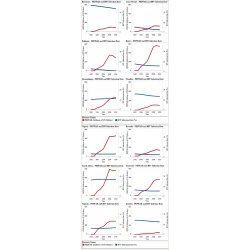
HIV and AIDS continue to have a calamitous effect on individuals living on the continent of Africa. U.S. President George W. Bush implemented the President's Emergency Plan for AIDS Relief (PEPFAR) with the objective of committing approximately $15 billion from 2004 through 2008 to assist with the reduction of the HIV pandemic worldwide. The majority of the PEPFAR policy and funding focused on 12 countries in sub-Saharan Africa: Botswana, Cote d'Ivoire, Ethiopia, Kenya, Mozambique, Namibia, Nigeria, Rwanda, South Africa, Tanzania, Uganda, and Zambia. The policy question this research paper seeks to analyze is whether the PEPFAR funding (as a % of Gross Domestic Product (GDP)) allocated to the 12 countries in Africa had any effect on the decrease of HIV infection rates of males and females between the ages of 15 and 49.
Methods:A fixed-effects panel regression analysis was conducted to determine if this association exists. This study examined the 12 African countries that received PEPFAR funding over the years 2002 to 2010; even though PEPFAR was only active from 2004 through 2008, this research included two years prior and two years after this timeframe in order to better estimate the effect of PEPFAR funding on HIV reduction.
Results:The results illustrate that on average, ceteris paribus, for every 1 percentage point increase in PEPFAR funding per GDP a country received, the country's HIV infection rate decreased by 0.355 percentage points.
Conclusions and Global Health Implications:While the empirical findings in this study suggested that the correlation between PEPFAR funding and HIV reduction is statistically significant, the practical significance is perhaps less obvious. Arguably, the reduction rate should be higher given the extent of funding targeted to this project. The conclusion of this research provides suggestions on future research and the policy implications of PEPFAR.
Downloads
Similar Articles
- Nemati Ali, Tazakori Zahra, Maryam Namadi Vosogh, Nazila Vosoghi, Maryam Zare, Afroz Mardi, Adham Davoud, Hamidzadeh Arbabi Yousef, Kazemzadeh Rafat, Effectiveness Comparison of Mothers’ In-person Versus Written Nutritional Education Intervention on Infant Growth in Iran , Vol. 3 No. 1 (2015): International Journal of Maternal and Child Health and AIDS
- Hasiya Tijjani Ismail, Taiwo G Amole, Fatima I Tsiga-Ahmed, Rabiu I Jalo, Aishatu L Adamu, Mahmoud U Sani, Hamisu M Salihu, William Wester, Muktar H Aliyu, Factors Associated with Utilization of Sexual and Reproductive Health Services among Married Adolescent Girls in Kano, Northern Nigeria , Vol. 13 No. Continuous (2024): International Journal of Maternal and Child Health and AIDS
- Akinyi E. Imbo, Elizabeth K. Mbuthia, Douglas N. Ngotho, Determinants of Neonatal Mortality in Kenya: Evidence from the Kenya Demographic and Health Survey 2014 , Vol. 10 No. 2 (2021): International Journal of Maternal and Child Health and AIDS
- Abou Ba, Fatou K Ndiaye, Yaay J Djeng, Cecile Cames, Aminata Diack, Ousmane N’diaye, Impact of Highly Active Antiretroviral Therapy on Chronic Hepatitis B Serological Markers among Senegalese HIV Co-infected Children , Vol. 8 No. 2 (2019): International Journal of Maternal and Child Health and AIDS
- Prakash R Ganesh, Rachel Mernoff, Renske Dikkers, William Nundwe, Rachel Pope, A Comparison of Postoperative Surgical Outcomes among Women Undergoing Obstetric Fistula Repair with and without HIV , Vol. 10 No. 2 (2021): International Journal of Maternal and Child Health and AIDS
- Maxwell P. Dapar, Benjamin N. Joseph, Rotkangmwa C. Okunlola, Josiah Mutihir, Moses P. Chingle, Mathilda E. Banwat, Pregnancy and Birth Outcomes Among Women on Antiretroviral Therapy: A Long-term Retrospective Analysis of Data from a Major Tertiary Hospital in North Central Nigeria , Vol. 10 No. 2 (2021): International Journal of Maternal and Child Health and AIDS
- Manpreet Singh Khurmi, Felix Sayinzoga, Atakilt Berhe, Tatien Bucyana, Assumpta Kayinamura Mwali, Emmanuel Manzi, Maharajan Muthu, Newborn Survival Case Study in Rwanda - Bottleneck Analysis and Projections in Key Maternal and Child Mortality Rates Using Lives Saved Tool (LiST) , Vol. 6 No. 2 (2017): International Journal of Maternal and Child Health and AIDS
- Mehrete Girmay, Digital Health Divide: Opportunities for Reducing Health Disparities and Promoting Equitable Care for Maternal and Child Health Populations , Vol. 13 No. Continuous (2024): International Journal of Maternal and Child Health and AIDS
- Gopal K. Singh, Mohammad Siahpush, Romuladus E. Azuine, Shanita D. Williams, Widening Socioeconomic and Racial Disparities in Cardiovascular Disease Mortality in the United States, 1969-2013 , Vol. 3 No. 2 (2015): International Journal of Maternal and Child Health and AIDS
- Gopal K. Singh, Romuladus E. Azuine, Mohammad Siahpush, Global Inequalities in Cervical Cancer Incidence and Mortality are Linked to Deprivation, Low Socioeconomic Status, and Human Development , Vol. 1 No. 1 (2012): International Journal of Maternal and Child Health and AIDS
<< < 8 9 10 11 12 13 14 15 16 17 > >>
You may also start an advanced similarity search for this article.
Published
How to Cite
Issue
Section
License
Copyright © 2015 Roger J. Chin, Domrongphol Sangmanee, Lisa Piergallini. Published by Global Health and Education Projects, Inc., USA.

This is an open-access article distributed under the terms of the Creative Commons Attribution-NonCommercial-ShareAlike 4.0 International License , which permits others to remix, transform, and build upon the work non-commercially, provided the original author is credited and the new creations are licensed under the same terms.