
PEPFAR Funding and Reduction in HIV Infection Rates in 12 Focus Sub-Saharan African Countries: A Quantitative Analysis
DOI:
https://doi.org/10.21106/ijma.47Keywords:
- AIDS Africa,
- Disease Prevention,
- Global Health HIV,
- PEPFAR,
- President's Emergency Plan for AIDS Relief
Abstract
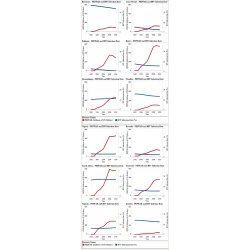
HIV and AIDS continue to have a calamitous effect on individuals living on the continent of Africa. U.S. President George W. Bush implemented the President's Emergency Plan for AIDS Relief (PEPFAR) with the objective of committing approximately $15 billion from 2004 through 2008 to assist with the reduction of the HIV pandemic worldwide. The majority of the PEPFAR policy and funding focused on 12 countries in sub-Saharan Africa: Botswana, Cote d'Ivoire, Ethiopia, Kenya, Mozambique, Namibia, Nigeria, Rwanda, South Africa, Tanzania, Uganda, and Zambia. The policy question this research paper seeks to analyze is whether the PEPFAR funding (as a % of Gross Domestic Product (GDP)) allocated to the 12 countries in Africa had any effect on the decrease of HIV infection rates of males and females between the ages of 15 and 49.
Methods:A fixed-effects panel regression analysis was conducted to determine if this association exists. This study examined the 12 African countries that received PEPFAR funding over the years 2002 to 2010; even though PEPFAR was only active from 2004 through 2008, this research included two years prior and two years after this timeframe in order to better estimate the effect of PEPFAR funding on HIV reduction.
Results:The results illustrate that on average, ceteris paribus, for every 1 percentage point increase in PEPFAR funding per GDP a country received, the country's HIV infection rate decreased by 0.355 percentage points.
Conclusions and Global Health Implications:While the empirical findings in this study suggested that the correlation between PEPFAR funding and HIV reduction is statistically significant, the practical significance is perhaps less obvious. Arguably, the reduction rate should be higher given the extent of funding targeted to this project. The conclusion of this research provides suggestions on future research and the policy implications of PEPFAR.
Downloads
Similar Articles
- Janice Katherine Kopinak, Mental Health in Developing Countries: Challenges and Opportunities in Introducing Western Mental Health System in Uganda , Vol. 3 No. 1 (2015): International Journal of Maternal and Child Health and AIDS
- Mousumi Datta, Shamima Yasmin, Rahul Biswas, Immunization Status, Immunization Coverage, and Factors Associated with Immunization Service Utilization Among HIV-Exposed and HIV-Infected Children in India , Vol. 13 No. Continuous (2024): International Journal of Maternal and Child Health and AIDS
- Anastasia Y. Bongajum, Pascal Foumane, Charlotte O. Moussi, Noel Vogue, Hycinth S. Banseka, Jujlius M. Nwobegahay, Martina L. Baye, Strengthening Maternal Death Surveillance Systems for Evidence-Based Decision Making in Sub-Saharan Africa: The Case of the Center Region in Cameroon , Vol. 10 No. 2 (2021): International Journal of Maternal and Child Health and AIDS
- Olatunde A. Amode, Omaye V. Negedu, Jessica T. Joseph, Uchenna Igbokwe Igbokwe, Olajumoke Adekeye, Damilola K. Oyedele, Hadiza Salele, Lola Ameyan, Kayode Afolabi, Olufunke Fasawe, Owens Wiwa, An Implementation Research Study on Uterotonics Use Patterns and Heat-stable Carbetocin Acceptability and Safety for Prevention of Postpartum Hemorrhage in Nigeria , Vol. 13 No. S1 (2024): International Journal of Maternal and Child Health and AIDS
- Linda Aurpibul, Fuanglada Tongprasert, Uraiwan Wichasilp, Arunrat Tangmunkongvorakul, Depressive Symptoms Associated with Low Quality of Life Among Pregnant and Postpartum Women Living with HIV in Chiang Mai, Thailand , Vol. 9 No. 3 (2020): International Journal of Maternal and Child Health and AIDS
- Gopal K. Singh, Romuladus E. Azuine, Mohammad Siahpush, Shanita D. Williams, Widening Geographical Disparities in Cardiovascular Disease Mortality in the United States, 1969-2011 , Vol. 3 No. 2 (2015): International Journal of Maternal and Child Health and AIDS
- Romuladus E. Azuine, Janna Murray, Noor Alsafi, Gopal K. Singh, Exclusive Breastfeeding and Under-Five Mortality, 2006-2014: A Cross-National Analysis of 57 Low- and-Middle Income Countries , Vol. 4 No. 1 (2015): International Journal of Maternal and Child Health and AIDS
- Amos Kankponang Laar, Belynda Amankwa, Charlotte Asiedu, Prevention-of-Mother-To-Child-Transmission of HIV Services in Sub-Saharan Africa: A Qualitative Analysis of Healthcare Providers and Clients Challenges in Ghana , Vol. 2 No. 2 (2014): International Journal of Maternal and Child Health and AIDS
- Gerald J. Makuka, Moses M. Sango, Ayubu E. Mashambo, Abednego E. Mashambo, Sia E. Msuya, Sabina P. Mtweve, Clients’ Perspectives on Quality of Delivery Services in a Rural Setting in Tanzania: Findings from a Qualitative Action-Oriented Research , Vol. 6 No. 1 (2017): International Journal of Maternal and Child Health and AIDS
- Ndidiamaka Amutah-Onukagha, Monica Rodriguez, Ijeoma Opara, Michelle Gardner, Maame Araba Assan, Rodney Hammond, Jesus Plata, Kimberly Pierre, Ehsan Farag, Progresses and challenges of utilizing traditional birth attendants in maternal and child health in Nigeria , Vol. 6 No. 2 (2017): International Journal of Maternal and Child Health and AIDS
<< < 6 7 8 9 10 11 12 13 14 15 > >>
You may also start an advanced similarity search for this article.
Published
How to Cite
Issue
Section
License
Copyright © 2015 Roger J. Chin, Domrongphol Sangmanee, Lisa Piergallini. Published by Global Health and Education Projects, Inc., USA.

This is an open-access article distributed under the terms of the Creative Commons Attribution-NonCommercial-ShareAlike 4.0 International License , which permits others to remix, transform, and build upon the work non-commercially, provided the original author is credited and the new creations are licensed under the same terms.