
Determinants of Digitalized Antenatal Education Use among Pregnant Women Living with Human Immunodeficiency Virus in Nigeria
DOI:
https://doi.org/10.21106/IJMA_41_2025Keywords:
- Antenatal,
- Digital Health,
- Human immunodeficiency viruses,
- Maternal Health,
- Nigeria,
- Pregnancy
Abstract
Background and Objective: The introduction of digital health has been found to improve maternal health globally. However, the use and determinants of digitalized antenatal education (DAE) use among vulnerable populations are yet to be ascertained. Therefore, this study assessed the use and determinants of DAE use among pregnant women living with human immunodeficiency viruses (PWLHIV).
Methods: The study adopted a descriptive design. Oyo state was randomly selected in Southwestern Nigeria, and 116 PWLHIV, who are receiving antiretroviral therapy, were recruited for the study. Of these, 93 returned completed data, which were included in the data analysis. A validated online questionnaire was used for data collection. Data analysis was done using STATA version 17. Descriptive statistics were used to assess the use, feasibility, and acceptability of DAE. Logistic regression was used to identify the determinants of DAE use.
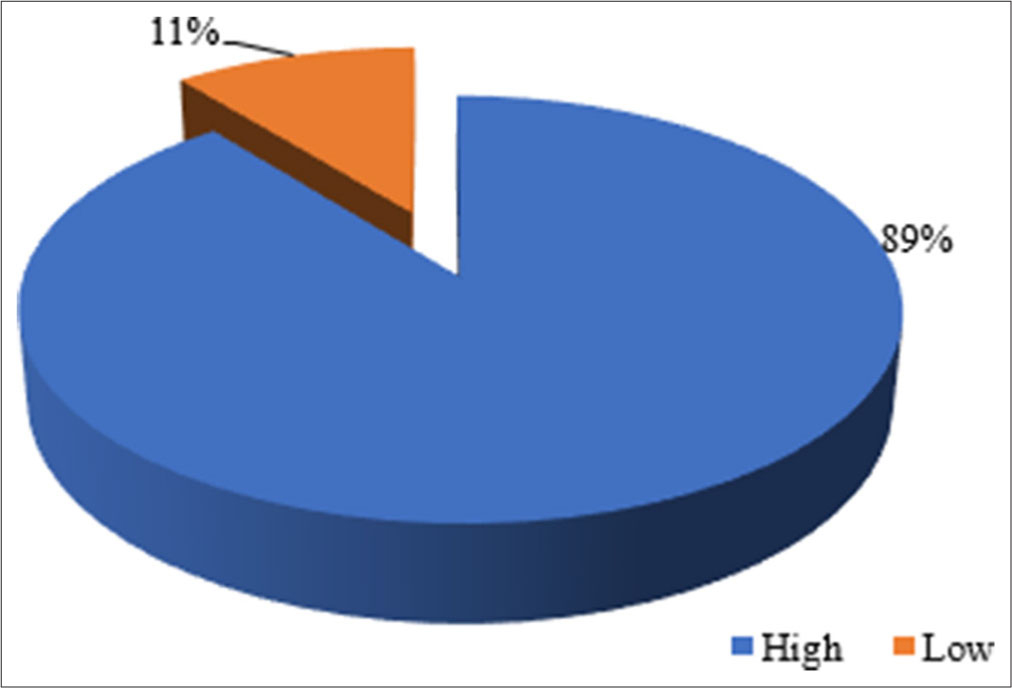
Results: Most (78 [83.9%]) of the participants reported that they have never used DAE. Similarly, 72 (77.4%) reported that they were not familiar with DAE at all. However, 84 (90.3%) of the women believed that it would be highly effective. The feasibility of DAE use is high in 83 (89%) of the participants. Furthermore, the majority of the participants, 73 (78.5%), indicated that DAE addresses their specific needs, and 77 (82.8%) of them reported being very comfortable with using DAE. The level of acceptability of DAE use is high in 73 (78.5%) of the participants. Determinants of DAE use, using adjusted odds ratio (AOR), include internet access (AOR = 1.205 with 95% confidence intervals [CI] of 0.233–6.221 and p = 0.024) and digital literacy (AOR = 14.072 with 95% CI of 2.209–89.634, and p = 0.005).
Conclusion and Global Health Implications: Despite the high feasibility and acceptability of DAE in Nigeria, its use is very low among PWLHIV. Strong determinants of use include digital literacy and internet access. Thus, for PWLHIV to meet the global standard in the use of digital health, interventions to improve digital literacy and internet access in low-resource settings are recommended.
Downloads
Most read articles by the same author(s)
- Margaret Omowaleola Akinwaare, Funmilayo A. Okanlawon, Monisola A. Popoola, Omotayo O. Adetunji, Birth Preparedness Plans and Status Disclosure Among Pregnant Women Living with HIV Who are Receiving Antiretroviral Therapy in Ibadan, Southwest, Nigeria , International Journal of Maternal and Child Health and AIDS: Vol. 12 No. 1 (2023): International Journal of Maternal and Child Health and AIDS
Similar Articles
- Ebelechuku F. Ugochukwu, Chinyere U. Onubogu, Emeka S. Edokwe, Uchenna Ekwochi, Kenneth N. Okeke, Esther N. Umeadi, Stanley K. Onah, A Review and Analysis of Outcomes from Prevention of Mother-toChild Transmission of HIV Infant Follow-up Services at a Pediatric Infectious Diseases Unit of a Major Tertiary Hospital in Nigeria: 2007-2020 , Vol. 10 No. 2 (2021): International Journal of Maternal and Child Health and AIDS
- Katherine Magerko, John Humphrey, Julia Songok, Beverly Musick, Joy Marsha Alera, Bett Kipchumba, Wycliffe Kosgei, Winfred Mwangi, Ziyi Yang, Kara Wools-Kaloustian, Megan McHenry, Impact of Maternal Viral Suppression on Growth Patterns for HIV-Exposed Uninfected Infants in Kenya , Vol. 13 No. Continuous (2024): International Journal of Maternal and Child Health and AIDS
- Metin Gülmezoglu, Lester Chiner, Sara Rushwan, Anne Ammerdorffer, A Tale of Two Medicines: The Need for Ownership, End-to-End Planning and Execution for Development and Introduction of Maternal Health Medicines , Vol. 13 No. S1 (2024): International Journal of Maternal and Child Health and AIDS
- Veronicah A. Wechuli, Monicah W. Karara, Allan T. Wafula, Godfrey W. Mayoka, Impact of COVID-19 on the Utilization of Maternal and Child Health Services at a Regional Referral Hospital in Kenya , Vol. 13 No. Continuous (2024): International Journal of Maternal and Child Health and AIDS
- Joel M. Njah, Gregory E. Halle-Ekane, Sylvester N. Atanga, Edouard K. Tshimwanga, Felix Desembuin, Pius T. Muffih, From Option B+ to Universal “Test and Treat” in Cameroon: Identification and Evaluation of District-level Factors Associated with Retention in Care , Vol. 12 No. 2 (2023): International Journal of Maternal and Child Health and AIDS
- Gopal K. Singh, Romuladus E. Azuine, Mohammad Siahpush, Global Inequalities in Cervical Cancer Incidence and Mortality are Linked to Deprivation, Low Socioeconomic Status, and Human Development , Vol. 1 No. 1 (2012): International Journal of Maternal and Child Health and AIDS
- Phillips Edomwonyi Obasohan, Religion, Ethnicity and Contraceptive Use among Reproductive age Women in Nigeria , Vol. 3 No. 1 (2015): International Journal of Maternal and Child Health and AIDS
- Wah Myint, Aishatu Yusuf, Angela Nguyen, Elfreda Samman, HIV Testing, Household and Reproductive Health Decision-Making: The Role of Women Autonomy in a Nationally Representative Study in Cambodia , Vol. 14 No. Continuous (2025): International Journal of Maternal and Child Health and AIDS
- Léonel Philibert, Judith Lapierre, Vulnerabilities and Strengths of Pregnant Haitian Adolescents and their Families During Transition to Motherhood , Vol. 11 No. 2 (2022): International Journal of Maternal and Child Health and AIDS
- Fatimah Isma’il Tsiga-Ahmed, Taiwo Gboluwaga Amole, Baba Maiyaki Musa, Aishatu Muhammad Nalado, Omeiza Baba Agoyi, Hadiza Shehu Galadanci, Hamisu M. Salihu, COVID 19: Evaluating the Knowledge, Attitude and Preventive Practices of Healthcare Workers in Northern Nigeria , Vol. 10 No. 1 (2021): International Journal of Maternal and Child Health and AIDS
<< < 6 7 8 9 10 11 12 13 14 15 > >>
You may also start an advanced similarity search for this article.
Published
How to Cite
Issue
Section
License
Copyright © 2026 Margaret Omowaleola Akinwaare, Jonah Musa, Chizoma Millicent Ndikom. Published by Global Health and Education Projects, Inc., USA.

This is an open-access article distributed under the terms of the Creative Commons Attribution-NonCommercial-ShareAlike 4.0 International License , which permits others to remix, transform, and build upon the work non-commercially, provided the original author is credited and the new creations are licensed under the same terms.