
Determinants of Digitalized Antenatal Education Use among Pregnant Women Living with Human Immunodeficiency Virus in Nigeria
DOI:
https://doi.org/10.21106/IJMA_41_2025Keywords:
- Antenatal,
- Digital Health,
- Human immunodeficiency viruses,
- Maternal Health,
- Nigeria,
- Pregnancy
Abstract
Background and Objective: The introduction of digital health has been found to improve maternal health globally. However, the use and determinants of digitalized antenatal education (DAE) use among vulnerable populations are yet to be ascertained. Therefore, this study assessed the use and determinants of DAE use among pregnant women living with human immunodeficiency viruses (PWLHIV).
Methods: The study adopted a descriptive design. Oyo state was randomly selected in Southwestern Nigeria, and 116 PWLHIV, who are receiving antiretroviral therapy, were recruited for the study. Of these, 93 returned completed data, which were included in the data analysis. A validated online questionnaire was used for data collection. Data analysis was done using STATA version 17. Descriptive statistics were used to assess the use, feasibility, and acceptability of DAE. Logistic regression was used to identify the determinants of DAE use.
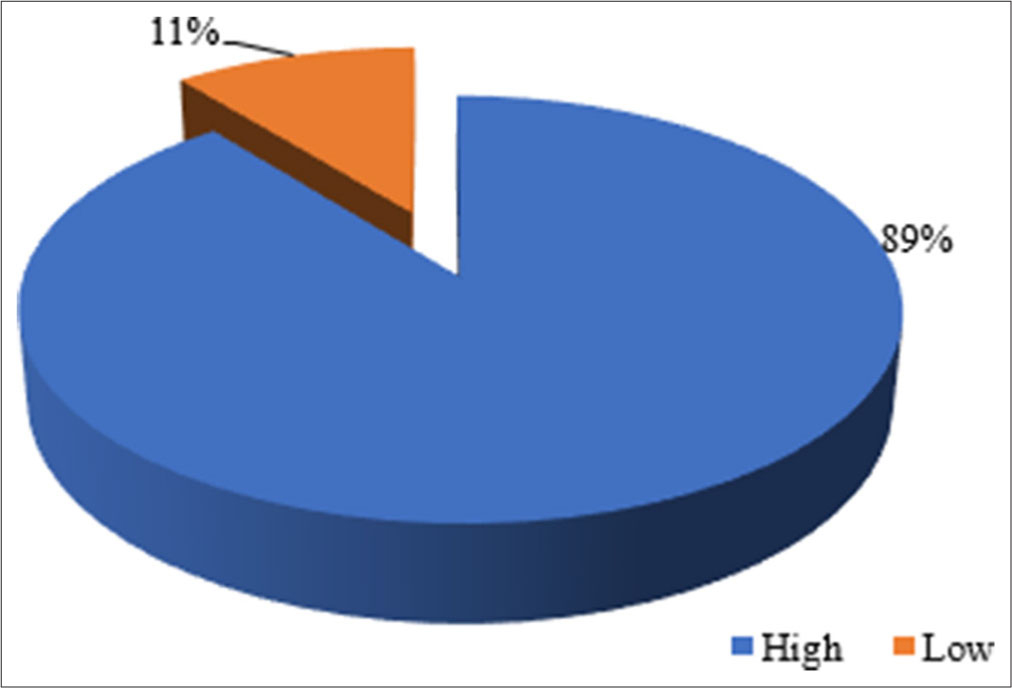
Results: Most (78 [83.9%]) of the participants reported that they have never used DAE. Similarly, 72 (77.4%) reported that they were not familiar with DAE at all. However, 84 (90.3%) of the women believed that it would be highly effective. The feasibility of DAE use is high in 83 (89%) of the participants. Furthermore, the majority of the participants, 73 (78.5%), indicated that DAE addresses their specific needs, and 77 (82.8%) of them reported being very comfortable with using DAE. The level of acceptability of DAE use is high in 73 (78.5%) of the participants. Determinants of DAE use, using adjusted odds ratio (AOR), include internet access (AOR = 1.205 with 95% confidence intervals [CI] of 0.233–6.221 and p = 0.024) and digital literacy (AOR = 14.072 with 95% CI of 2.209–89.634, and p = 0.005).
Conclusion and Global Health Implications: Despite the high feasibility and acceptability of DAE in Nigeria, its use is very low among PWLHIV. Strong determinants of use include digital literacy and internet access. Thus, for PWLHIV to meet the global standard in the use of digital health, interventions to improve digital literacy and internet access in low-resource settings are recommended.
Downloads
Most read articles by the same author(s)
- Margaret Omowaleola Akinwaare, Funmilayo A. Okanlawon, Monisola A. Popoola, Omotayo O. Adetunji, Birth Preparedness Plans and Status Disclosure Among Pregnant Women Living with HIV Who are Receiving Antiretroviral Therapy in Ibadan, Southwest, Nigeria , International Journal of Maternal and Child Health and AIDS: Vol. 12 No. 1 (2023): International Journal of Maternal and Child Health and AIDS
Similar Articles
- Kimberly Fryer, Chinyere N. Reid, Naciely Cabral, Jennifer Marshall, Usha Menon, Exploring Patients’ Needs and Desires for Quality Prenatal Care in Florida, United States , Vol. 12 No. 1 (2023): International Journal of Maternal and Child Health and AIDS
- Nidhi Fotedar, Nugehally Raju Ramesh Masthi, Burden of Fetal Anomalies among Antenatal Mothers Attending a Public Referral Hospital: A Mixed Cohort Study , Vol. 14 No. Continuous (2025): International Journal of Maternal and Child Health and AIDS
- Samantha A. Slinkard, Jennifer R. Pharr, Tamara Bruno, Dina Patel, Amaka Ogidi, Michael Obiefune, Echezona E. Ezeanolue, Determinants of Infant Mortality in Southeast Nigeria: Results from the Healthy Beginning Initiative, 2013-2014 , Vol. 7 No. 1 (2018): International Journal of Maternal and Child Health and AIDS
- Khadija Kofoworola Adeleye, Margaret Omowaleola Akinwaare, Prisca Olabisi Adejumo, Reproductive Plans And Utilization of Contraceptives Among Women Living With HIV , Vol. 8 No. 2 (2019): International Journal of Maternal and Child Health and AIDS
- Gopal K. Singh, Stella M. Yu, Infant Mortality in the United States, 1915-2017: Large Social Inequalities have Persisted for Over a Century , Vol. 8 No. 1 (2019): International Journal of Maternal and Child Health and AIDS
- Janice Katherine Kopinak, Mental Health in Developing Countries: Challenges and Opportunities in Introducing Western Mental Health System in Uganda , Vol. 3 No. 1 (2015): International Journal of Maternal and Child Health and AIDS
- Hyacinthe Zamané, Hyacinthe Euvrard Sow, Dantola Paul Kain, Brice Wilfried Bicaba, Sibraogo Kiemtoré, Issaka Yameogo, Blandine Bonané-Thieba, Mamadou Sawadogo, Maternal Mortality at the Dori Regional Hospital in Northern Burkina Faso, 2014-2016 , Vol. 7 No. 2 (2018): International Journal of Maternal and Child Health and AIDS
- Agnes Langat, Tegan L. Callahan, Isabella Yonga, Boniface Ochanda, Anthony Waruru, Lucy W. Ng’anga, Abraham Katana, Brian Onyango, Benson Singa, Stephen Oyule, George Githuka, Lennah Omoto, Jane Muli, Thorkild Tylleskar, Surbhi Modi, Associations of Sociodemographic and Clinical Factors with Late Presentation for Early Infant HIV Diagnosis (EID) Services in Kenya , Vol. 10 No. 2 (2021): International Journal of Maternal and Child Health and AIDS
- Fekadu Mazengia Alemu, Alemayehu Worku Yalew, Mesganaw Fantahun, Eta Ebasi Ashu, Antiretroviral Therapy and Pregnancy Outcomes in Developing Countries: A Systematic Review , Vol. 3 No. 1 (2015): International Journal of Maternal and Child Health and AIDS
- John Humphrey, Esther Wanjama, James G. Carlucci, Violet Naanyu, Lindah Muli, Edwin Were, Alan McGuire, Winstone M. Nyandiko, Julia Songok, Gregory Zimet, Kara Wools-Kaloustian, Understanding Women’s Preferences for Prevention of Mother-to-Child HIV Transmission Services in Kenya , Vol. 13 No. Continuous (2024): International Journal of Maternal and Child Health and AIDS
<< < 4 5 6 7 8 9 10 11 12 13 > >>
You may also start an advanced similarity search for this article.
Published
How to Cite
Issue
Section
License
Copyright © 2026 Margaret Omowaleola Akinwaare, Jonah Musa, Chizoma Millicent Ndikom. Published by Global Health and Education Projects, Inc., USA.

This is an open-access article distributed under the terms of the Creative Commons Attribution-NonCommercial-ShareAlike 4.0 International License , which permits others to remix, transform, and build upon the work non-commercially, provided the original author is credited and the new creations are licensed under the same terms.