
Determinants of Digitalized Antenatal Education Use among Pregnant Women Living with Human Immunodeficiency Virus in Nigeria
DOI:
https://doi.org/10.21106/IJMA_41_2025Keywords:
- Antenatal,
- Digital Health,
- Human immunodeficiency viruses,
- Maternal Health,
- Nigeria,
- Pregnancy
Abstract
Background and Objective: The introduction of digital health has been found to improve maternal health globally. However, the use and determinants of digitalized antenatal education (DAE) use among vulnerable populations are yet to be ascertained. Therefore, this study assessed the use and determinants of DAE use among pregnant women living with human immunodeficiency viruses (PWLHIV).
Methods: The study adopted a descriptive design. Oyo state was randomly selected in Southwestern Nigeria, and 116 PWLHIV, who are receiving antiretroviral therapy, were recruited for the study. Of these, 93 returned completed data, which were included in the data analysis. A validated online questionnaire was used for data collection. Data analysis was done using STATA version 17. Descriptive statistics were used to assess the use, feasibility, and acceptability of DAE. Logistic regression was used to identify the determinants of DAE use.
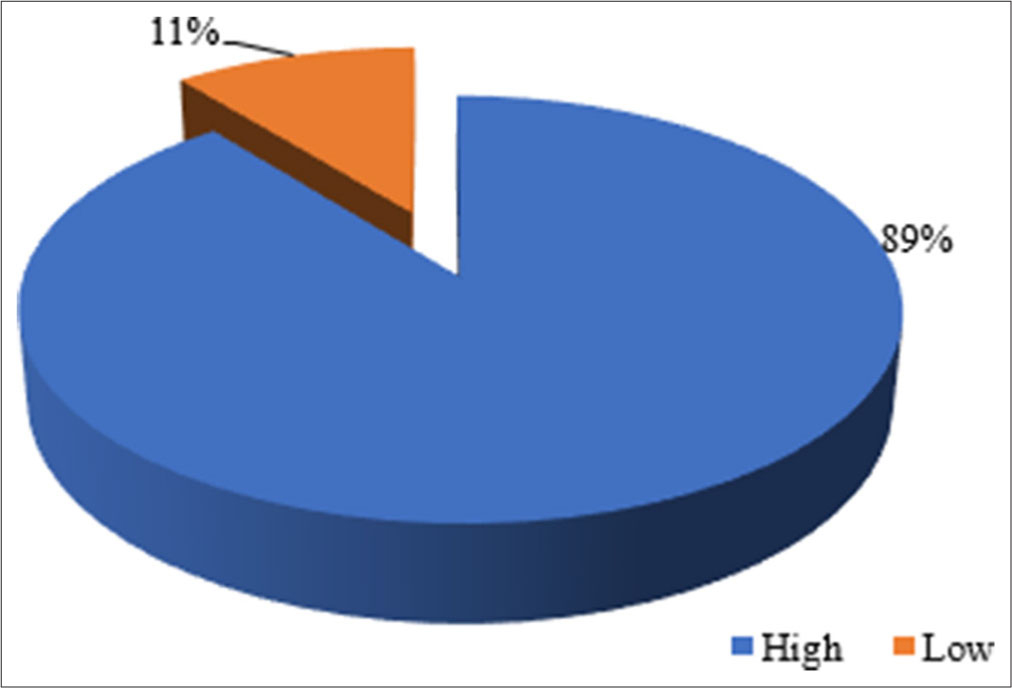
Results: Most (78 [83.9%]) of the participants reported that they have never used DAE. Similarly, 72 (77.4%) reported that they were not familiar with DAE at all. However, 84 (90.3%) of the women believed that it would be highly effective. The feasibility of DAE use is high in 83 (89%) of the participants. Furthermore, the majority of the participants, 73 (78.5%), indicated that DAE addresses their specific needs, and 77 (82.8%) of them reported being very comfortable with using DAE. The level of acceptability of DAE use is high in 73 (78.5%) of the participants. Determinants of DAE use, using adjusted odds ratio (AOR), include internet access (AOR = 1.205 with 95% confidence intervals [CI] of 0.233–6.221 and p = 0.024) and digital literacy (AOR = 14.072 with 95% CI of 2.209–89.634, and p = 0.005).
Conclusion and Global Health Implications: Despite the high feasibility and acceptability of DAE in Nigeria, its use is very low among PWLHIV. Strong determinants of use include digital literacy and internet access. Thus, for PWLHIV to meet the global standard in the use of digital health, interventions to improve digital literacy and internet access in low-resource settings are recommended.
Downloads
Most read articles by the same author(s)
- Margaret Omowaleola Akinwaare, Funmilayo A. Okanlawon, Monisola A. Popoola, Omotayo O. Adetunji, Birth Preparedness Plans and Status Disclosure Among Pregnant Women Living with HIV Who are Receiving Antiretroviral Therapy in Ibadan, Southwest, Nigeria , International Journal of Maternal and Child Health and AIDS: Vol. 12 No. 1 (2023): International Journal of Maternal and Child Health and AIDS
Similar Articles
- Armand Duclaire Kemo, Bruno Kenfack, Jerome Ateudjieu, Maternal Deaths and Complications: Documentation of Parameters on the Partographs Used by Health Care Providers in Four Hospitals in West Cameroon , Vol. 14 No. Continuous (2025): International Journal of Maternal and Child Health and AIDS
- Oluwafunmilayo Funke Adeniyi, Ekanem Ekure, Foluke A. Olatona, Elizabeth O. Ajayi, Nwaoma Nworgu, Nutritional Assessment and Maternal Perception of Toddler Body Size using Toddler Silhouette Scale in Nigeria a Developing Country , Vol. 7 No. 1 (2018): International Journal of Maternal and Child Health and AIDS
- Smitha Kochukuttan, TK Sundari Ravindran, Suneeta Krishnan, Evaluating Birth Preparedness and Pregnancy Complications Readiness Knowledge and Skills of Accredited Social Health Activists in India , Vol. 2 No. 1 (2013): International Journal of Maternal and Child Health and AIDS
- Gopal K. Singh, Romuladus E. Azuine, Mohammad Siahpush, Shanita D. Williams, Widening Geographical Disparities in Cardiovascular Disease Mortality in the United States, 1969-2011 , Vol. 3 No. 2 (2015): International Journal of Maternal and Child Health and AIDS
- Amina A. Umar, Hamisu M. Salihu, Romuladus E. Azuine, Crisis of Brain Drain in Nigeria’s Health Sector: Challenges, Opportunities, and the Path Forward , Vol. 14 No. Continuous (2025): International Journal of Maternal and Child Health and AIDS
- Linda Aurpibul, Fuanglada Tongprasert, Uraiwan Wichasilp, Arunrat Tangmunkongvorakul, Depressive Symptoms Associated with Low Quality of Life Among Pregnant and Postpartum Women Living with HIV in Chiang Mai, Thailand , Vol. 9 No. 3 (2020): International Journal of Maternal and Child Health and AIDS
- John Humphrey, James G Carlucci, Esther Karen Wanjama, Violet Naanyu, Lindah Muli, Joy Marsha Alera, Edwin Were, Alan McGuire, Winstone Nyandiko, Gregory Zimet, Julia Jerono Songok, Kara Wools Kaloustian, Implementing WHO Differentiated Service Delivery Model for Pregnant and Breastfeeding Women and Infants Living with HIV: Insights from Kenyan Healthcare Providers , Vol. 14 No. Continuous (2025): International Journal of Maternal and Child Health and AIDS
- Deepa Dongarwar, Veronica B. Ajewole, Emmanuella Oduguwa, Ahone Ngujede, Kiydra Harris, Theresa U. Ofili, Omonike A. Olaleye, Hamisu M. Salihu, Role of Social Determinants of Health in Widening Maternal and Child Health Disparities in the Era of Covid-19 Pandemic , Vol. 9 No. 3 (2020): International Journal of Maternal and Child Health and AIDS
- Karen M. Hampanda, Lisa L. Abuogi, Yusuf Ahmed, HIV-Positive Women Taking Lifelong Antiretroviral Therapy Report Better Adherence Than Women Taking Short-Course Prophylaxis During and After Pregnancy Under PMTCT Program Option A in Lusaka, Zambia , Vol. 6 No. 1 (2017): International Journal of Maternal and Child Health and AIDS
- Kolawole Solomon Oyedeji, Adeniyi Francis Fagbamigbe, Johnbull Sonny Ogboi, Adebobola Toluwalashe Bashorun, Kawu Bolakale Issa, Perpetua Amida, Adeniyi Ogundiran, Ezire Onoriode, Does Pre-Survey Training Impact Knowledge of Survey Administrators and Survey Outcomes in Developing Countries? Evaluation Findings of a Training of Trainers Workshop for National AIDS and Reproductive Health Survey-Plus in Nigeria , Vol. 2 No. 1 (2013): International Journal of Maternal and Child Health and AIDS
<< < 9 10 11 12 13 14 15 16 17 18 > >>
You may also start an advanced similarity search for this article.
Published
How to Cite
Issue
Section
License
Copyright © 2026 Margaret Omowaleola Akinwaare, Jonah Musa, Chizoma Millicent Ndikom. Published by Global Health and Education Projects, Inc., USA.

This is an open-access article distributed under the terms of the Creative Commons Attribution-NonCommercial-ShareAlike 4.0 International License , which permits others to remix, transform, and build upon the work non-commercially, provided the original author is credited and the new creations are licensed under the same terms.