
Determinants of Digitalized Antenatal Education Use among Pregnant Women Living with Human Immunodeficiency Virus in Nigeria
DOI:
https://doi.org/10.21106/IJMA_41_2025Keywords:
- Antenatal,
- Digital Health,
- Human immunodeficiency viruses,
- Maternal Health,
- Nigeria,
- Pregnancy
Abstract
Background and Objective: The introduction of digital health has been found to improve maternal health globally. However, the use and determinants of digitalized antenatal education (DAE) use among vulnerable populations are yet to be ascertained. Therefore, this study assessed the use and determinants of DAE use among pregnant women living with human immunodeficiency viruses (PWLHIV).
Methods: The study adopted a descriptive design. Oyo state was randomly selected in Southwestern Nigeria, and 116 PWLHIV, who are receiving antiretroviral therapy, were recruited for the study. Of these, 93 returned completed data, which were included in the data analysis. A validated online questionnaire was used for data collection. Data analysis was done using STATA version 17. Descriptive statistics were used to assess the use, feasibility, and acceptability of DAE. Logistic regression was used to identify the determinants of DAE use.
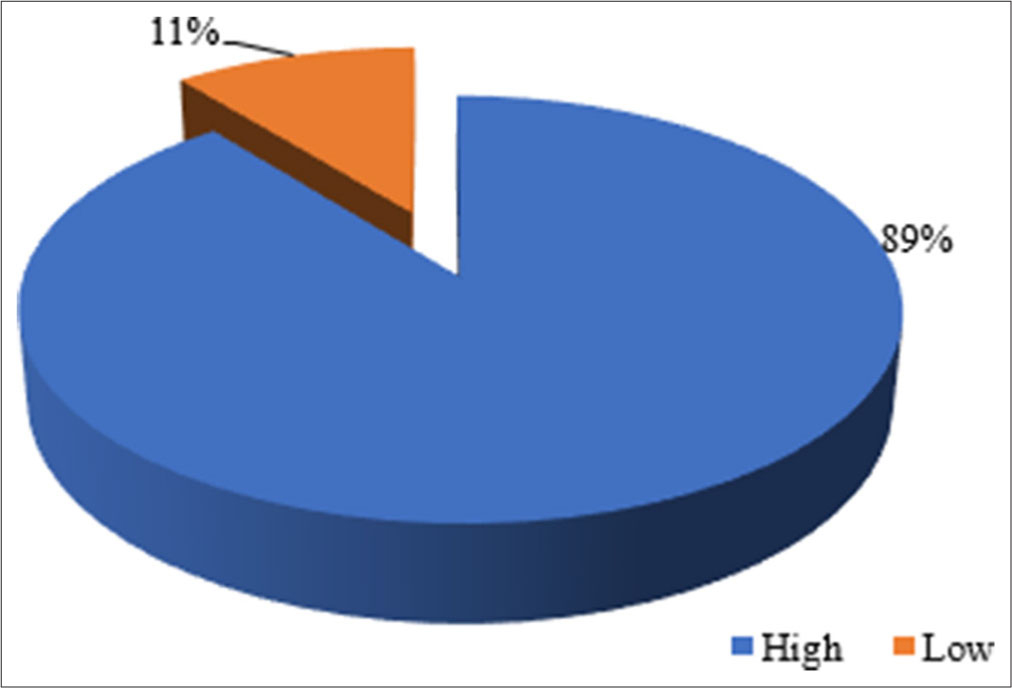
Results: Most (78 [83.9%]) of the participants reported that they have never used DAE. Similarly, 72 (77.4%) reported that they were not familiar with DAE at all. However, 84 (90.3%) of the women believed that it would be highly effective. The feasibility of DAE use is high in 83 (89%) of the participants. Furthermore, the majority of the participants, 73 (78.5%), indicated that DAE addresses their specific needs, and 77 (82.8%) of them reported being very comfortable with using DAE. The level of acceptability of DAE use is high in 73 (78.5%) of the participants. Determinants of DAE use, using adjusted odds ratio (AOR), include internet access (AOR = 1.205 with 95% confidence intervals [CI] of 0.233–6.221 and p = 0.024) and digital literacy (AOR = 14.072 with 95% CI of 2.209–89.634, and p = 0.005).
Conclusion and Global Health Implications: Despite the high feasibility and acceptability of DAE in Nigeria, its use is very low among PWLHIV. Strong determinants of use include digital literacy and internet access. Thus, for PWLHIV to meet the global standard in the use of digital health, interventions to improve digital literacy and internet access in low-resource settings are recommended.
Downloads
Most read articles by the same author(s)
- Margaret Omowaleola Akinwaare, Funmilayo A. Okanlawon, Monisola A. Popoola, Omotayo O. Adetunji, Birth Preparedness Plans and Status Disclosure Among Pregnant Women Living with HIV Who are Receiving Antiretroviral Therapy in Ibadan, Southwest, Nigeria , International Journal of Maternal and Child Health and AIDS: Vol. 12 No. 1 (2023): International Journal of Maternal and Child Health and AIDS
Similar Articles
- Korede K Yusuf, Deepa Dongarwar, Sahra Ibrahimi, Chioma Ikedionwu, Sitratullah O. Maiyegun, Hamisu M. Salihu, Expected Surge in Maternal Mortality and Severe Morbidity among African-Americans in the Era of COVID-19 Pandemic , Vol. 9 No. 3 (2020): International Journal of Maternal and Child Health and AIDS
- Gopal K. Singh, Isaac E. Kim, Mehrete Girmay, Chrisp Perry, Gem P. Daus, Ivy P. Vedamuthu, Andrew A. De Los Reyes, Christine T. Ramey, Elijah K. Martin, Michelle Allender, Opioid Epidemic in the United States: Empirical Trends, and A Literature Review of Social Determinants and Epidemiological, Pain Management, and Treatment Patterns , Vol. 8 No. 2 (2019): International Journal of Maternal and Child Health and AIDS
- Md Nazrul Islam Mondai, Md Monzur Morshad Nasir Ullah, Md Rafiqul Islam, Md Shafiur Rahman, Md Nuruzzaman Khan, Kazi Mohiuddin Ahmed, Mohammad Shariful Islam, Sociodemographic and Health Determinants of Inequalities in Life Expectancy in Least Developed Countries , Vol. 4 No. 1 (2015): International Journal of Maternal and Child Health and AIDS
- Chidimma Ezenwa Anyanwu, Kwasi Torpey, Olaiya Paul Abiodun, Olaniyi Felix Sanni, Ifeanyi Donald Anyanwu, Variations in the Prevalence of Female Genital Mutilation Among Reproductive-aged Women in Nigeria Across Three Generations , Vol. 11 No. 2 (2022): International Journal of Maternal and Child Health and AIDS
- Sue C. Lin, Stella M. Yu, Disparities in Healthcare Access and Utilization among Children with Autism Spectrum Disorder from Immigrant Non-English Primary Language Households in the United States , Vol. 3 No. 2 (2015): International Journal of Maternal and Child Health and AIDS
- Daisy Ruto, Michael Muthamia, Edith Njeri, Freda Nyaga, Christine Muia, Morris Kiio, Jane Wausi, Introduction of Heat-Stable Carbetocin for Postpartum Hemorrhage Prevention in Public Sector Hospitals in Kenya: Provider Experience and Policy Insights , Vol. 13 No. S1 (2024): International Journal of Maternal and Child Health and AIDS
- Presley Chick Tayong, Herbert Afegenwi Mbunkah, Raphael Awah Abong, Sumelong Sharon Dione Akomoneh, Raoul Tuekam Kayo, Elvis Achondou Akomoneh, Incidence of Mother-to-Child Transmission of HIV and Associated Factors in Postpartum Women in Cameroon , Vol. 14 No. Continuous (2025): International Journal of Maternal and Child Health and AIDS
- Jayati Kusari Basu, Lawrence Chauke, Cert Maternal Fetal Medicine, Terrance Magoro, Clinical Features and Outcomes of COVID-19 Infection among Pregnant Women in South Africa , Vol. 10 No. 2 (2021): International Journal of Maternal and Child Health and AIDS
- Nazrul Islam Mondal, Monzur Morshad Nasir Ullah, Nuruzzaman Khan, Mohammad Zamirul Islam, Nurul Islam, Sabiha Yasmin Moni, Nazrul Hoque, Mashiur Rahman, Socioeconomic and Demographic Disparities in Knowledge of Reproductive Healthcare among Female University Students in Bangladesh , Vol. 4 No. 2 (2015): International Journal of Maternal and Child Health and AIDS
- Modupe Rebekah Akinyinka, Foluke Adenike Olatona, Esther Oluwakemi Oluwole, Breastfeeding Knowledge and Practices among Mothers of Children under 2 Years of Age Living in a Military Barrack in Southwest Nigeria , Vol. 5 No. 1 (2016): International Journal of Maternal and Child Health and AIDS
<< < 8 9 10 11 12 13 14 15 16 17 > >>
You may also start an advanced similarity search for this article.
Published
How to Cite
Issue
Section
License
Copyright © 2026 Margaret Omowaleola Akinwaare, Jonah Musa, Chizoma Millicent Ndikom. Published by Global Health and Education Projects, Inc., USA.

This is an open-access article distributed under the terms of the Creative Commons Attribution-NonCommercial-ShareAlike 4.0 International License , which permits others to remix, transform, and build upon the work non-commercially, provided the original author is credited and the new creations are licensed under the same terms.