
Determinants of Digitalized Antenatal Education Use among Pregnant Women Living with Human Immunodeficiency Virus in Nigeria
DOI:
https://doi.org/10.21106/IJMA_41_2025Keywords:
- Antenatal,
- Digital Health,
- Human immunodeficiency viruses,
- Maternal Health,
- Nigeria,
- Pregnancy
Abstract
Background and Objective: The introduction of digital health has been found to improve maternal health globally. However, the use and determinants of digitalized antenatal education (DAE) use among vulnerable populations are yet to be ascertained. Therefore, this study assessed the use and determinants of DAE use among pregnant women living with human immunodeficiency viruses (PWLHIV).
Methods: The study adopted a descriptive design. Oyo state was randomly selected in Southwestern Nigeria, and 116 PWLHIV, who are receiving antiretroviral therapy, were recruited for the study. Of these, 93 returned completed data, which were included in the data analysis. A validated online questionnaire was used for data collection. Data analysis was done using STATA version 17. Descriptive statistics were used to assess the use, feasibility, and acceptability of DAE. Logistic regression was used to identify the determinants of DAE use.
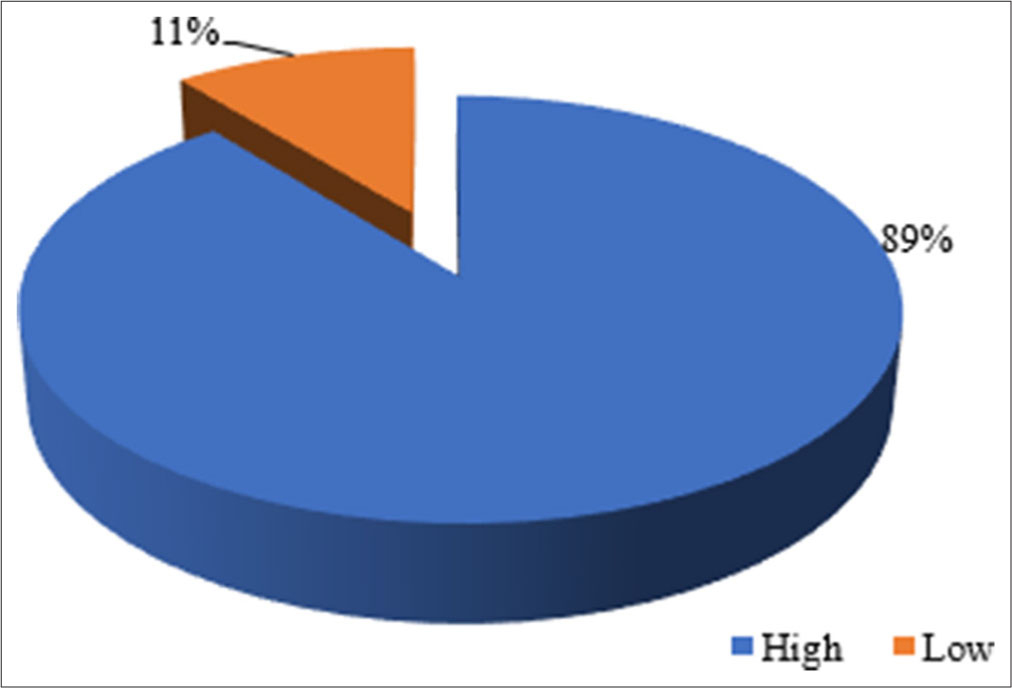
Results: Most (78 [83.9%]) of the participants reported that they have never used DAE. Similarly, 72 (77.4%) reported that they were not familiar with DAE at all. However, 84 (90.3%) of the women believed that it would be highly effective. The feasibility of DAE use is high in 83 (89%) of the participants. Furthermore, the majority of the participants, 73 (78.5%), indicated that DAE addresses their specific needs, and 77 (82.8%) of them reported being very comfortable with using DAE. The level of acceptability of DAE use is high in 73 (78.5%) of the participants. Determinants of DAE use, using adjusted odds ratio (AOR), include internet access (AOR = 1.205 with 95% confidence intervals [CI] of 0.233–6.221 and p = 0.024) and digital literacy (AOR = 14.072 with 95% CI of 2.209–89.634, and p = 0.005).
Conclusion and Global Health Implications: Despite the high feasibility and acceptability of DAE in Nigeria, its use is very low among PWLHIV. Strong determinants of use include digital literacy and internet access. Thus, for PWLHIV to meet the global standard in the use of digital health, interventions to improve digital literacy and internet access in low-resource settings are recommended.
Downloads
Most read articles by the same author(s)
- Margaret Omowaleola Akinwaare, Funmilayo A. Okanlawon, Monisola A. Popoola, Omotayo O. Adetunji, Birth Preparedness Plans and Status Disclosure Among Pregnant Women Living with HIV Who are Receiving Antiretroviral Therapy in Ibadan, Southwest, Nigeria , International Journal of Maternal and Child Health and AIDS: Vol. 12 No. 1 (2023): International Journal of Maternal and Child Health and AIDS
Similar Articles
- Ekere James Essien, Osaro Mgbere, Sorochi Iloanusi, Susan M. Abughosh, COVID-19 Infection among People with HIV/AIDS in Africa: Knowledge Gaps, Public Health Preparedness and Research Priorities , Vol. 10 No. 1 (2021): International Journal of Maternal and Child Health and AIDS
- San Hone, Li Li, W. Scott Comulada, Roger Detels, Progress and Challenges of Implementing Decentralized HIV Testing For Prevention of Mother-to-Child Transmission of HIV – Myanmar , Vol. 8 No. 1 (2019): International Journal of Maternal and Child Health and AIDS
- Oluwafunmilayo Funke Adeniyi, Gabriel T. Fagbenro, Foluke A. Olatona, Overweight and Obesity Among School-aged Children and Maternal Preventive Practices against Childhood Obesity in Select Local Government Areas of Lagos, Southwest, Nigeria , Vol. 8 No. 1 (2019): International Journal of Maternal and Child Health and AIDS
- Rasaki O Shittu, Baba A Issa, Ganiyu T Olanrewaju, Abdulraheem O Mahmoud, Louis O Odeigah, Abdullateef G Sule, Social Determinants of Depression: Social Cohesion, Negative Life Events, and Depression Among People Living with HIV/Aids in Nigeria, West Africa , Vol. 2 No. 2 (2014): International Journal of Maternal and Child Health and AIDS
- Folake Olukemi Samuel, Ebunoluwa Grace Ibidapo, Complementary Feeding Practices and Associated Factors Among Nursing Mothers in Southwestern Nigeria , Vol. 9 No. 2 (2020): International Journal of Maternal and Child Health and AIDS
- Rajesh Narwal, Lu Gram, Has the Rate of Reduction in Infant Mortality Increased in India Since the Launch of National Rural Health Mission? Analysis of Time Trends 2000-2009 with Projection to 2015 , Vol. 2 No. 1 (2013): International Journal of Maternal and Child Health and AIDS
- Hyunjung Lee, Gopal K. Singh, Contributions of Socioeconomic, Demographic, and Behavioral Risk Factors to All-Cause Mortality Disparities by Psychological Distress in the United States: A Blinder-Oaxaca Decomposition Analysis of Longitudinal Data , Vol. 11 No. 1 (2022): International Journal of Maternal and Child Health and AIDS
- Foluke Adenike Olatona, Jesupelumi Oreoluwa Adenihun, Sunday Adedeji Aderibigbe, Oluwafunmilayo Funke Adeniyi, Complementary Feeding Knowledge, Practices, and Dietary Diversity among Mothers of Under-Five Children in an Urban Community in Lagos State, Nigeria , Vol. 6 No. 1 (2017): International Journal of Maternal and Child Health and AIDS
- Sara Rushwan, Tesfaye Tufa, Metin Gülmezoglu, Feasibility, Acceptability, and Appropriate Use of Novel and Lesser-Used Medicines for Prevention and Treatment of Postpartum Hemorrhage: Evidence from Implementation Research , Vol. 13 No. S1 (2024): International Journal of Maternal and Child Health and AIDS
- Kiydra Harris, Deepa Dongarwar, Tasha Roshan, Collins Onyenaka, Collins Enwerem, Omonike Olaleye, Hamisu M. Salihu, The Global Alliance for Maternal and Child Health (GLAM): A Pioneer Organization for MCH Students , Vol. 10 No. 1 (2021): International Journal of Maternal and Child Health and AIDS
<< < 12 13 14 15 16 17 18 19 20 21 > >>
You may also start an advanced similarity search for this article.
Published
How to Cite
Issue
Section
License
Copyright © 2026 Margaret Omowaleola Akinwaare, Jonah Musa, Chizoma Millicent Ndikom. Published by Global Health and Education Projects, Inc., USA.

This is an open-access article distributed under the terms of the Creative Commons Attribution-NonCommercial-ShareAlike 4.0 International License , which permits others to remix, transform, and build upon the work non-commercially, provided the original author is credited and the new creations are licensed under the same terms.