
Determinants of Digitalized Antenatal Education Use among Pregnant Women Living with Human Immunodeficiency Virus in Nigeria
DOI:
https://doi.org/10.21106/IJMA_41_2025Keywords:
- Antenatal,
- Digital Health,
- Human immunodeficiency viruses,
- Maternal Health,
- Nigeria,
- Pregnancy
Abstract
Background and Objective: The introduction of digital health has been found to improve maternal health globally. However, the use and determinants of digitalized antenatal education (DAE) use among vulnerable populations are yet to be ascertained. Therefore, this study assessed the use and determinants of DAE use among pregnant women living with human immunodeficiency viruses (PWLHIV).
Methods: The study adopted a descriptive design. Oyo state was randomly selected in Southwestern Nigeria, and 116 PWLHIV, who are receiving antiretroviral therapy, were recruited for the study. Of these, 93 returned completed data, which were included in the data analysis. A validated online questionnaire was used for data collection. Data analysis was done using STATA version 17. Descriptive statistics were used to assess the use, feasibility, and acceptability of DAE. Logistic regression was used to identify the determinants of DAE use.
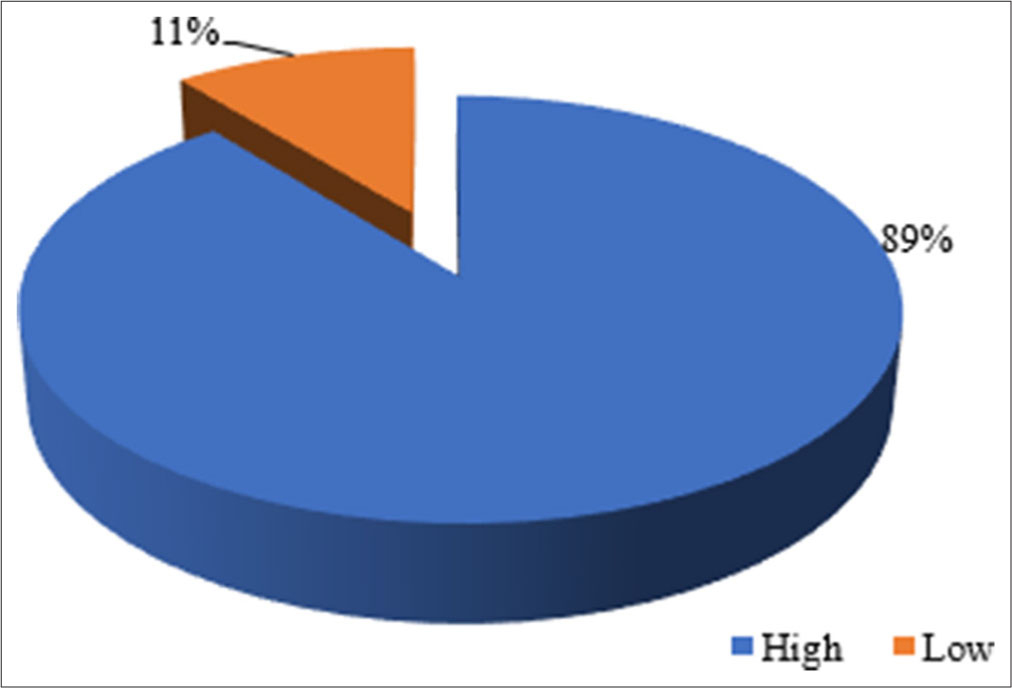
Results: Most (78 [83.9%]) of the participants reported that they have never used DAE. Similarly, 72 (77.4%) reported that they were not familiar with DAE at all. However, 84 (90.3%) of the women believed that it would be highly effective. The feasibility of DAE use is high in 83 (89%) of the participants. Furthermore, the majority of the participants, 73 (78.5%), indicated that DAE addresses their specific needs, and 77 (82.8%) of them reported being very comfortable with using DAE. The level of acceptability of DAE use is high in 73 (78.5%) of the participants. Determinants of DAE use, using adjusted odds ratio (AOR), include internet access (AOR = 1.205 with 95% confidence intervals [CI] of 0.233–6.221 and p = 0.024) and digital literacy (AOR = 14.072 with 95% CI of 2.209–89.634, and p = 0.005).
Conclusion and Global Health Implications: Despite the high feasibility and acceptability of DAE in Nigeria, its use is very low among PWLHIV. Strong determinants of use include digital literacy and internet access. Thus, for PWLHIV to meet the global standard in the use of digital health, interventions to improve digital literacy and internet access in low-resource settings are recommended.
Downloads
Most read articles by the same author(s)
- Margaret Omowaleola Akinwaare, Funmilayo A. Okanlawon, Monisola A. Popoola, Omotayo O. Adetunji, Birth Preparedness Plans and Status Disclosure Among Pregnant Women Living with HIV Who are Receiving Antiretroviral Therapy in Ibadan, Southwest, Nigeria , International Journal of Maternal and Child Health and AIDS: Vol. 12 No. 1 (2023): International Journal of Maternal and Child Health and AIDS
Similar Articles
- Elizabeth Armstrong-Mensah, Krystal Ruiz, Aminata Fofana, Victoria Hawley, Perinatal HIV Transmission Prevention: Challenges among Women Living with HIV in sub-Saharan Africa , Vol. 9 No. 3 (2020): International Journal of Maternal and Child Health and AIDS
- Joseph F. Nkfusai, Simon M. Manga, Kathleen Nulah, Calvin Ngalla, Florence Manjuh, Claude Ngwayu Nkfusai, Tendongfor Nicholas, Halle Ekane Edie Gregory, Cervical Precancer Treatment Outcomes in Cameroon , Vol. 13 No. Continuous (2024): International Journal of Maternal and Child Health and AIDS
- Devon Madelyn Rupley, Deepa Dongarwar, Hamisu M. Salihu, Allison M. Janda, Rachel Pope, Healthcare Access as a Risk-Marker for Obstetric Vesicovaginal Fistula in Malawi , Vol. 9 No. 1 (2020): International Journal of Maternal and Child Health and AIDS
- Rafeek A. Yusuf, Deepa Dongarwar, Zenab I. Yusuf, Hamisu M. Salihu, Association between Intimate Partner Violence, Knowledge and Use of Contraception in Africa: Comparative Analysis across Five African Regions , Vol. 9 No. 1 (2020): International Journal of Maternal and Child Health and AIDS
- Aradhana Singh, Vibha Rani Pipal, Raj Kishore Singh, Preeti Bala Singh, Nidhi Singh, Anupama Singh, Incidence and Predictors of Uterine Rupture with Maternal and Perinatal Outcome: A Cross-sectional Study , Vol. 14 No. Continuous (2025): International Journal of Maternal and Child Health and AIDS
- Agnes Napyo, James K Tumwine, David Mukunya, Josephine Tumuhamye, Anna Agnes Ojok Arach, Grace Ndeezi, Paul Waako, Thorkild Tylleskär, Detectable HIV-RNA Viral Load Among HIV-Infected Pregnant Women on Treatment in Northern Uganda , Vol. 9 No. 2 (2020): International Journal of Maternal and Child Health and AIDS
- Mary Stokes, Amber Olson, Clare Algeo, Bakari Rajab, Carolyn Mwalwanda, Deepa Dongarwar, Rachel Pope, Clinical and Sociodemographic Characteristics Associated with Emergency Peripartum Hysterectomy due to Puerperal Sepsis in Malawi , Vol. 11 No. 1 (2022): International Journal of Maternal and Child Health and AIDS
- Kenneth N. Opara, Nsima I. Udoidung, Dominic C. Opara, Okpok E. Okon, Evelyn U. Edosomwan, Anietie J. Udoh, The Impact of Intestinal Parasitic Infections on the Nutritional Status of Rural and Urban School-Aged Children in Nigeria , Vol. 1 No. 1 (2012): International Journal of Maternal and Child Health and AIDS
- Hyunjung Lee, Gopal K. Singh, Psychological Distress and Heart Disease Mortality in the United States: Results from the 1997-2014 NHIS-NDI Record Linkage Study , Vol. 9 No. 3 (2020): International Journal of Maternal and Child Health and AIDS
- Alexander Suuk Laar, Veioshnee Govender, Individual and Community Perspectives, Attitudes, and Practices to Mother-to-Child-Transmission and Infant Feeding among HIV-Positive Mothers in Sub-Saharan Africa: A Systematic Literature Review , Vol. 2 No. 1 (2013): International Journal of Maternal and Child Health and AIDS
<< < 15 16 17 18 19 20 21 22 23 24 > >>
You may also start an advanced similarity search for this article.
Published
How to Cite
Issue
Section
License
Copyright © 2026 Margaret Omowaleola Akinwaare, Jonah Musa, Chizoma Millicent Ndikom. Published by Global Health and Education Projects, Inc., USA.

This is an open-access article distributed under the terms of the Creative Commons Attribution-NonCommercial-ShareAlike 4.0 International License , which permits others to remix, transform, and build upon the work non-commercially, provided the original author is credited and the new creations are licensed under the same terms.