
Determinants of Digitalized Antenatal Education Use among Pregnant Women Living with Human Immunodeficiency Virus in Nigeria
DOI:
https://doi.org/10.21106/IJMA_41_2025Keywords:
- Antenatal,
- Digital Health,
- Human immunodeficiency viruses,
- Maternal Health,
- Nigeria,
- Pregnancy
Abstract
Background and Objective: The introduction of digital health has been found to improve maternal health globally. However, the use and determinants of digitalized antenatal education (DAE) use among vulnerable populations are yet to be ascertained. Therefore, this study assessed the use and determinants of DAE use among pregnant women living with human immunodeficiency viruses (PWLHIV).
Methods: The study adopted a descriptive design. Oyo state was randomly selected in Southwestern Nigeria, and 116 PWLHIV, who are receiving antiretroviral therapy, were recruited for the study. Of these, 93 returned completed data, which were included in the data analysis. A validated online questionnaire was used for data collection. Data analysis was done using STATA version 17. Descriptive statistics were used to assess the use, feasibility, and acceptability of DAE. Logistic regression was used to identify the determinants of DAE use.
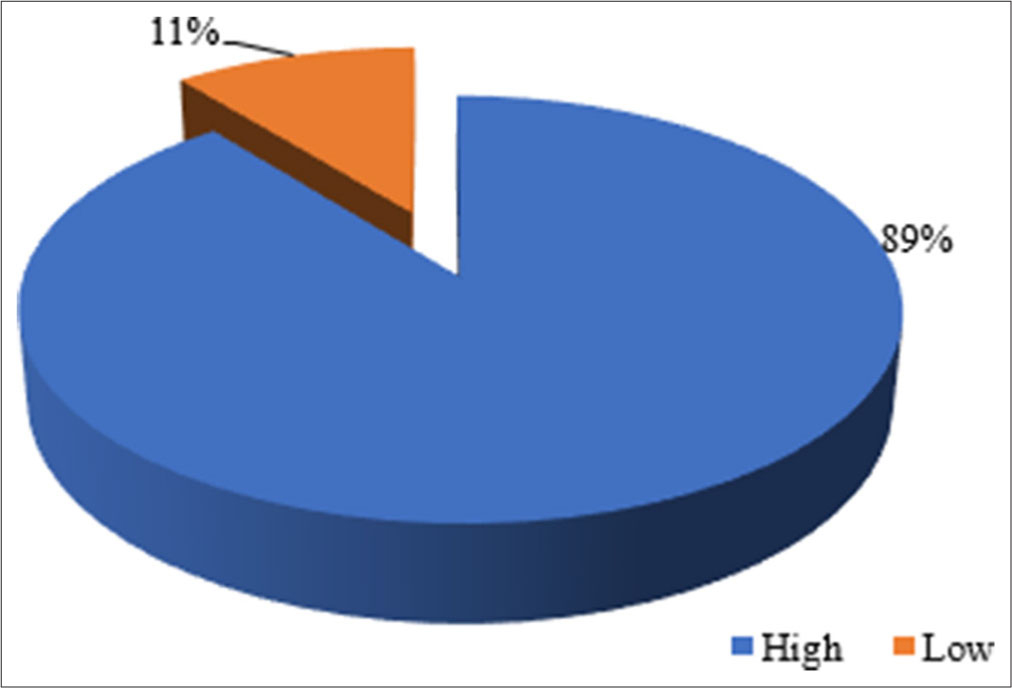
Results: Most (78 [83.9%]) of the participants reported that they have never used DAE. Similarly, 72 (77.4%) reported that they were not familiar with DAE at all. However, 84 (90.3%) of the women believed that it would be highly effective. The feasibility of DAE use is high in 83 (89%) of the participants. Furthermore, the majority of the participants, 73 (78.5%), indicated that DAE addresses their specific needs, and 77 (82.8%) of them reported being very comfortable with using DAE. The level of acceptability of DAE use is high in 73 (78.5%) of the participants. Determinants of DAE use, using adjusted odds ratio (AOR), include internet access (AOR = 1.205 with 95% confidence intervals [CI] of 0.233–6.221 and p = 0.024) and digital literacy (AOR = 14.072 with 95% CI of 2.209–89.634, and p = 0.005).
Conclusion and Global Health Implications: Despite the high feasibility and acceptability of DAE in Nigeria, its use is very low among PWLHIV. Strong determinants of use include digital literacy and internet access. Thus, for PWLHIV to meet the global standard in the use of digital health, interventions to improve digital literacy and internet access in low-resource settings are recommended.
Downloads
Most read articles by the same author(s)
- Margaret Omowaleola Akinwaare, Funmilayo A. Okanlawon, Monisola A. Popoola, Omotayo O. Adetunji, Birth Preparedness Plans and Status Disclosure Among Pregnant Women Living with HIV Who are Receiving Antiretroviral Therapy in Ibadan, Southwest, Nigeria , International Journal of Maternal and Child Health and AIDS: Vol. 12 No. 1 (2023): International Journal of Maternal and Child Health and AIDS
Similar Articles
- Hamisu M. Salihu, Abraham A. Salinas-Miranda, Lindsey M. King, Deepa Dongarwar, Korede K. Yusuf, Sahra Ibrahimi, Chioma A. Ike dionwu, Estrellita Lo Berry, Racism, Psycho-Social Stress, and Health-related Quality of Life , Vol. 9 No. 1 (2020): International Journal of Maternal and Child Health and AIDS
- Chioma A Ikedionwu, Deepa Dongarwar, Korede K. Yusuf, Sitratullah O. Maiyegun, Sahra Ibrahimi, Hamisu M. Salihu, Using Nominal Group Technique to Elucidate a COVID-19 Research Agenda for Maternal and Child Health (MCH) Populations , Vol. 9 No. 3 (2020): International Journal of Maternal and Child Health and AIDS
- Xiaoxiao Lu, Hee-Soon Juon, Sunmin Lee, Do Recommendations by Healthcare Providers, Family-members, Friends, and Individual Self-Efficacy Increase Uptake of Hepatitis B Screening? Results of a Population-Based Study of Asian Americans , Vol. 6 No. 1 (2017): International Journal of Maternal and Child Health and AIDS
- Sergio M. Navarro, Andile Sibiya, Maziar M. Nourian, Kelsey A. Stewart, Taylor D. Ottesen, Raymond R. Price, Addressing Supply Chain Management Issues in Cost-effective Maternal and Pediatric Global Surgery: A Call to Action , Vol. 9 No. 1 (2020): International Journal of Maternal and Child Health and AIDS
- Elangovan Arumugam, Joseph K. David, Santhakumar Aridoss, Nagaraj Jaganathasamy, Malathi Mathiyazhakan, Ganesh Balasubramanian, Manikandan Natesan, VM, Padmapriya, BK Kirubakaran, Sanjay Patel, Pradeep Kumar, Shobini Rajan, An Analysis of Levels and Trends in HIV Prevalence Among Pregnant Women Attending Antenatal Clinics in Karnataka, South India, 2003-2019 , Vol. 10 No. 2 (2021): International Journal of Maternal and Child Health and AIDS
- Sybil S. Opoku Asiedu, Nana Abena Ansah Apatu, Rosemond Tetteh, Abraham Hodgson, Neonatal Cord Care Practices among Mothers and Caregivers in the Volta Region of Ghana , Vol. 8 No. 1 (2019): International Journal of Maternal and Child Health and AIDS
- Claude Ngwayu Nkfusai, Olivia Ngou, Caroline Ekoko Subi, Sofia Mohlin, Fidele Bemadoum, Sylvanus Teboh, Frankline Sevidzem Wirsiy, Luchuo Engelbert Bain, Malaria Elimination: What Can Africa Learn from China? , Vol. 11 No. 2 (2022): International Journal of Maternal and Child Health and AIDS
- Ranjan Kumar Prusty, Sayeed Unisa, Reproductive Tract Infections and Treatment Seeking Behavior among Married Adolescent Women 15-19 Years in India , Vol. 2 No. 1 (2013): International Journal of Maternal and Child Health and AIDS
- Charles Kouanfack, Hermine Meli, Samuel N. Cumber, Fala Bede, Claude N. Nkfusai, Patience Y. Ijang, Emerson Wepngong, Olga Yvonne M. Bassong, Benjamin-Alexandre Nkoum, Non-Occupational HIV Post-exposure Prophylaxis: A 10-Year Retrospective Review of Data Following Sexual Exposure From Yaounde Central Hospital, Cameroon , Vol. 8 No. 2 (2019): International Journal of Maternal and Child Health and AIDS
- Comfort Z. Olorunsaiye, Korede K. Yusuf, Kylie Reinhart, Hamisu M. Salihu, COVID-19 and Child Vaccination: A Systematic Approach to Closing the Immunization Gap , Vol. 9 No. 3 (2020): International Journal of Maternal and Child Health and AIDS
<< < 19 20 21 22 23 24 25 26 27 28 > >>
You may also start an advanced similarity search for this article.
Published
How to Cite
Issue
Section
License
Copyright © 2026 Margaret Omowaleola Akinwaare, Jonah Musa, Chizoma Millicent Ndikom. Published by Global Health and Education Projects, Inc., USA.

This is an open-access article distributed under the terms of the Creative Commons Attribution-NonCommercial-ShareAlike 4.0 International License , which permits others to remix, transform, and build upon the work non-commercially, provided the original author is credited and the new creations are licensed under the same terms.