
Determinants of Digitalized Antenatal Education Use among Pregnant Women Living with Human Immunodeficiency Virus in Nigeria
DOI:
https://doi.org/10.21106/IJMA_41_2025Keywords:
- Antenatal,
- Digital Health,
- Human immunodeficiency viruses,
- Maternal Health,
- Nigeria,
- Pregnancy
Abstract
Background and Objective: The introduction of digital health has been found to improve maternal health globally. However, the use and determinants of digitalized antenatal education (DAE) use among vulnerable populations are yet to be ascertained. Therefore, this study assessed the use and determinants of DAE use among pregnant women living with human immunodeficiency viruses (PWLHIV).
Methods: The study adopted a descriptive design. Oyo state was randomly selected in Southwestern Nigeria, and 116 PWLHIV, who are receiving antiretroviral therapy, were recruited for the study. Of these, 93 returned completed data, which were included in the data analysis. A validated online questionnaire was used for data collection. Data analysis was done using STATA version 17. Descriptive statistics were used to assess the use, feasibility, and acceptability of DAE. Logistic regression was used to identify the determinants of DAE use.
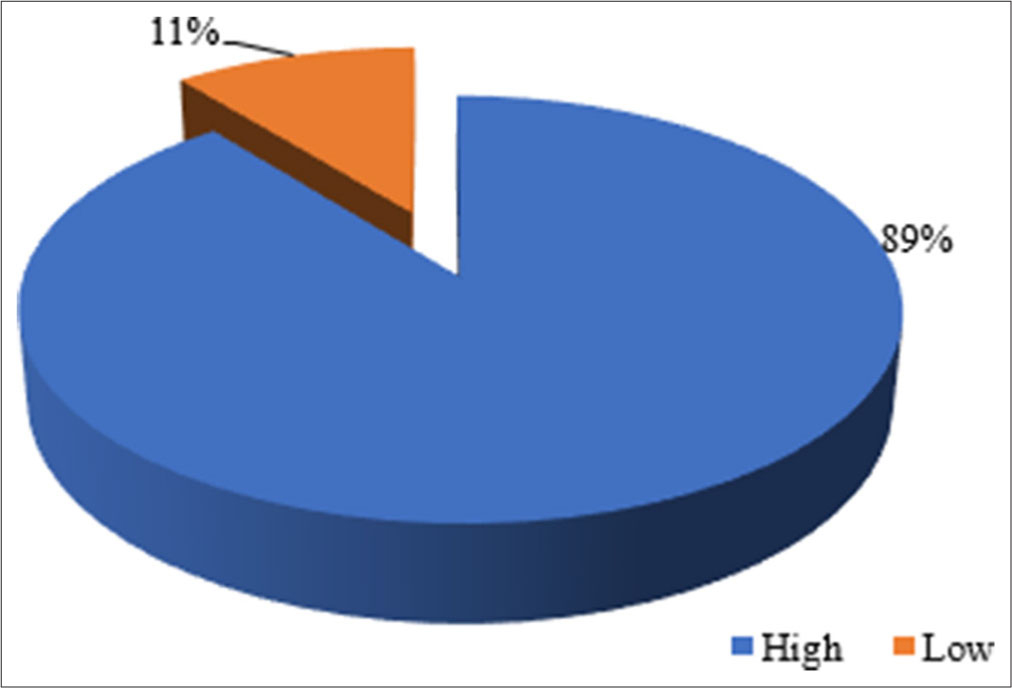
Results: Most (78 [83.9%]) of the participants reported that they have never used DAE. Similarly, 72 (77.4%) reported that they were not familiar with DAE at all. However, 84 (90.3%) of the women believed that it would be highly effective. The feasibility of DAE use is high in 83 (89%) of the participants. Furthermore, the majority of the participants, 73 (78.5%), indicated that DAE addresses their specific needs, and 77 (82.8%) of them reported being very comfortable with using DAE. The level of acceptability of DAE use is high in 73 (78.5%) of the participants. Determinants of DAE use, using adjusted odds ratio (AOR), include internet access (AOR = 1.205 with 95% confidence intervals [CI] of 0.233–6.221 and p = 0.024) and digital literacy (AOR = 14.072 with 95% CI of 2.209–89.634, and p = 0.005).
Conclusion and Global Health Implications: Despite the high feasibility and acceptability of DAE in Nigeria, its use is very low among PWLHIV. Strong determinants of use include digital literacy and internet access. Thus, for PWLHIV to meet the global standard in the use of digital health, interventions to improve digital literacy and internet access in low-resource settings are recommended.
Downloads
Most read articles by the same author(s)
- Margaret Omowaleola Akinwaare, Funmilayo A. Okanlawon, Monisola A. Popoola, Omotayo O. Adetunji, Birth Preparedness Plans and Status Disclosure Among Pregnant Women Living with HIV Who are Receiving Antiretroviral Therapy in Ibadan, Southwest, Nigeria , International Journal of Maternal and Child Health and AIDS: Vol. 12 No. 1 (2023): International Journal of Maternal and Child Health and AIDS
Similar Articles
- Nathan Isabirye, Amara E. Ezeamama, Rachel Kyeyune-Bakyayita, Danstan Bagenda, Wafaie W. Fawzi, David Guwatudde, Dietary Micronutrients and Gender, Body Mass Index and Viral Suppression Among HIV-Infected Patients in Kampala, Uganda , Vol. 9 No. 3 (2020): International Journal of Maternal and Child Health and AIDS
- Ahmed Zohirul Islam, Nazrul Islam Mondal, Laily Khatun, Mosiur Rahman, Rafiqul Islam, Golam Mostofa, Nazrul Hoque, Prevalence and Determinants of Contraceptive use among Employed and Unemployed Women in Bangladesh , Vol. 5 No. 2 (2016): International Journal of Maternal and Child Health and AIDS
- Hamisu M Salihu, Roneé E Wilson, Estrellita “Lo” Berry, The CI Index (CII): A New Instrument to Evaluate and Foster Collaborative Partnership in Public Health , Vol. 7 No. 1 (2018): International Journal of Maternal and Child Health and AIDS
- Veronica B. Ajewole, Ahone E. Ngujede, Emmanuella Oduguwa, Deepa Dongarwar, Manvir Kaur, Cecelia Knight, Maresha Jackson, Uyen Nguyen, Tasha Roshan, Jordan Simpson, Igor Vouffo, Omonike A. Olaleye, Hamisu M. Salihu, A Surveillance System for the Maternal and Child Health (MCH) Population During the COVID-19 Pandemic , Vol. 9 No. 3 (2020): International Journal of Maternal and Child Health and AIDS
- Veronica B. Ajewole-Mwema, Nkechi U. Ogboh, Dolores Ramirez, Olanike A. Shamonda, Kassie L. Thompson, Sneha George, Deepa Dongarwar, Polly Niravath, Mobile Mammography Outreach in Communities with Unmet Health Needs: Assessment of Appointment Outcomes and Operational Insights from Texas, United States , Vol. 14 No. Continuous (2025): International Journal of Maternal and Child Health and AIDS
- Ashu Michael Agbor, Karpal Singh Sohal, Nguitewou Loith Nguimfack, Elvis Tarkang, Enow O’rock George, Sudeshni Naidoo, Oral Manifestations of HIV Infection and Dental Health Needs of Children with HIV Attending HIV Treatment Clinics in Western Cameroon , Vol. 13 No. Continuous (2024): International Journal of Maternal and Child Health and AIDS
- Janel Mendoza, Improving Health, Social Welfare, and Human Development Through Women’s Empowerment in Developing Countries: The 2016 Girl Up Leadership Summit, Washington, DC, USA , Vol. 5 No. 2 (2016): International Journal of Maternal and Child Health and AIDS
- Amina P. Alio, Candace Sibley, Halimah S. Ouedraogo, Stephaun E. Wallace, Steven Wakefield, Damon L. Humes, Sheldon D. Fields, Michael C. Keefer, House Ball Community Leaders’ Perceptions of HIV and HIV Vaccine Research , Vol. 9 No. 1 (2020): International Journal of Maternal and Child Health and AIDS
- Frankline Sevidzem Wirsiy, Claude Ngwayu Nkfusai, Denis Ebot Ako-Arrey, Esther Kenfack Dongmo, Florence Titu Manjong, Samuel Nambile Cumber, Acceptability of COVID-19 Vaccine in Africa , Vol. 10 No. 1 (2021): International Journal of Maternal and Child Health and AIDS
- Mousumi Datta, Shamima Yasmin, Rahul Biswas, Immunization Status, Immunization Coverage, and Factors Associated with Immunization Service Utilization Among HIV-Exposed and HIV-Infected Children in India , Vol. 13 No. Continuous (2024): International Journal of Maternal and Child Health and AIDS
<< < 17 18 19 20 21 22 23 24 25 26 > >>
You may also start an advanced similarity search for this article.
Published
How to Cite
Issue
Section
License
Copyright © 2026 Margaret Omowaleola Akinwaare, Jonah Musa, Chizoma Millicent Ndikom. Published by Global Health and Education Projects, Inc., USA.

This is an open-access article distributed under the terms of the Creative Commons Attribution-NonCommercial-ShareAlike 4.0 International License , which permits others to remix, transform, and build upon the work non-commercially, provided the original author is credited and the new creations are licensed under the same terms.