
Determinants of Digitalized Antenatal Education Use among Pregnant Women Living with Human Immunodeficiency Virus in Nigeria
DOI:
https://doi.org/10.21106/IJMA_41_2025Keywords:
- Antenatal,
- Digital Health,
- Human immunodeficiency viruses,
- Maternal Health,
- Nigeria,
- Pregnancy
Abstract
Background and Objective: The introduction of digital health has been found to improve maternal health globally. However, the use and determinants of digitalized antenatal education (DAE) use among vulnerable populations are yet to be ascertained. Therefore, this study assessed the use and determinants of DAE use among pregnant women living with human immunodeficiency viruses (PWLHIV).
Methods: The study adopted a descriptive design. Oyo state was randomly selected in Southwestern Nigeria, and 116 PWLHIV, who are receiving antiretroviral therapy, were recruited for the study. Of these, 93 returned completed data, which were included in the data analysis. A validated online questionnaire was used for data collection. Data analysis was done using STATA version 17. Descriptive statistics were used to assess the use, feasibility, and acceptability of DAE. Logistic regression was used to identify the determinants of DAE use.
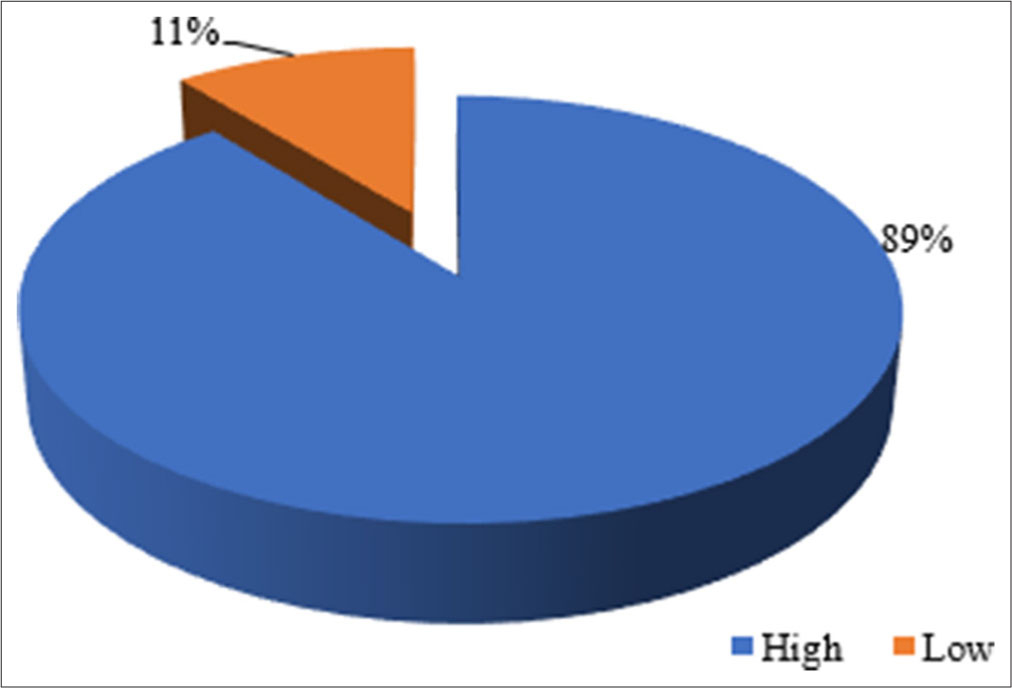
Results: Most (78 [83.9%]) of the participants reported that they have never used DAE. Similarly, 72 (77.4%) reported that they were not familiar with DAE at all. However, 84 (90.3%) of the women believed that it would be highly effective. The feasibility of DAE use is high in 83 (89%) of the participants. Furthermore, the majority of the participants, 73 (78.5%), indicated that DAE addresses their specific needs, and 77 (82.8%) of them reported being very comfortable with using DAE. The level of acceptability of DAE use is high in 73 (78.5%) of the participants. Determinants of DAE use, using adjusted odds ratio (AOR), include internet access (AOR = 1.205 with 95% confidence intervals [CI] of 0.233–6.221 and p = 0.024) and digital literacy (AOR = 14.072 with 95% CI of 2.209–89.634, and p = 0.005).
Conclusion and Global Health Implications: Despite the high feasibility and acceptability of DAE in Nigeria, its use is very low among PWLHIV. Strong determinants of use include digital literacy and internet access. Thus, for PWLHIV to meet the global standard in the use of digital health, interventions to improve digital literacy and internet access in low-resource settings are recommended.
Downloads
Most read articles by the same author(s)
- Margaret Omowaleola Akinwaare, Funmilayo A. Okanlawon, Monisola A. Popoola, Omotayo O. Adetunji, Birth Preparedness Plans and Status Disclosure Among Pregnant Women Living with HIV Who are Receiving Antiretroviral Therapy in Ibadan, Southwest, Nigeria , International Journal of Maternal and Child Health and AIDS: Vol. 12 No. 1 (2023): International Journal of Maternal and Child Health and AIDS
Similar Articles
- Deepa Dongarwar, Hamisu Mohammed Salihu, Risk of Stillbirth after Infertility Treatment in the United States: 2014-2017 , Vol. 9 No. 1 (2020): International Journal of Maternal and Child Health and AIDS
- Ali Reza Soltanian, Saeid Bashirian, Shahin Akhondzadeh Basti, Manoochehr Karami, Afshin Ostovar, Salman Khazaei, Estimation of the Hidden Population with COVID-19 Disease , Vol. 9 No. 2 (2020): International Journal of Maternal and Child Health and AIDS
- Alireza Ghannad Sabzevari, Mohsen Nikbakht, Considerations about Reducing False-Negative PCR Test for COVID-19 , Vol. 11 No. 2 (2022): International Journal of Maternal and Child Health and AIDS
- Liye Wang, Deepa Dongarwar, Hamisu M. Salihu, Temporal Trends in the Rates of Singletons, Twins and Higher-order Multiple Births Over Five Decades Across Racial Groups in the United States , Vol. 9 No. 3 (2020): International Journal of Maternal and Child Health and AIDS
- Deepa Dongarwar, Anjali Aggarwal, Kenneth Barning, Hamisu Mohammed Salihu, Trends in Stillbirths and Stillbirth Phenotypes in the United States: An Analysis of 131.5 Million Births , Vol. 9 No. 1 (2020): International Journal of Maternal and Child Health and AIDS
- Carl Dowling, Factors Affecting Paramedic Personnel in the Assessment and Management of Emergency Pediatric Patients within the Prehospital Settings in the United Kingdom , Vol. 12 No. 1 (2023): International Journal of Maternal and Child Health and AIDS
- Faith D. Ihekweazu, Deepa Dongarwar, Hamisu M. Salihu, Richard Kellermayer, National Trends in Hospitalization, Surgical Resection, and Comorbidities in Pediatric Inflammatory Bowel Disease in the United States, 2002-2015 , Vol. 11 No. 1 (2022): International Journal of Maternal and Child Health and AIDS
- Michelle Meyer, Molly Elmer-DeWitt, Cinthia Blat, Starley B Shade, Ijaa Kapule, Elizabeth Bukusi, Craig R Cohen, Lisa Abuogi, Evaluation and Utility of a Family Information Table to Identify and Test Children at Risk for HIV in Kenya , Vol. 2 No. 2 (2014): International Journal of Maternal and Child Health and AIDS
- Arshiya Khan, Adarshlata Singh, Sugat Ambadas Jawade, Yash Kashikar, Extensive Intertrigo and Irritant Contact Dermatitis of Groins in Pregnant Female Due to Overuse of Feminine Hygiene Products , Vol. 13 No. Continuous (2024): International Journal of Maternal and Child Health and AIDS
- Fatemeh Bahreini, Rezvan Najafi, Razieh Amini, Salman Khazaei, Saeid Bashirian, Reducing False Negative PCR Test for COVID-19 , Vol. 9 No. 3 (2020): International Journal of Maternal and Child Health and AIDS
<< < 25 26 27 28 29 30 31 > >>
You may also start an advanced similarity search for this article.
Published
How to Cite
Issue
Section
License
Copyright © 2026 Margaret Omowaleola Akinwaare, Jonah Musa, Chizoma Millicent Ndikom. Published by Global Health and Education Projects, Inc., USA.

This is an open-access article distributed under the terms of the Creative Commons Attribution-NonCommercial-ShareAlike 4.0 International License , which permits others to remix, transform, and build upon the work non-commercially, provided the original author is credited and the new creations are licensed under the same terms.