
Determinants of Digitalized Antenatal Education Use among Pregnant Women Living with Human Immunodeficiency Virus in Nigeria
DOI:
https://doi.org/10.21106/IJMA_41_2025Keywords:
- Antenatal,
- Digital Health,
- Human immunodeficiency viruses,
- Maternal Health,
- Nigeria,
- Pregnancy
Abstract
Background and Objective: The introduction of digital health has been found to improve maternal health globally. However, the use and determinants of digitalized antenatal education (DAE) use among vulnerable populations are yet to be ascertained. Therefore, this study assessed the use and determinants of DAE use among pregnant women living with human immunodeficiency viruses (PWLHIV).
Methods: The study adopted a descriptive design. Oyo state was randomly selected in Southwestern Nigeria, and 116 PWLHIV, who are receiving antiretroviral therapy, were recruited for the study. Of these, 93 returned completed data, which were included in the data analysis. A validated online questionnaire was used for data collection. Data analysis was done using STATA version 17. Descriptive statistics were used to assess the use, feasibility, and acceptability of DAE. Logistic regression was used to identify the determinants of DAE use.
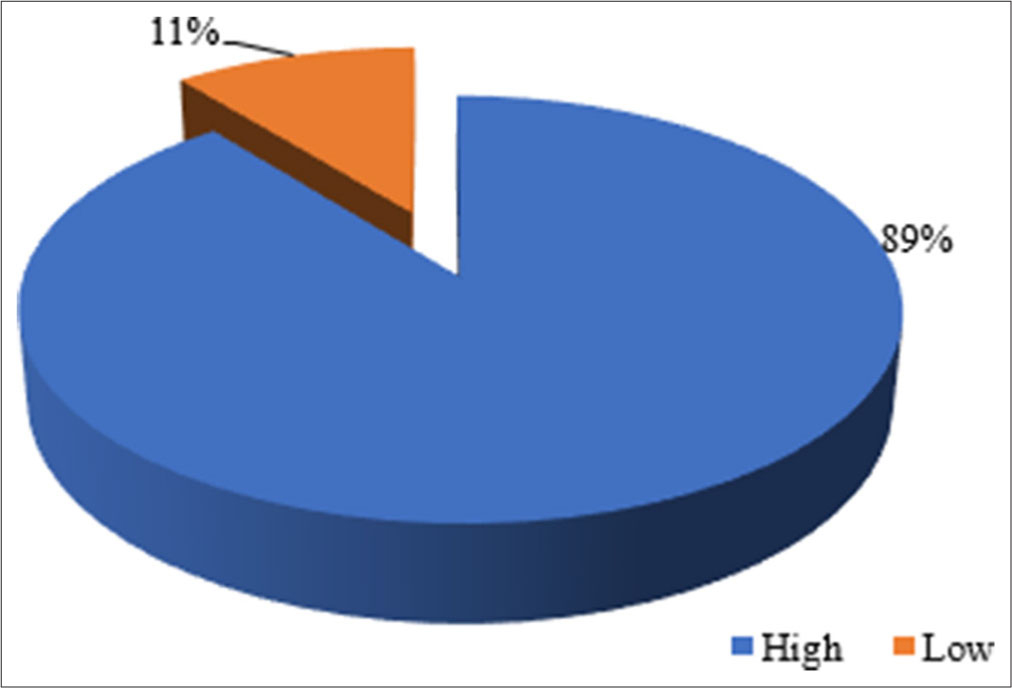
Results: Most (78 [83.9%]) of the participants reported that they have never used DAE. Similarly, 72 (77.4%) reported that they were not familiar with DAE at all. However, 84 (90.3%) of the women believed that it would be highly effective. The feasibility of DAE use is high in 83 (89%) of the participants. Furthermore, the majority of the participants, 73 (78.5%), indicated that DAE addresses their specific needs, and 77 (82.8%) of them reported being very comfortable with using DAE. The level of acceptability of DAE use is high in 73 (78.5%) of the participants. Determinants of DAE use, using adjusted odds ratio (AOR), include internet access (AOR = 1.205 with 95% confidence intervals [CI] of 0.233–6.221 and p = 0.024) and digital literacy (AOR = 14.072 with 95% CI of 2.209–89.634, and p = 0.005).
Conclusion and Global Health Implications: Despite the high feasibility and acceptability of DAE in Nigeria, its use is very low among PWLHIV. Strong determinants of use include digital literacy and internet access. Thus, for PWLHIV to meet the global standard in the use of digital health, interventions to improve digital literacy and internet access in low-resource settings are recommended.
Downloads
Most read articles by the same author(s)
- Margaret Omowaleola Akinwaare, Funmilayo A. Okanlawon, Monisola A. Popoola, Omotayo O. Adetunji, Birth Preparedness Plans and Status Disclosure Among Pregnant Women Living with HIV Who are Receiving Antiretroviral Therapy in Ibadan, Southwest, Nigeria , International Journal of Maternal and Child Health and AIDS: Vol. 12 No. 1 (2023): International Journal of Maternal and Child Health and AIDS
Similar Articles
- Sharaf Sheik-Ali, Sergio M. Navarro, Hashim Shaikh, Evan J. Keil, Walter Johnson, Chris Lavy, The Health Determinants of Accessibility to Clubfoot Treatment in LMICs: A Global Exploration of Barriers and Solutions , Vol. 10 No. 2 (2021): International Journal of Maternal and Child Health and AIDS
- Roger J. Chin, Domrongphol Sangmanee, Lisa Piergallini, PEPFAR Funding and Reduction in HIV Infection Rates in 12 Focus Sub-Saharan African Countries: A Quantitative Analysis , Vol. 3 No. 2 (2015): International Journal of Maternal and Child Health and AIDS
- Jahron P Marriott, José G Pérez-Ramos Pérez-Ramos, Song Hoa Choi, Gersandre Gonsalves-Domond, Beatrice Aladin, Monica Barbosu, Cheryl Smith, Timothy Dye, Assessing Training Interests of Latin American and Caribbean Immigrant-serving HIV/AIDS, STD, and Hepatitis C Providers in New York State, United States , Vol. 9 No. 2 (2020): International Journal of Maternal and Child Health and AIDS
- Ohemaa B. Poku, Timothy D. Becker, Shathani Rampa, Supriya Misra, Ari R. Ho-Foster, Patlo Entaile, Charisse Tay, Karen Choe, Tonya Arscott-Mills, Michael B. Blank, Philip Renison Opondo, Lawrence H. Yang, Theory-Driven, Multi-Stage Process to Develop a Culturally-Informed Anti-Stigma Intervention for Pregnant Women Living with HIV in Botswana , Vol. 11 No. 2 (2022): International Journal of Maternal and Child Health and AIDS
- Cho Sabastine Anye, Claude Ngwayu Nkfusai, Brenda Mbouamba Yankam, Frankline Sevidzem Wirsiy, Joyce Mahlako Tsoka-Gwegweni, Samuel Nambile Cumber, A Four-Year Hospital-Based Retrospective Study of the Predictors of Tuberculosis in People Living with HIV and Receiving Care at Bamenda Regional Hospital, Cameroon , Vol. 9 No. 2 (2020): International Journal of Maternal and Child Health and AIDS
- Ekere James Essien, Osaro Mgbere, Long-acting Antiretroviral Agents in the Prevention and Treatment of HIV/AIDS: A Review of Recent Advances in Sub-Saharan Africa , Vol. 14 No. Continuous (2025): International Journal of Maternal and Child Health and AIDS
- Mary Jane Rotheram-Borus, Mark Tomlinson, Utilizing Principles of Private Enterprise to Improve Maternal and Child Health Programs , Vol. 9 No. 2 (2020): International Journal of Maternal and Child Health and AIDS
- Constantin Tchakounté, Céline N. Nkenfou, Thibau F. Tchouangueu, Nicole M. Ngoufack, Salomon B. Tchuandom, Olivier D. Ngono, Jules-Rogers Kuiate, Alexis Ndjolo, HIV Serodiscordance among Couples in Cameroon: Effects on Sexual and Reproductive Health , Vol. 9 No. 3 (2020): International Journal of Maternal and Child Health and AIDS
- Chiluba Kabalika, David Mulenga, Mazyanga Lucy Mazaba, Seter Siziya, Acceptance of Cervical Cancer Screening and its Correlates Among Women of a Peri-Urban High-Density Residential Area in Ndola, Zambia , Vol. 7 No. 1 (2018): International Journal of Maternal and Child Health and AIDS
- Arlin Delgado, Chinyere N. Reid, Emma Hale, Jennifer Marshall, Kimberly Fryer, Evaluation of Virtual Prenatal Care for Obstetric Care Delivery During the COVID-19 Pandemic: A Mixed Method Research Study Using the Consolidated Framework in Implementation Research , Vol. 12 No. 2 (2023): International Journal of Maternal and Child Health and AIDS
<< < 21 22 23 24 25 26 27 28 29 30 > >>
You may also start an advanced similarity search for this article.
Published
How to Cite
Issue
Section
License
Copyright © 2026 Margaret Omowaleola Akinwaare, Jonah Musa, Chizoma Millicent Ndikom. Published by Global Health and Education Projects, Inc., USA.

This is an open-access article distributed under the terms of the Creative Commons Attribution-NonCommercial-ShareAlike 4.0 International License , which permits others to remix, transform, and build upon the work non-commercially, provided the original author is credited and the new creations are licensed under the same terms.