
Determinants of Digitalized Antenatal Education Use among Pregnant Women Living with Human Immunodeficiency Virus in Nigeria
DOI:
https://doi.org/10.21106/IJMA_41_2025Keywords:
- Antenatal,
- Digital Health,
- Human immunodeficiency viruses,
- Maternal Health,
- Nigeria,
- Pregnancy
Abstract
Background and Objective: The introduction of digital health has been found to improve maternal health globally. However, the use and determinants of digitalized antenatal education (DAE) use among vulnerable populations are yet to be ascertained. Therefore, this study assessed the use and determinants of DAE use among pregnant women living with human immunodeficiency viruses (PWLHIV).
Methods: The study adopted a descriptive design. Oyo state was randomly selected in Southwestern Nigeria, and 116 PWLHIV, who are receiving antiretroviral therapy, were recruited for the study. Of these, 93 returned completed data, which were included in the data analysis. A validated online questionnaire was used for data collection. Data analysis was done using STATA version 17. Descriptive statistics were used to assess the use, feasibility, and acceptability of DAE. Logistic regression was used to identify the determinants of DAE use.
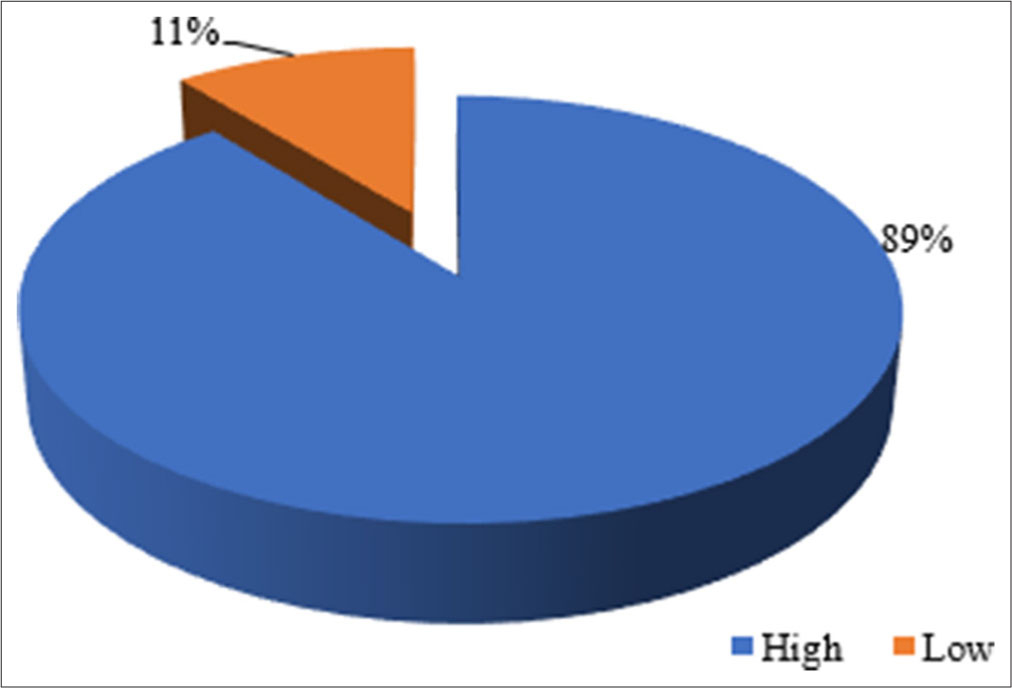
Results: Most (78 [83.9%]) of the participants reported that they have never used DAE. Similarly, 72 (77.4%) reported that they were not familiar with DAE at all. However, 84 (90.3%) of the women believed that it would be highly effective. The feasibility of DAE use is high in 83 (89%) of the participants. Furthermore, the majority of the participants, 73 (78.5%), indicated that DAE addresses their specific needs, and 77 (82.8%) of them reported being very comfortable with using DAE. The level of acceptability of DAE use is high in 73 (78.5%) of the participants. Determinants of DAE use, using adjusted odds ratio (AOR), include internet access (AOR = 1.205 with 95% confidence intervals [CI] of 0.233–6.221 and p = 0.024) and digital literacy (AOR = 14.072 with 95% CI of 2.209–89.634, and p = 0.005).
Conclusion and Global Health Implications: Despite the high feasibility and acceptability of DAE in Nigeria, its use is very low among PWLHIV. Strong determinants of use include digital literacy and internet access. Thus, for PWLHIV to meet the global standard in the use of digital health, interventions to improve digital literacy and internet access in low-resource settings are recommended.
Downloads
Most read articles by the same author(s)
- Margaret Omowaleola Akinwaare, Funmilayo A. Okanlawon, Monisola A. Popoola, Omotayo O. Adetunji, Birth Preparedness Plans and Status Disclosure Among Pregnant Women Living with HIV Who are Receiving Antiretroviral Therapy in Ibadan, Southwest, Nigeria , International Journal of Maternal and Child Health and AIDS: Vol. 12 No. 1 (2023): International Journal of Maternal and Child Health and AIDS
Similar Articles
- Anne Esther Njom Nlend, Pascal Avenec, Jeannette Epée Ngoué, Arsène B. Sandie, Morbidity and Mortality of HIV-Exposed Uninfected Infants in a Tertiary Referral Facility in Yaoundé, Cameroon , Vol. 12 No. 2 (2023): International Journal of Maternal and Child Health and AIDS
- Ornella Sybile D. Kouanfack, Charles Kouanfack, Serges Clotaire Billong, Samuel N. Cumber, Claude N. Nkfusai, Fala Bede, Emerson Wepngong, Chombong Hubert, Georges Nguefack-Tsague, Madeleine N. Singwe, Epidemiology of Opportunistic Infections in HIV Infected Patients on Treatment in Accredited HIV Treatment Centers in Cameroon , Vol. 8 No. 2 (2019): International Journal of Maternal and Child Health and AIDS
- Eren Oyungu, Anna Roose, Ananda R. Ombitsa, Rachel C. Vreeman, Megan S. McHenry, Child Development Monitoring in Well-baby Clinics in Kenya , Vol. 10 No. 1 (2021): International Journal of Maternal and Child Health and AIDS
- Hamisu M. Salihu, Global Reduction in HIV-related Maternal Mortality: ART as a Key Strategy , Vol. 4 No. 2 (2015): International Journal of Maternal and Child Health and AIDS
- Charles Kouanfack, Skinner Nguefack Lekelem, Fala Bede, Claude Ngwayu Nkfusai, Yvette Micha Nouafo, Christian Tchokonte, Nicaise Tsomo Zephirin, Pierre Joseph Fouda, Use of Trained Non-Medical Staff to Improve Access to HIV Testing Services in Africa: Implementation of the World Health Organization Opt-out Approach in Cameroon , Vol. 10 No. 1 (2021): International Journal of Maternal and Child Health and AIDS
- Stephen Stephen, Chiwoneso Gwyneth Elizabeth Muchaneta-Kubara, Marshall Wesley Munjoma, Gibson Mandozana, Evaluation of Cortez OneStep Chlamydia Rapicard™ Insta Test for the Detection of Chlamydia trachomatis in Pregnant Women at Mbare Polyclinic in Harare, Zimbabwe , Vol. 6 No. 1 (2017): International Journal of Maternal and Child Health and AIDS
- Chelsea E Modlin, Helga Naburi, Kristy M Hendricks, Goodluck Lyatuu, Josphine Kimaro, Lisa V Adams, Paul E Palumbo, C. Fordham von Reyn, Nutritional Deficiencies and Food Insecurity Among HIV-infected Children in Tanzania , Vol. 2 No. 2 (2014): International Journal of Maternal and Child Health and AIDS
- Isabel Hernandez, Vinita Sharma, Miguel Reina-Ortiz, Carlos Rosas, Tatiana Ochoa, Ricardo Izurieta, Enrique Teran, HIV/AIDS-related Knowledge and Behavior among School-attending Afro-Descendant Youths in Ecuador , Vol. 9 No. 3 (2020): International Journal of Maternal and Child Health and AIDS
- Kalaivani Mani, Sada Nand Dwivedi, Ravindra Mohan Pandey, Determinants of Under-Five Mortality in Rural Empowered Action Group States in India: An Application of Cox Frailty Model , Vol. 1 No. 1 (2012): International Journal of Maternal and Child Health and AIDS
- Margaret Macherera Macherera, Lindani Moyo, Mkhanyiseli Ncube, Angella Gumbi, Social, Cultural, and Environmental Challenges Faced by Children on Antiretroviral Therapy in Zimbabwe: a Mixed-Method Study , Vol. 1 No. 1 (2012): International Journal of Maternal and Child Health and AIDS
<< < 20 21 22 23 24 25 26 27 28 29 > >>
You may also start an advanced similarity search for this article.
Published
How to Cite
Issue
Section
License
Copyright © 2026 Margaret Omowaleola Akinwaare, Jonah Musa, Chizoma Millicent Ndikom. Published by Global Health and Education Projects, Inc., USA.

This is an open-access article distributed under the terms of the Creative Commons Attribution-NonCommercial-ShareAlike 4.0 International License , which permits others to remix, transform, and build upon the work non-commercially, provided the original author is credited and the new creations are licensed under the same terms.