
Determinants of Digitalized Antenatal Education Use among Pregnant Women Living with Human Immunodeficiency Virus in Nigeria
DOI:
https://doi.org/10.21106/IJMA_41_2025Keywords:
- Antenatal,
- Digital Health,
- Human immunodeficiency viruses,
- Maternal Health,
- Nigeria,
- Pregnancy
Abstract
Background and Objective: The introduction of digital health has been found to improve maternal health globally. However, the use and determinants of digitalized antenatal education (DAE) use among vulnerable populations are yet to be ascertained. Therefore, this study assessed the use and determinants of DAE use among pregnant women living with human immunodeficiency viruses (PWLHIV).
Methods: The study adopted a descriptive design. Oyo state was randomly selected in Southwestern Nigeria, and 116 PWLHIV, who are receiving antiretroviral therapy, were recruited for the study. Of these, 93 returned completed data, which were included in the data analysis. A validated online questionnaire was used for data collection. Data analysis was done using STATA version 17. Descriptive statistics were used to assess the use, feasibility, and acceptability of DAE. Logistic regression was used to identify the determinants of DAE use.
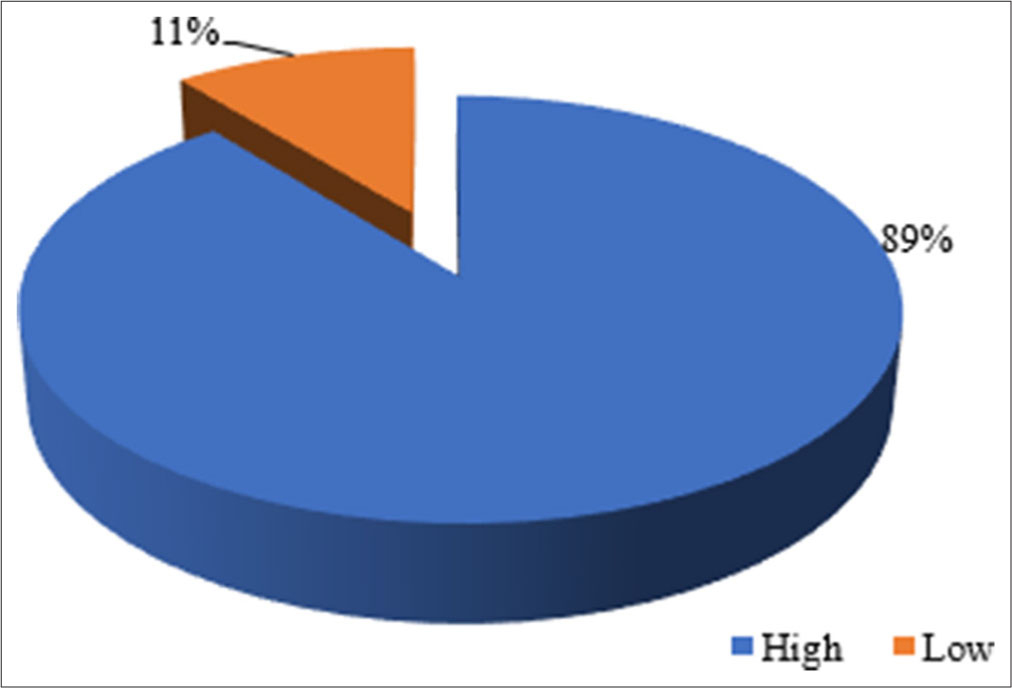
Results: Most (78 [83.9%]) of the participants reported that they have never used DAE. Similarly, 72 (77.4%) reported that they were not familiar with DAE at all. However, 84 (90.3%) of the women believed that it would be highly effective. The feasibility of DAE use is high in 83 (89%) of the participants. Furthermore, the majority of the participants, 73 (78.5%), indicated that DAE addresses their specific needs, and 77 (82.8%) of them reported being very comfortable with using DAE. The level of acceptability of DAE use is high in 73 (78.5%) of the participants. Determinants of DAE use, using adjusted odds ratio (AOR), include internet access (AOR = 1.205 with 95% confidence intervals [CI] of 0.233–6.221 and p = 0.024) and digital literacy (AOR = 14.072 with 95% CI of 2.209–89.634, and p = 0.005).
Conclusion and Global Health Implications: Despite the high feasibility and acceptability of DAE in Nigeria, its use is very low among PWLHIV. Strong determinants of use include digital literacy and internet access. Thus, for PWLHIV to meet the global standard in the use of digital health, interventions to improve digital literacy and internet access in low-resource settings are recommended.
Downloads
Most read articles by the same author(s)
- Margaret Omowaleola Akinwaare, Funmilayo A. Okanlawon, Monisola A. Popoola, Omotayo O. Adetunji, Birth Preparedness Plans and Status Disclosure Among Pregnant Women Living with HIV Who are Receiving Antiretroviral Therapy in Ibadan, Southwest, Nigeria , International Journal of Maternal and Child Health and AIDS: Vol. 12 No. 1 (2023): International Journal of Maternal and Child Health and AIDS
Similar Articles
- Ashish Kumar Gupta, Kakoli Borkotoky, Amit Kumar, Household Headship and Infant Mortality in India: Evaluating the Determinants and Differentials , Vol. 3 No. 1 (2015): International Journal of Maternal and Child Health and AIDS
- Renice Obure, Hamisu M. Salihu, Anjali Aggarwal, Acara E. Turner, Estrellita “Lo” Berry, Deborah A. Austin, Usman J. Wudil, Muktar H. Aliyu, Ronee E. Wilson, Evaluation of an Evidence-based and Community-responsive Fatherhood Training Program: Providers’ Perspective , Vol. 9 No. 1 (2020): International Journal of Maternal and Child Health and AIDS
- Elizabeth Armstrong-Mensah, Ato Kwamena Tetteh, Seung Choi, Utilization of Rapid Diagnostic Testing in sub-Saharan Africa: Challenges and Effects on HIV Prevention , Vol. 10 No. 1 (2021): International Journal of Maternal and Child Health and AIDS
- Alicia E. Hersey, Betty Norman, Rebecca Reece, Assessing Reproductive Decision-making Among HIV-Positive Women in Kumasi, Ghana , Vol. 8 No. 1 (2019): International Journal of Maternal and Child Health and AIDS
- Ranbir S Balgir, Population and Public Health Implications of Child Health and Reproductive Outcomes Among Carrier Couples of Sickle Cell Disorders in Madhya Pradesh, Central India , Vol. 2 No. 2 (2014): International Journal of Maternal and Child Health and AIDS
- Deepa Dongarwar, Korede K. Yusuf, Sitratullah O. Maiyegun, Sahra Ibrahimi, Chioma Ikedionwu, Hamisu M. Salihu, Covid-19 and Neuro-Behavioral Economics: A Conceptual Framework to Improve Physical and Mental Health among Remote Workers , Vol. 9 No. 3 (2020): International Journal of Maternal and Child Health and AIDS
- Kenneth Ihenetu, Darius Mason, Biochemical Manifestation of HIV Lipodystrophy Syndrome , Vol. 1 No. 1 (2012): International Journal of Maternal and Child Health and AIDS
- Charles Kouanfack, Fala Bede, Claude Ngwayu Nkfusai, Emerson Wepngong, Mbinkar Adeline Venyuy, Chombong Hubert, Denise Movuh Sam, Samuel Nambile Cumber, Retention in HIV/AIDS Management Services: is it Really Poor? The Case of Yaounde Central Hospital in Cameroon , Vol. 9 No. 2 (2020): International Journal of Maternal and Child Health and AIDS
- Prakash R Ganesh, Rachel Mernoff, Renske Dikkers, William Nundwe, Rachel Pope, A Comparison of Postoperative Surgical Outcomes among Women Undergoing Obstetric Fistula Repair with and without HIV , Vol. 10 No. 2 (2021): International Journal of Maternal and Child Health and AIDS
- Akosua A. Gyimah, Emmanuel K. Nakua, Ellis Owusu-Dabo, Easmon Otupiri, Contraceptive Characteristics of Women Living with HIV in the Kumasi Metropolis, Ghana , Vol. 2 No. 1 (2013): International Journal of Maternal and Child Health and AIDS
<< < 22 23 24 25 26 27 28 29 30 31 > >>
You may also start an advanced similarity search for this article.
Published
How to Cite
Issue
Section
License
Copyright © 2026 Margaret Omowaleola Akinwaare, Jonah Musa, Chizoma Millicent Ndikom. Published by Global Health and Education Projects, Inc., USA.

This is an open-access article distributed under the terms of the Creative Commons Attribution-NonCommercial-ShareAlike 4.0 International License , which permits others to remix, transform, and build upon the work non-commercially, provided the original author is credited and the new creations are licensed under the same terms.